
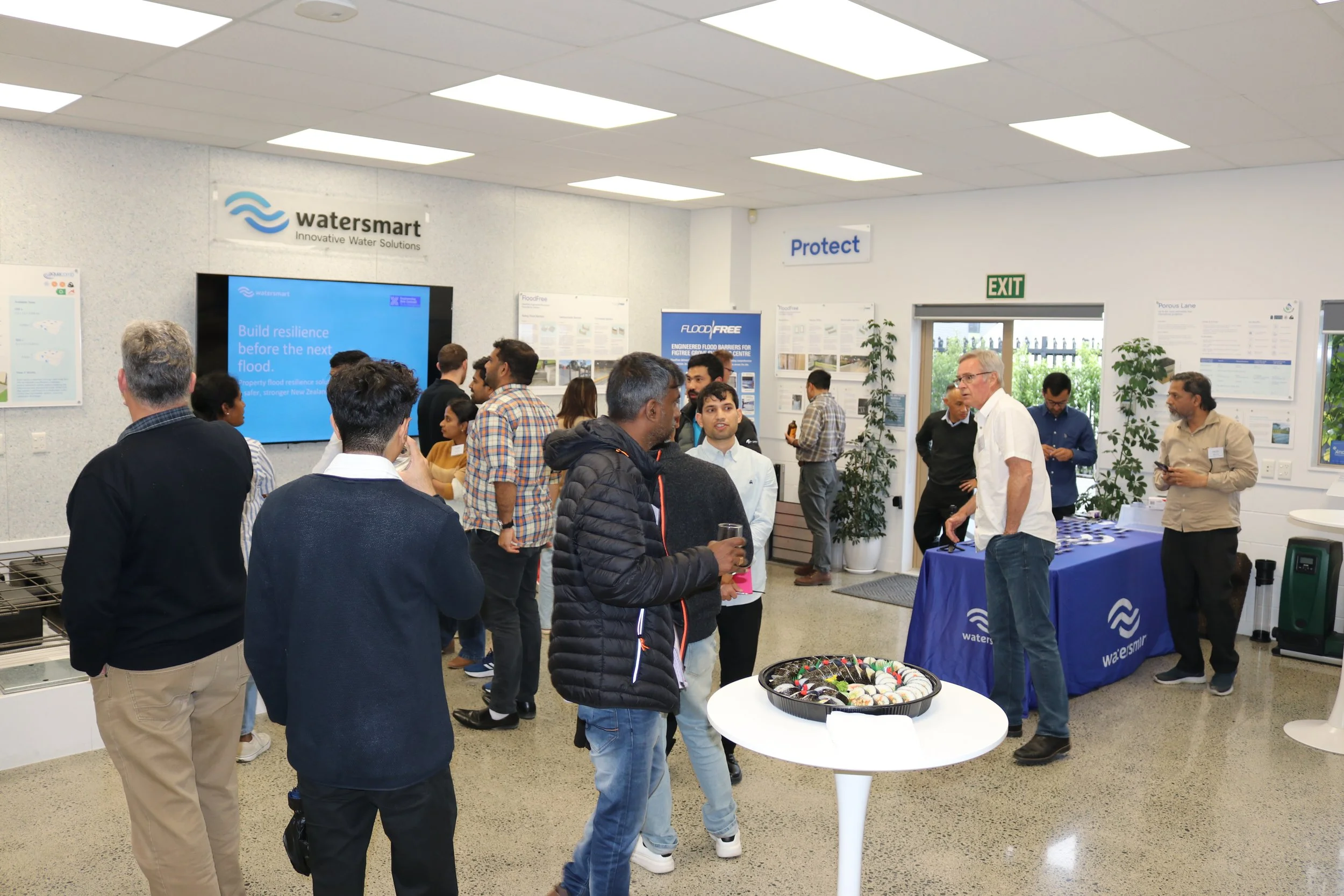
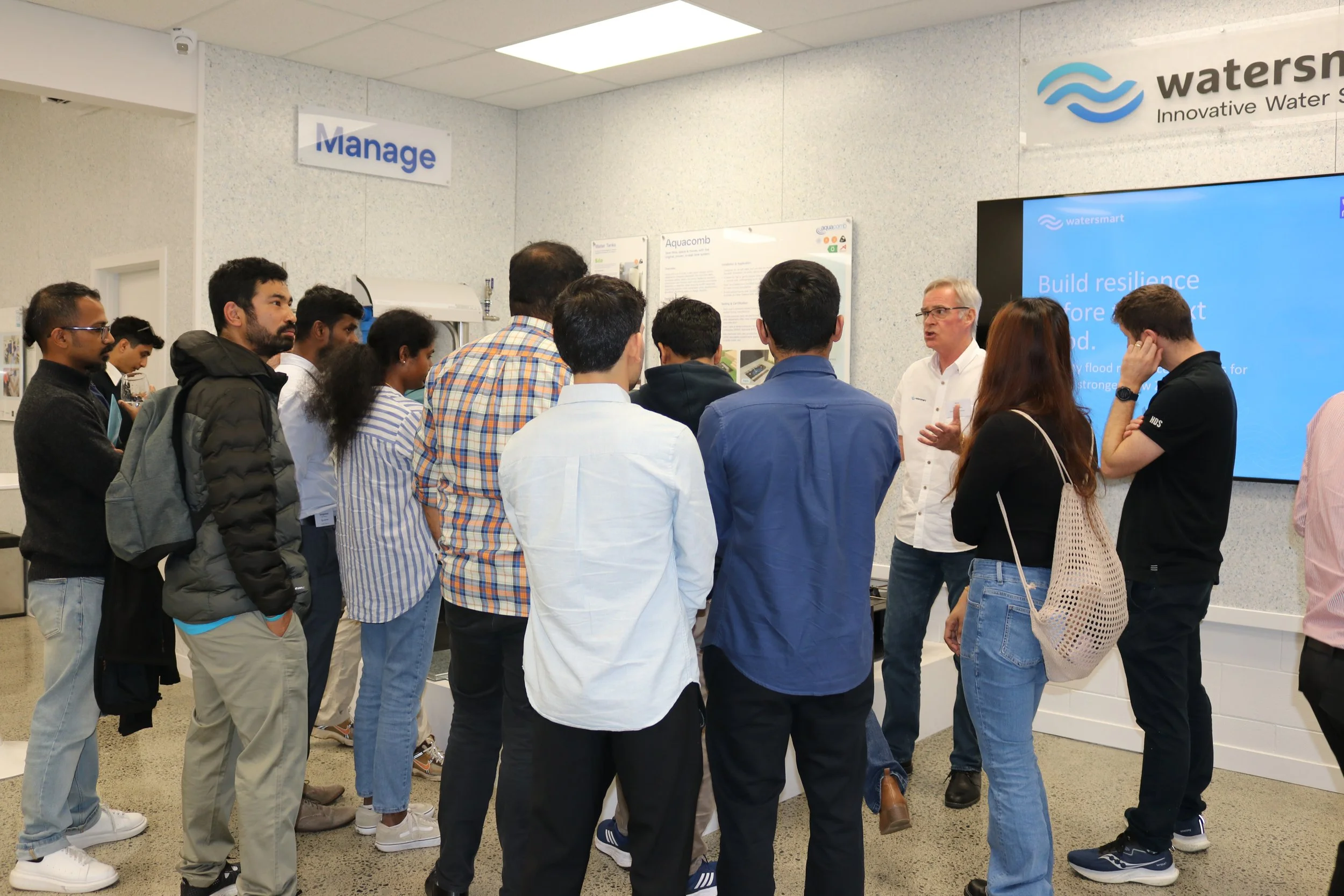
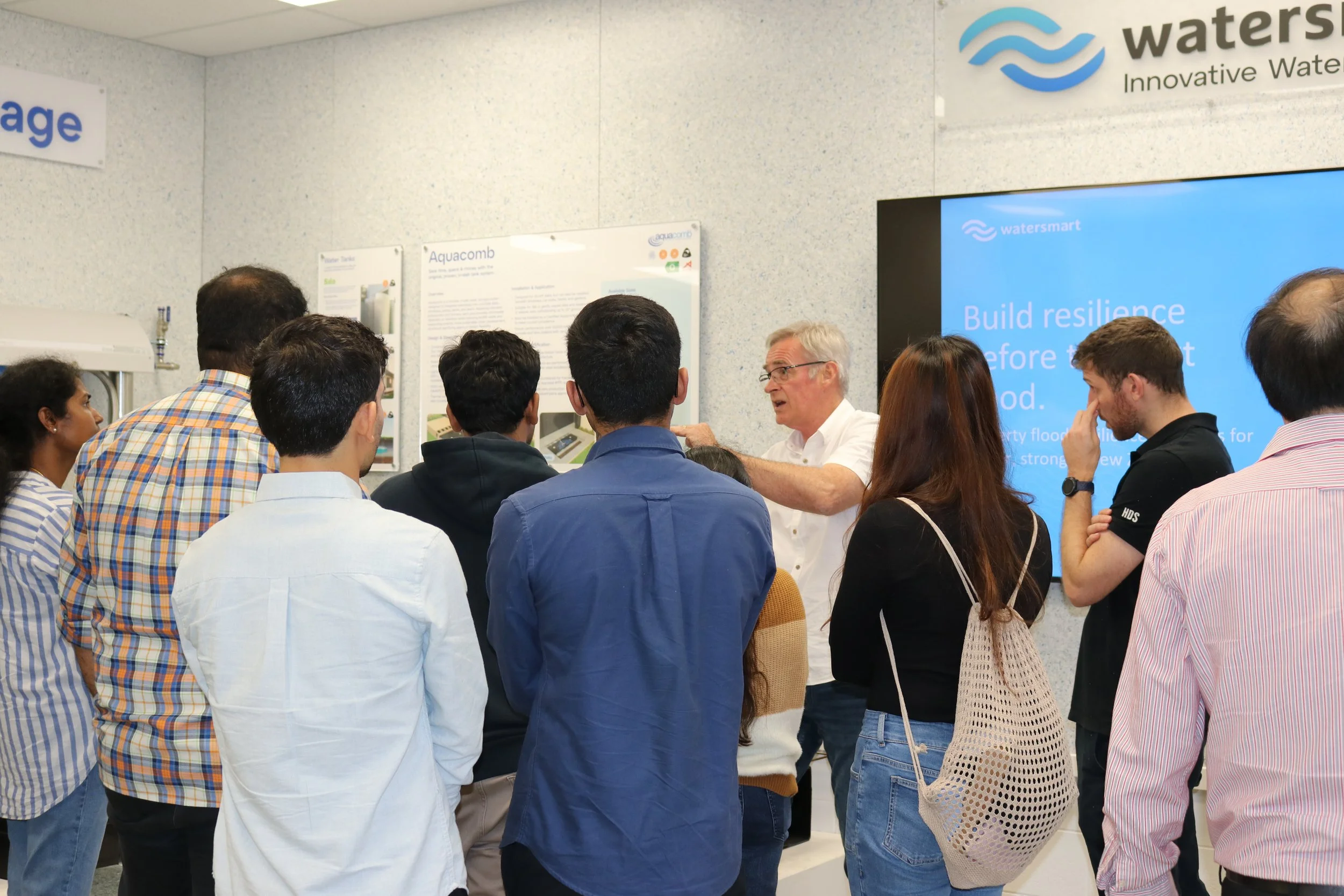
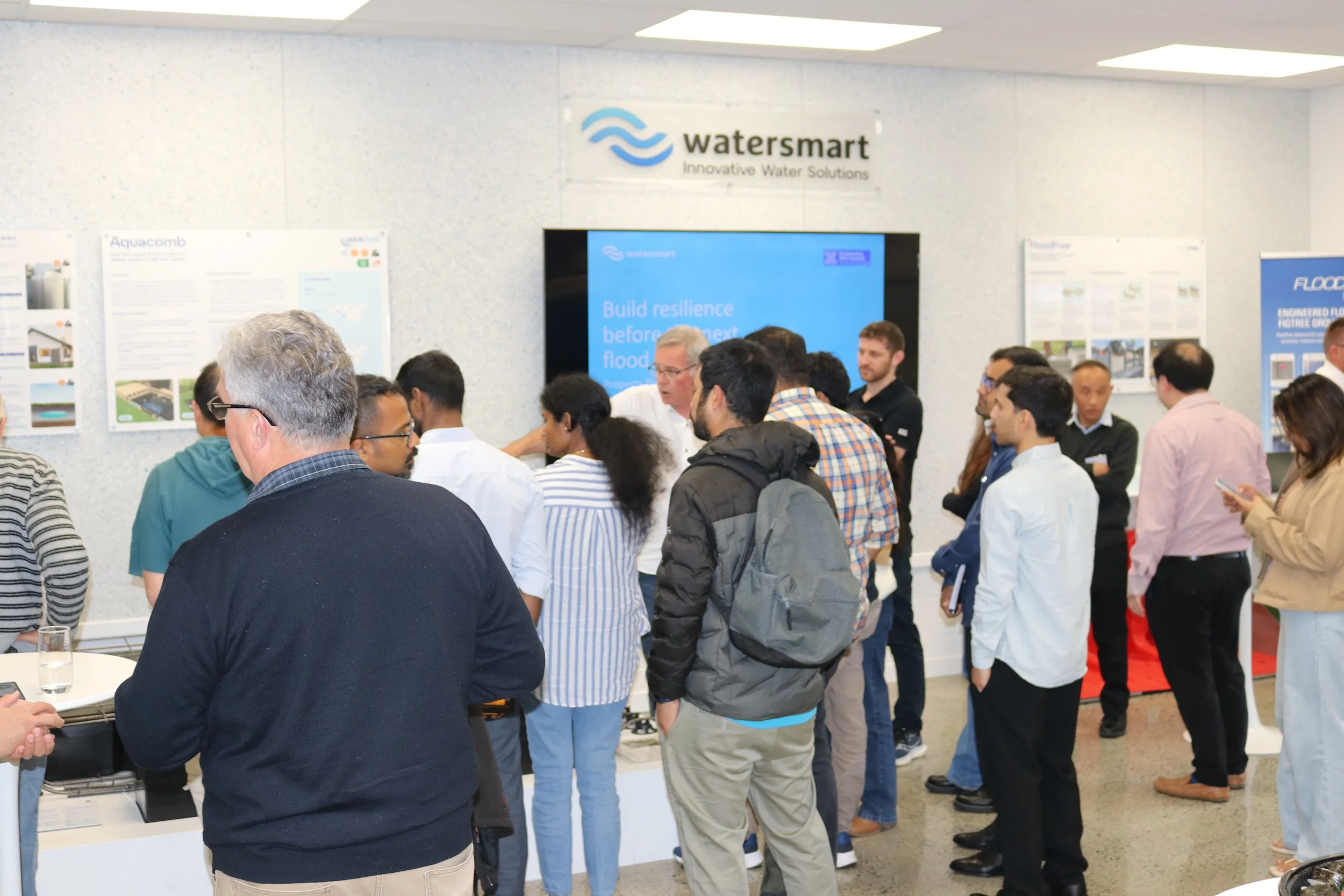
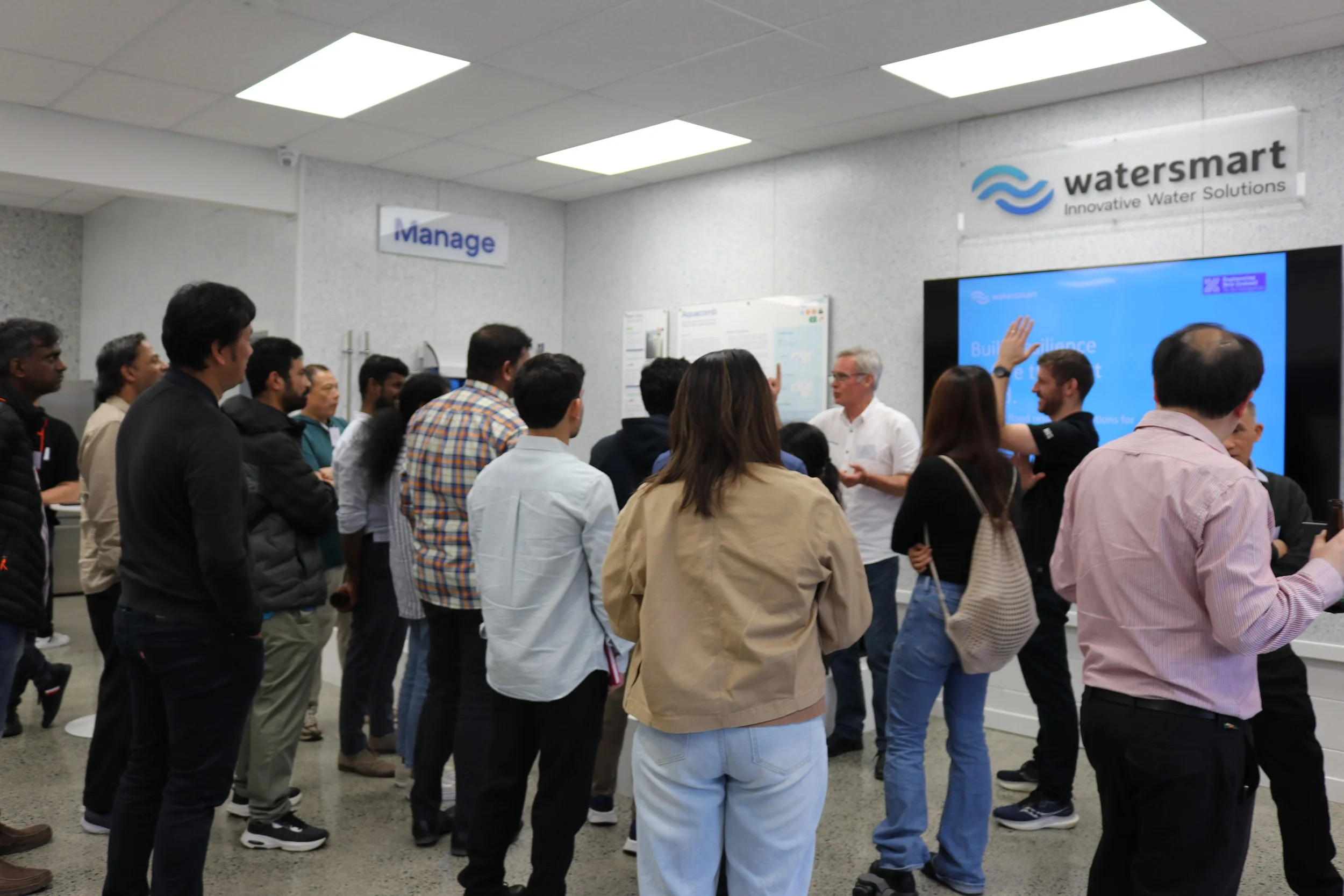
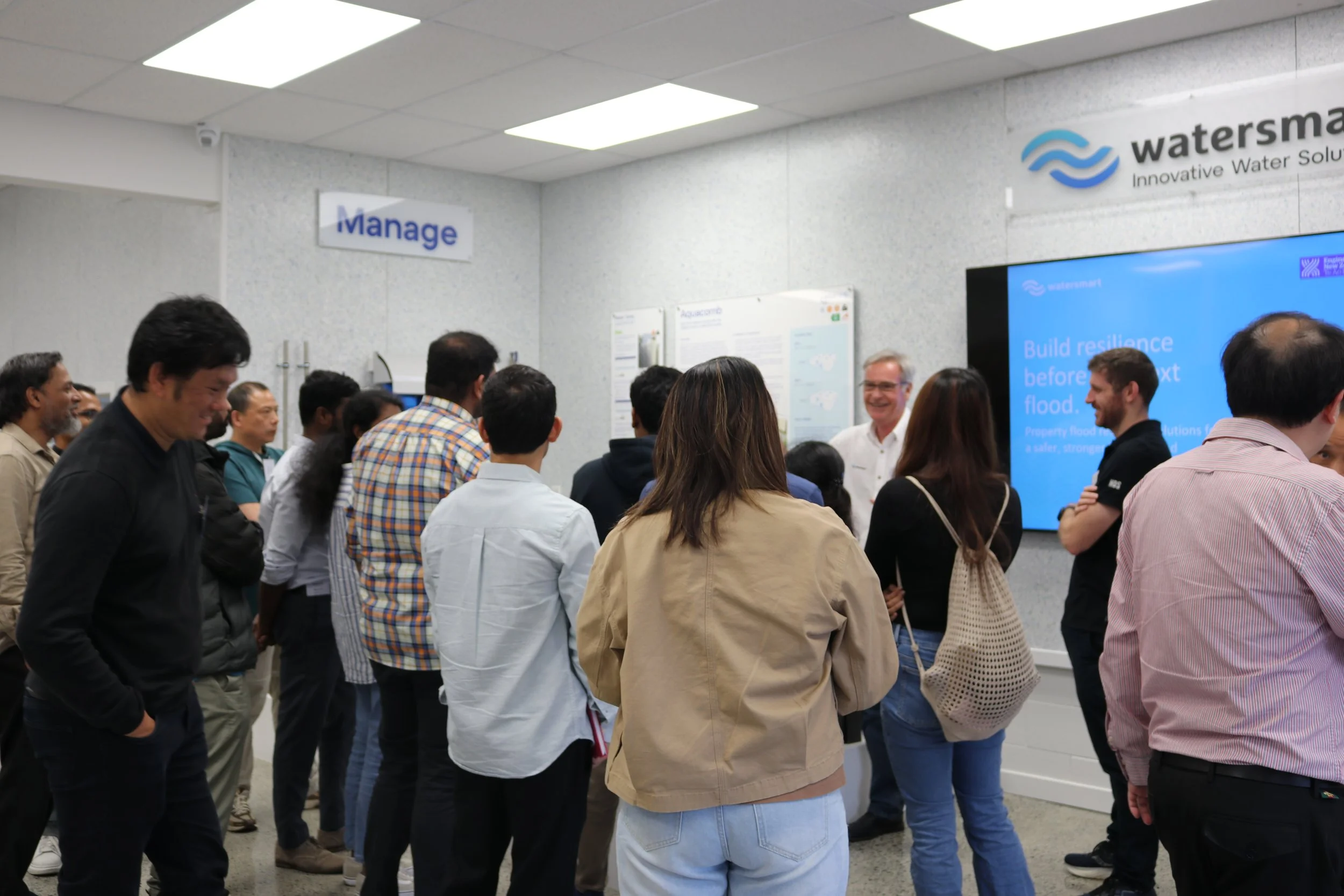
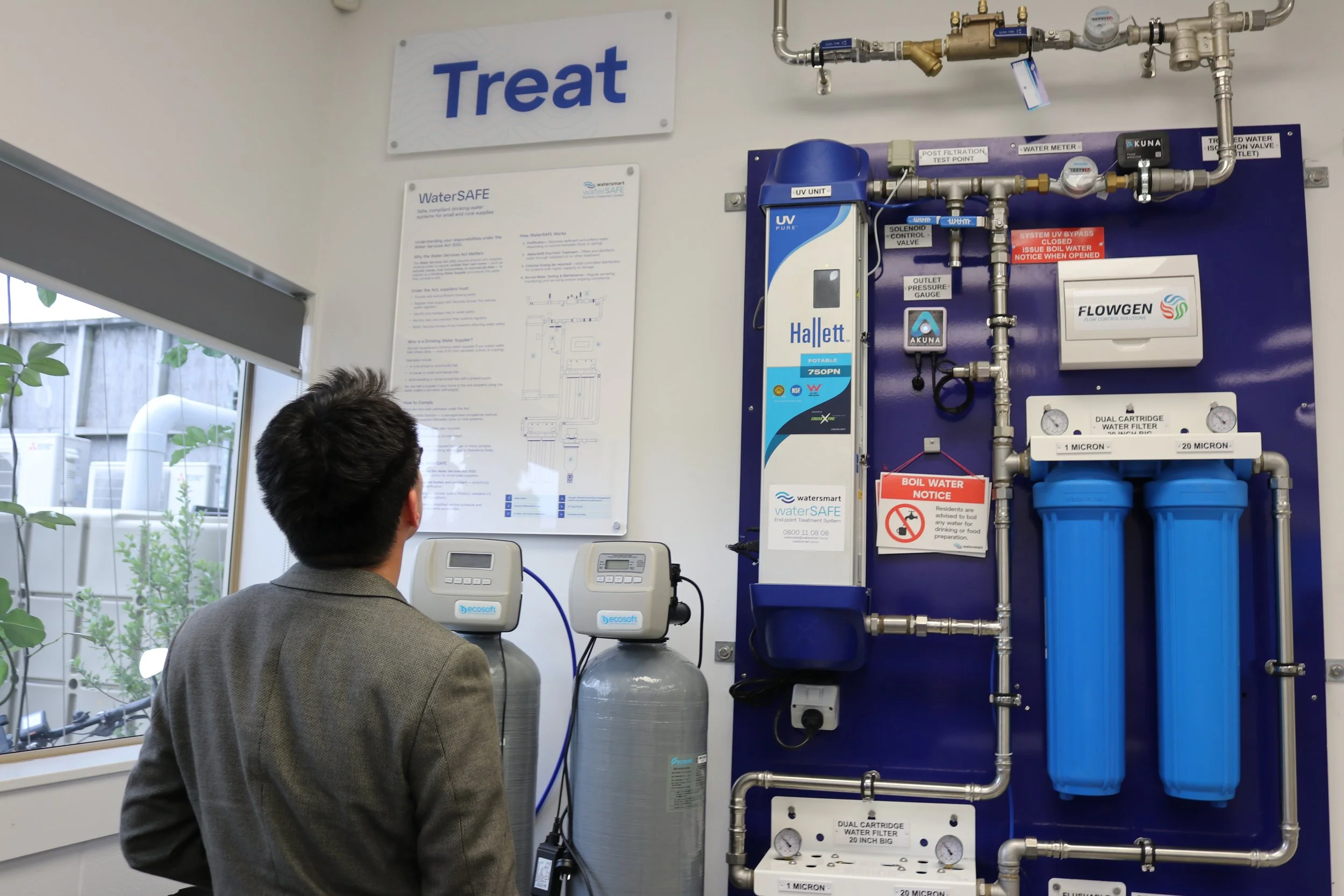
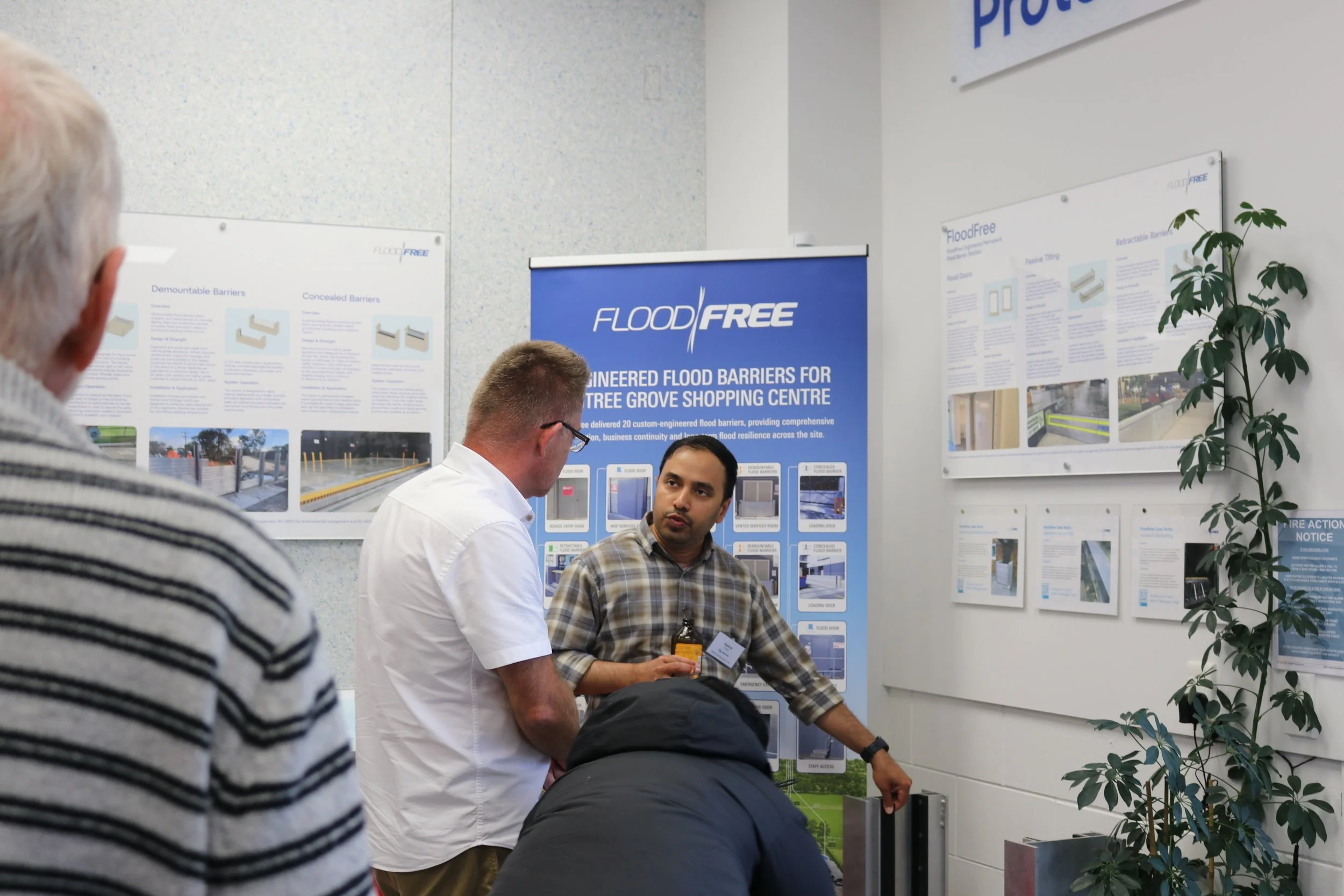
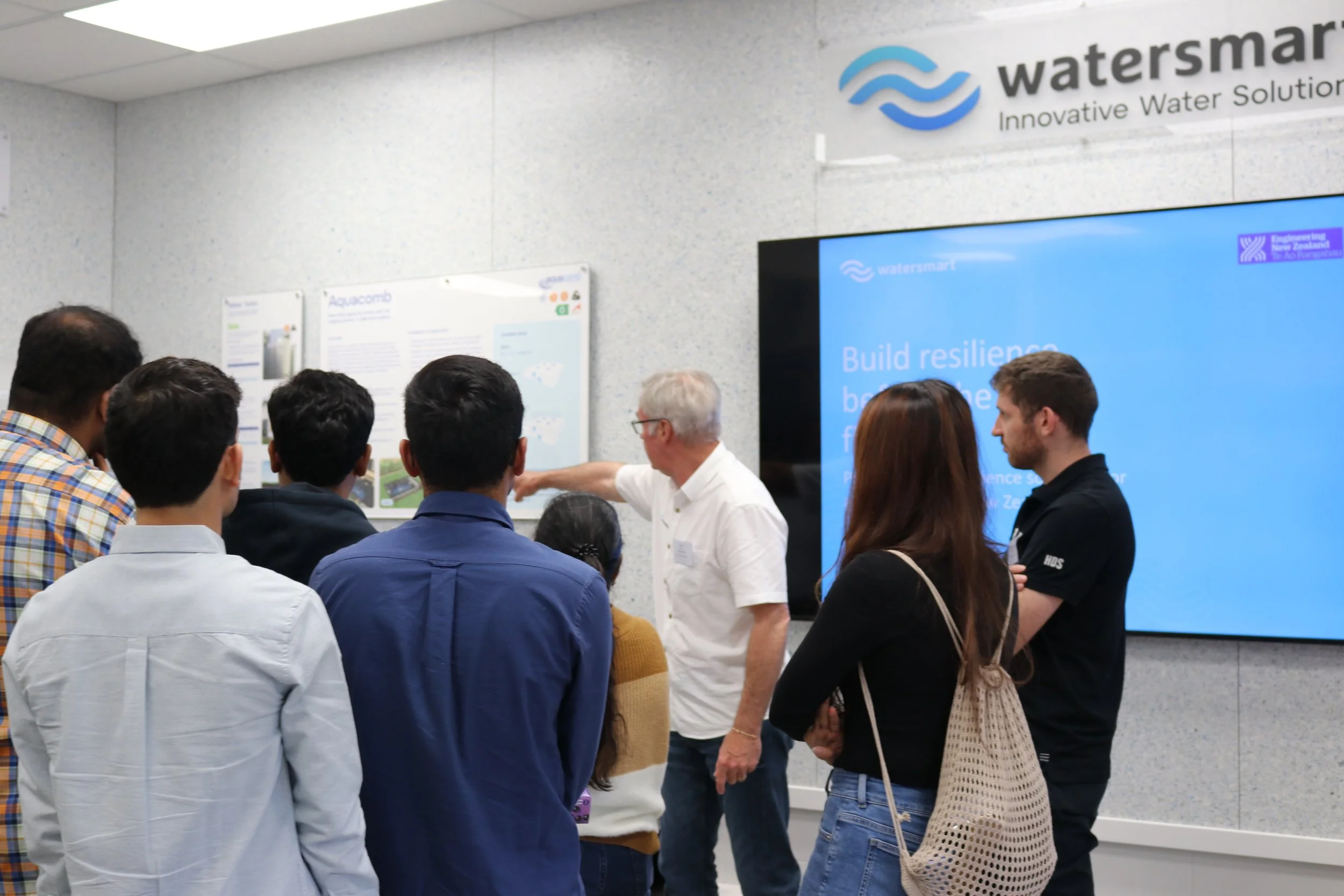
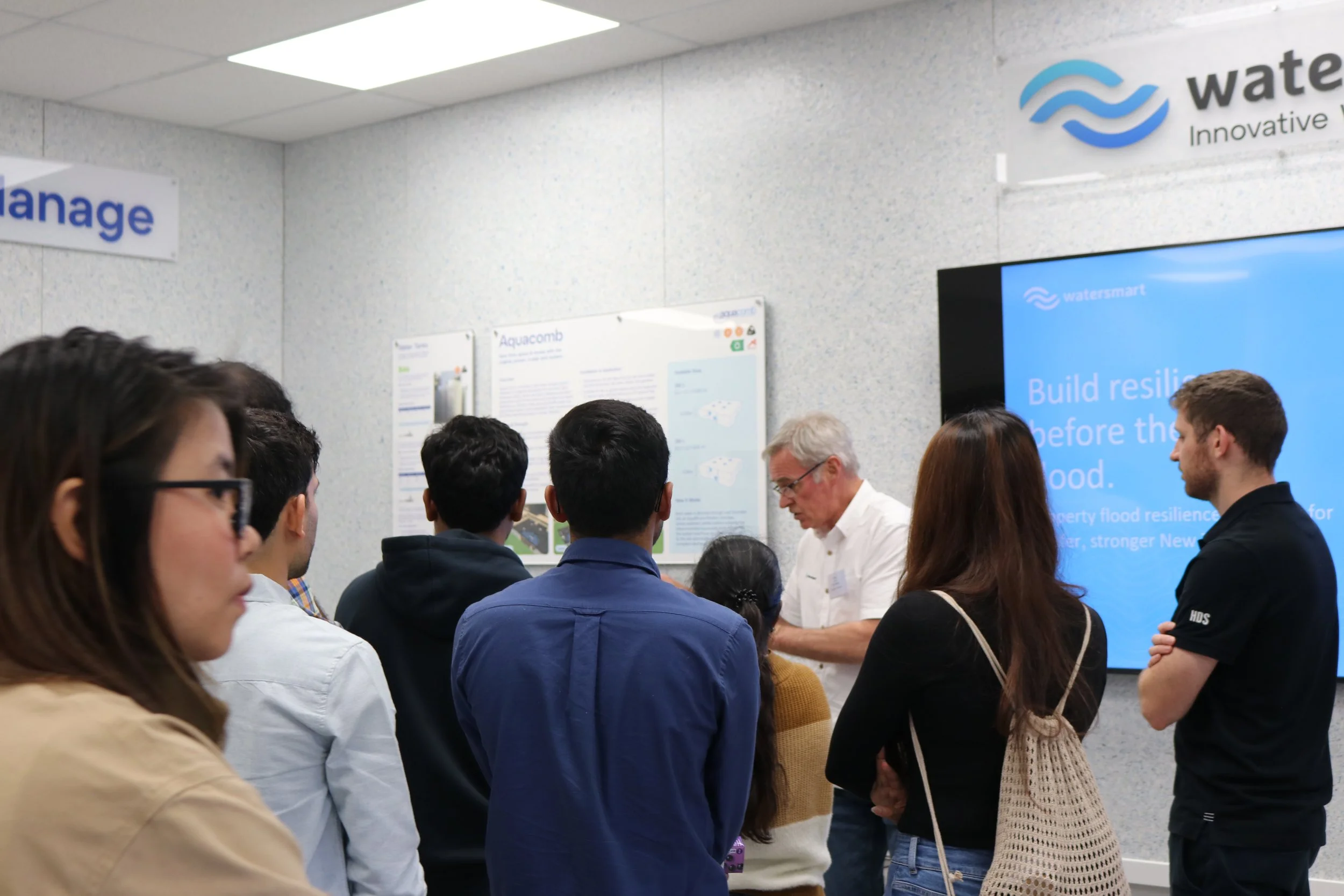
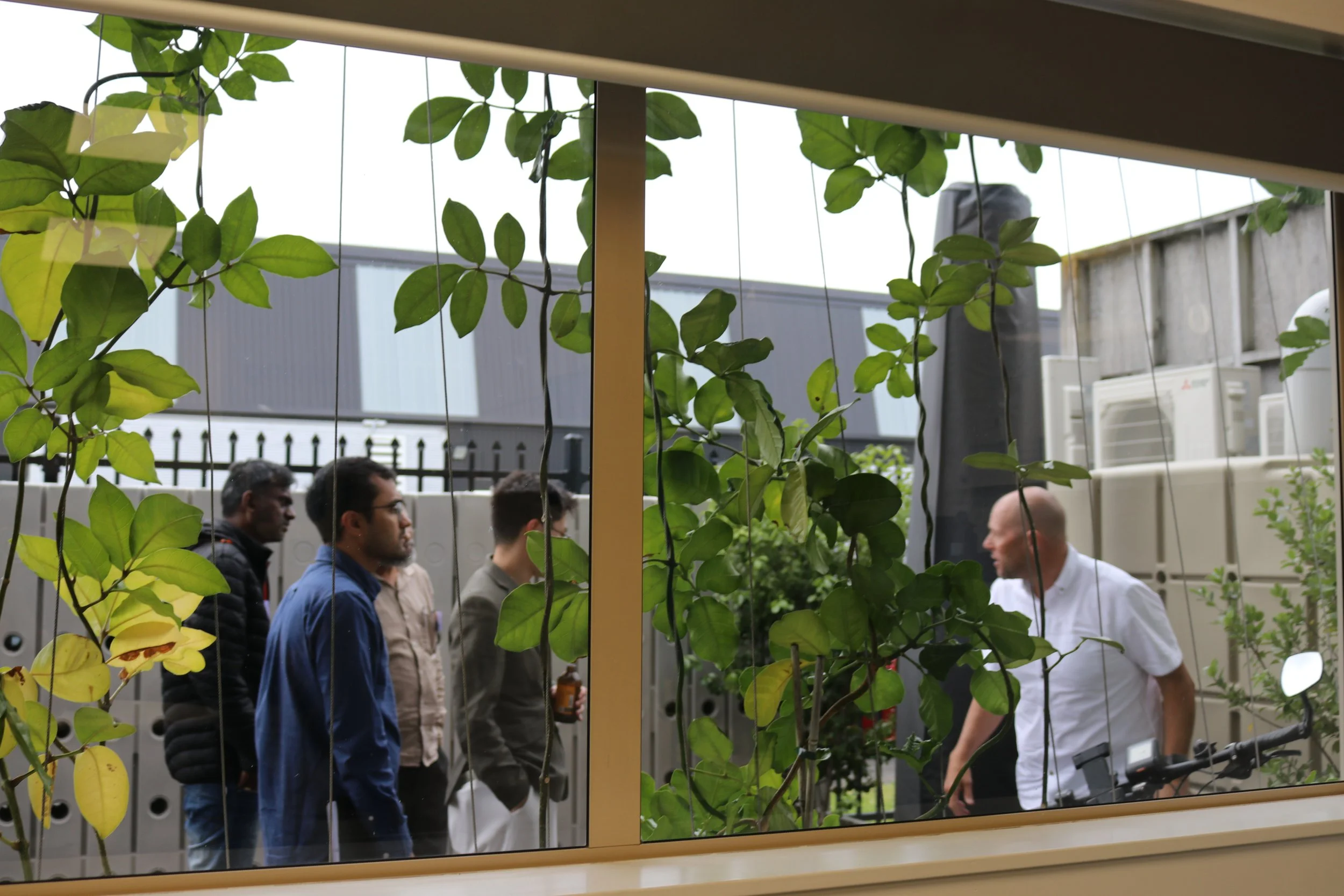
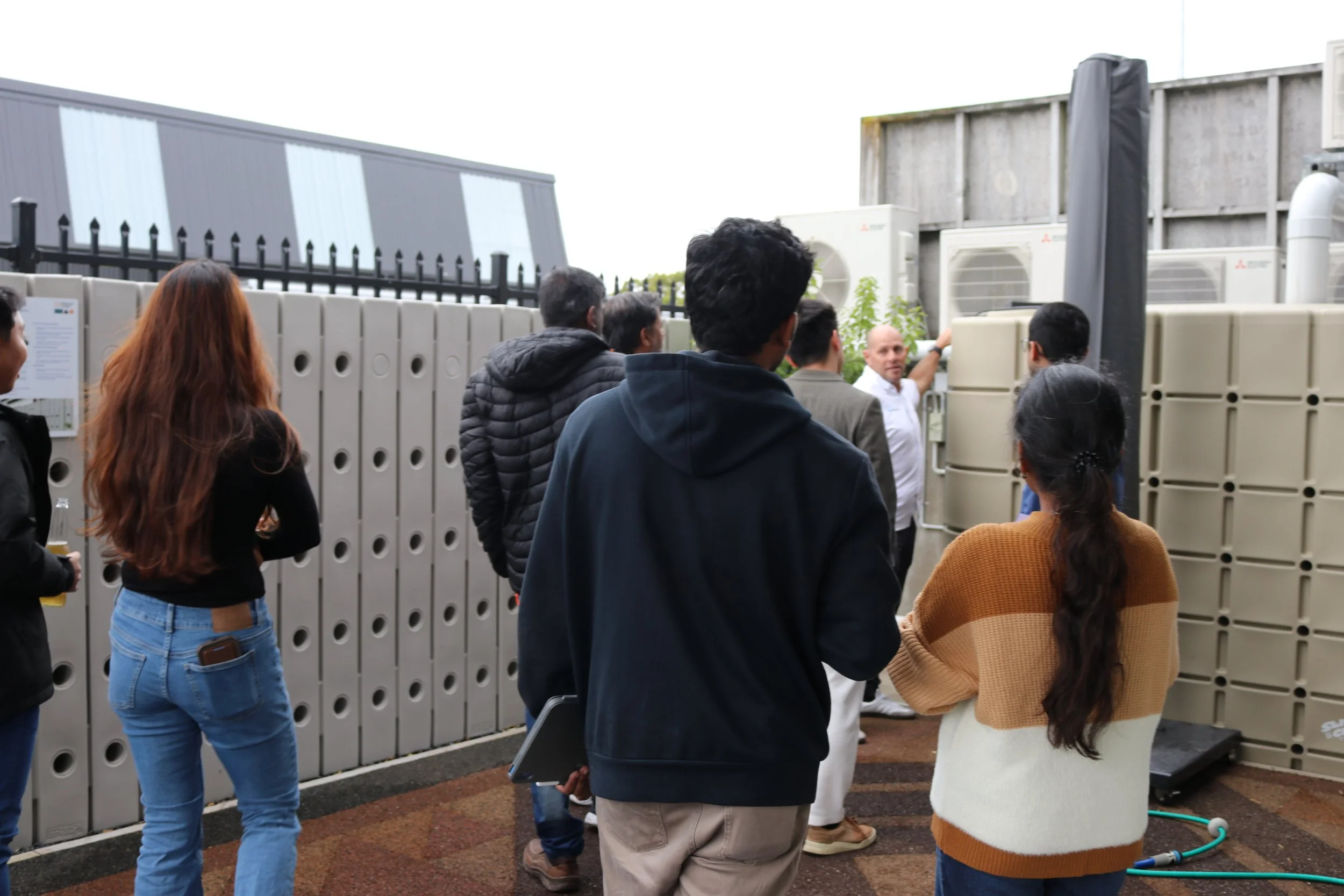
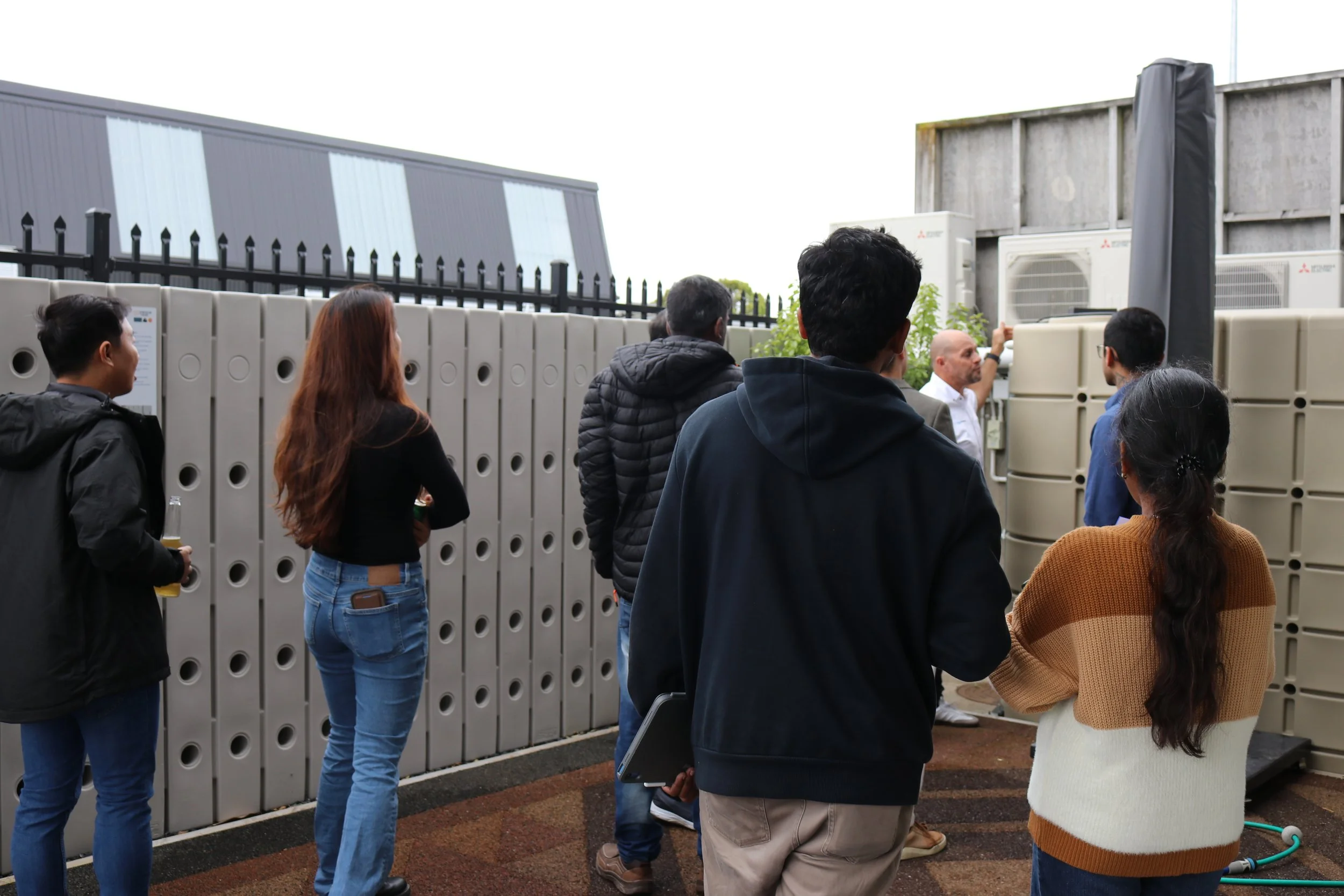
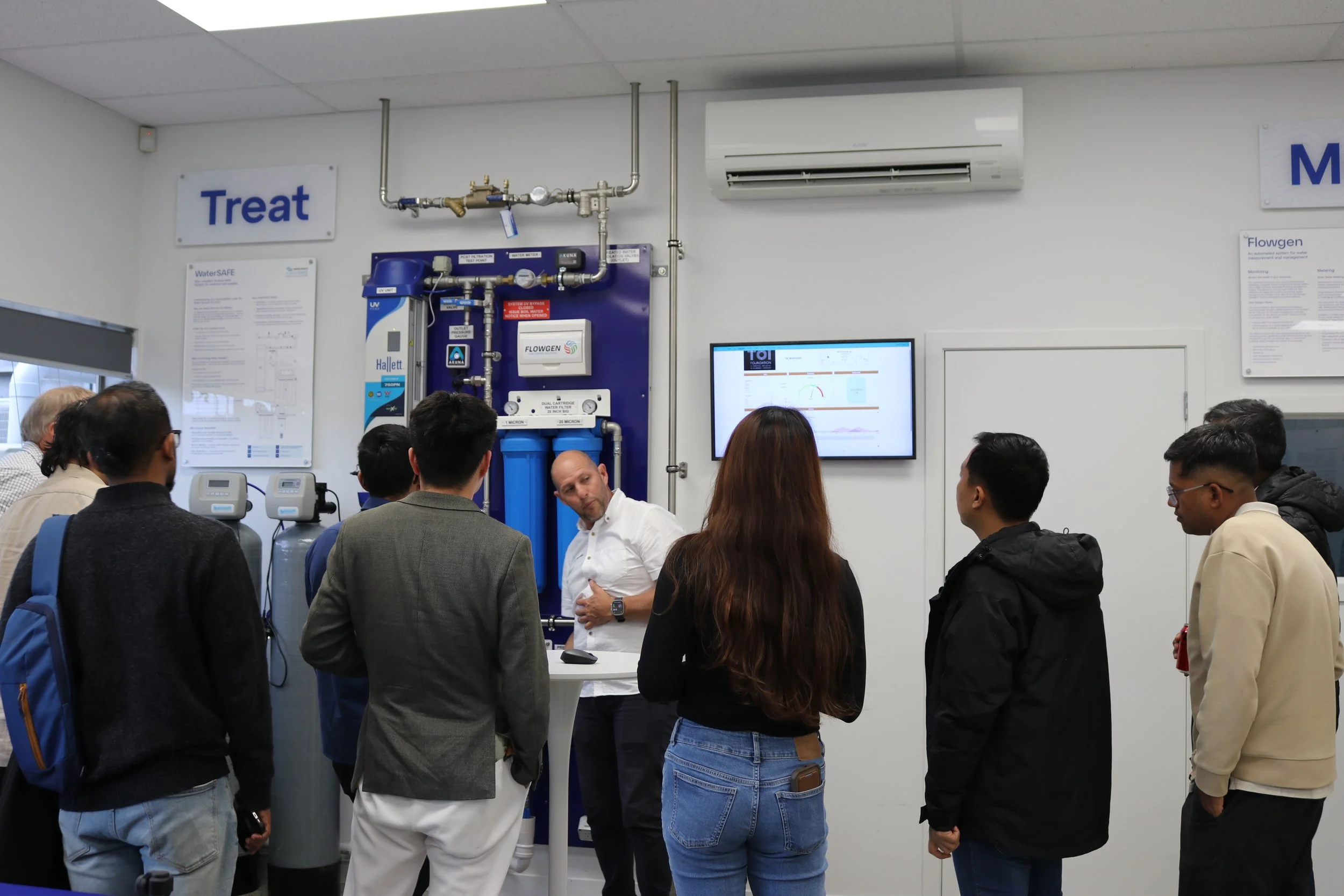
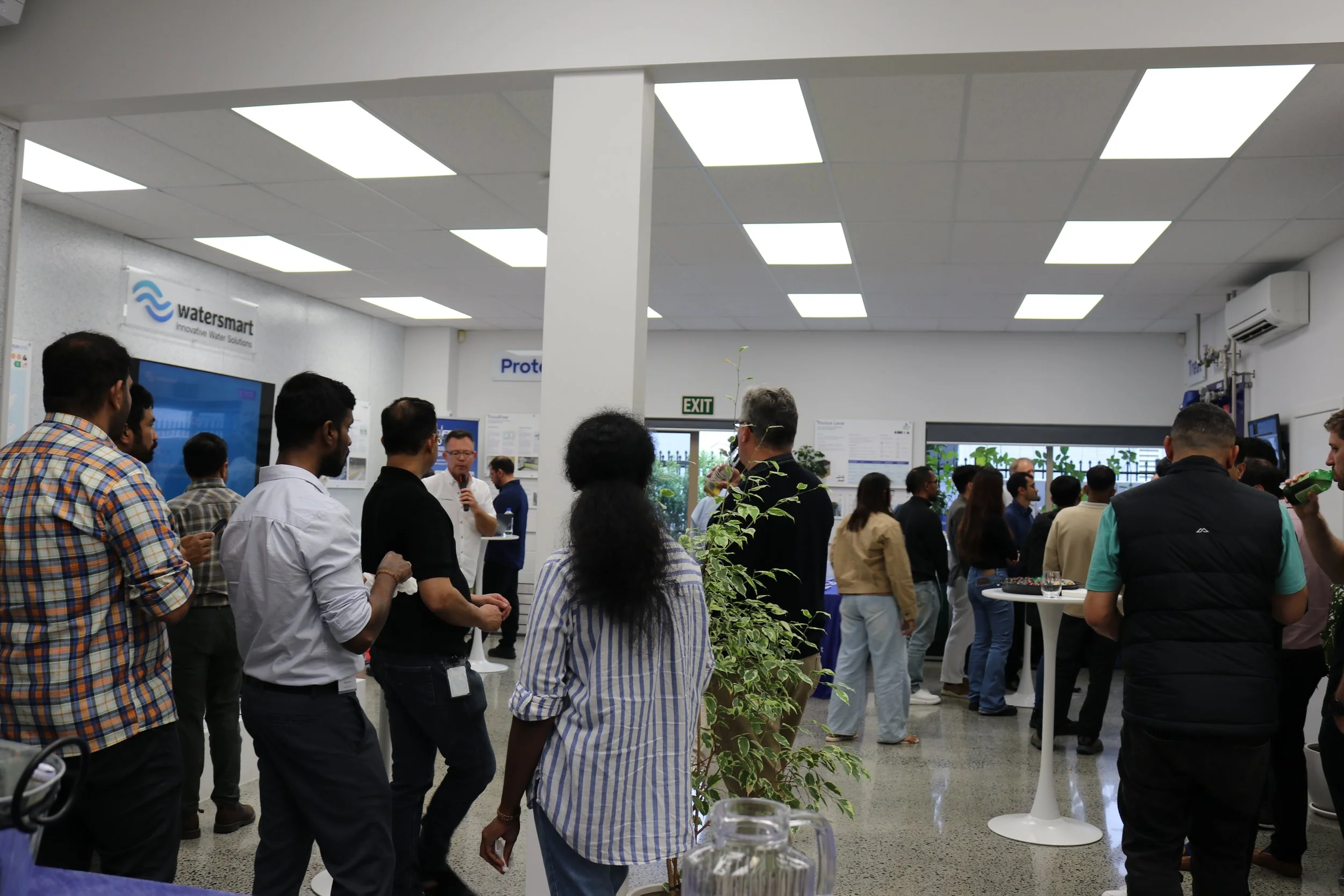
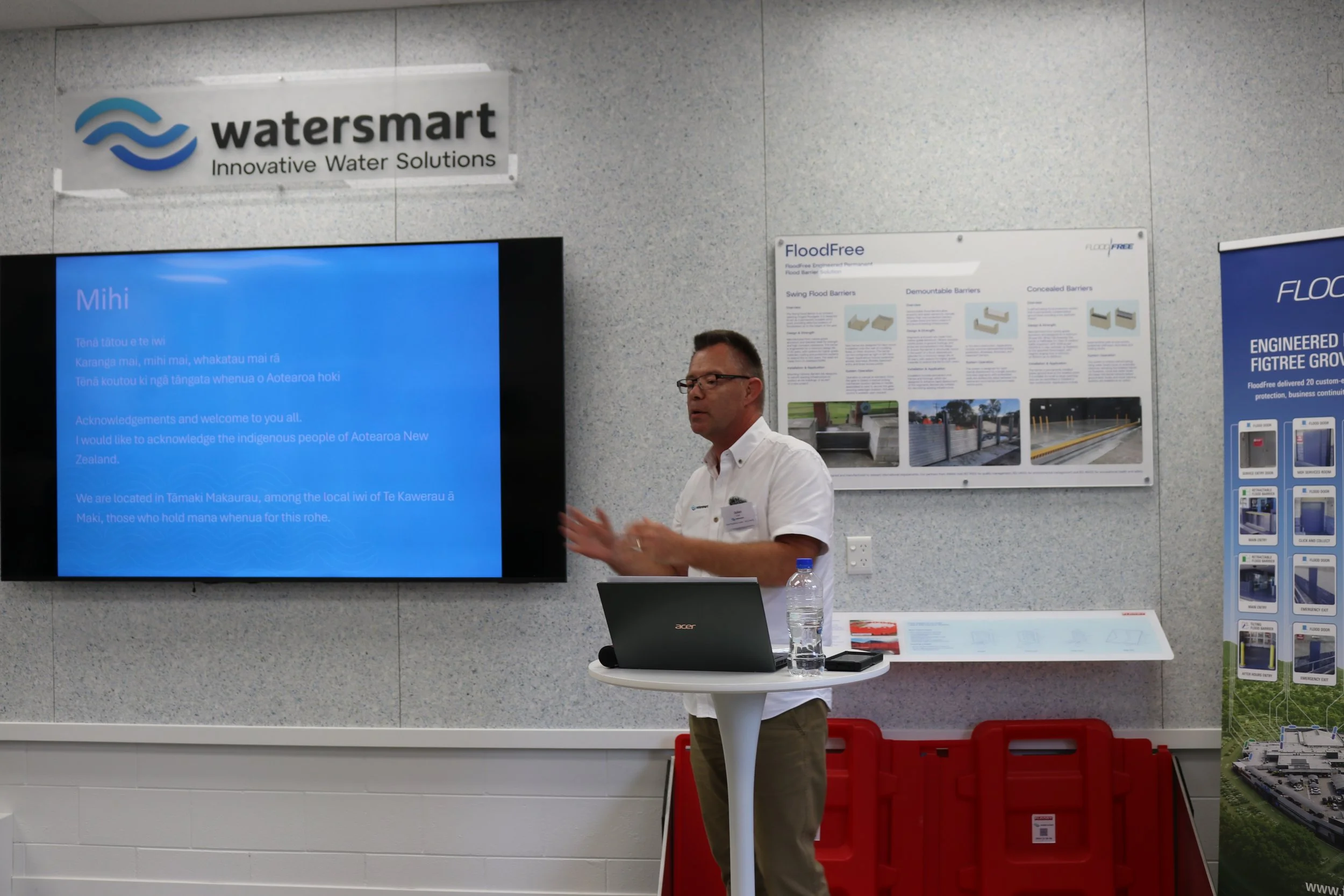
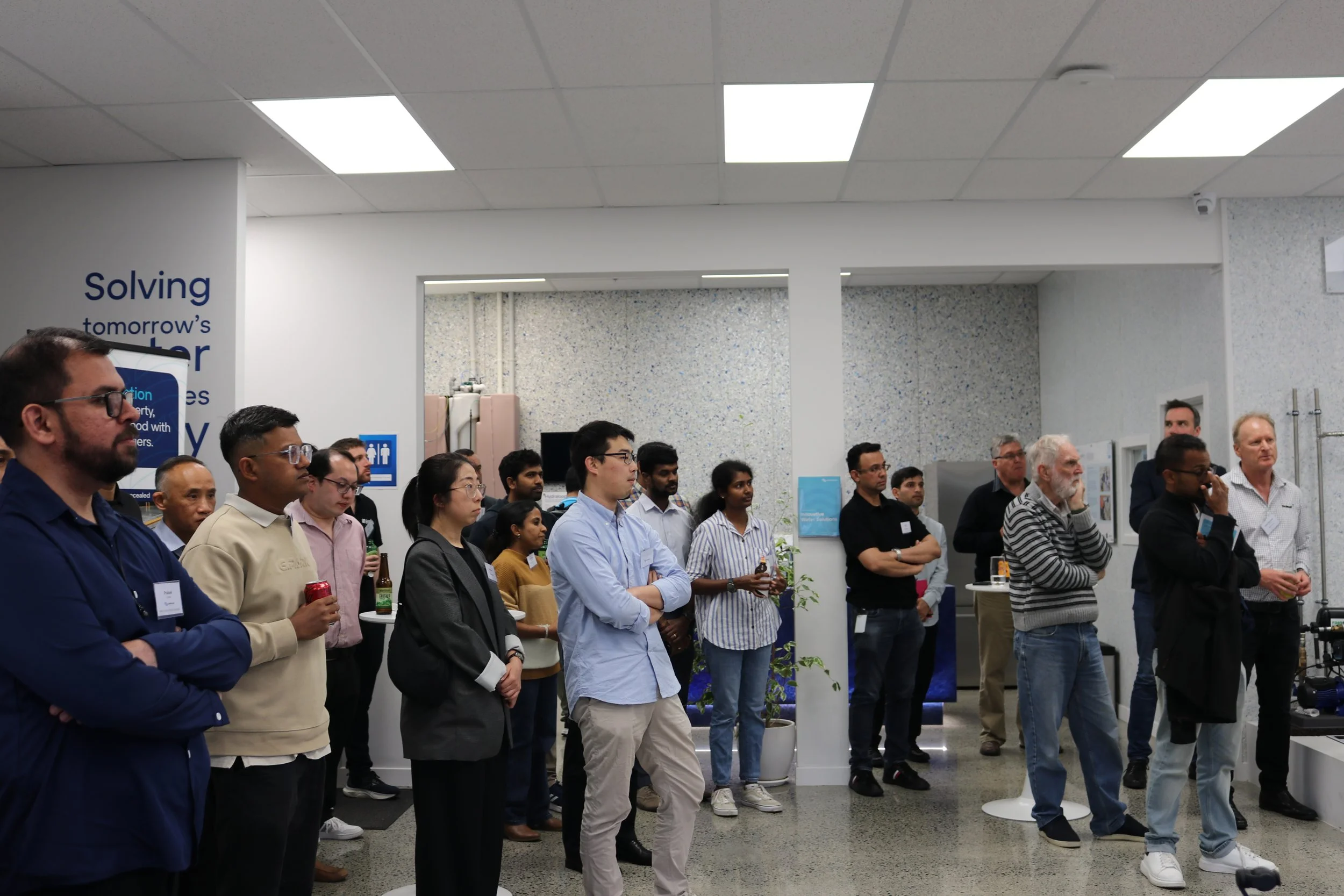
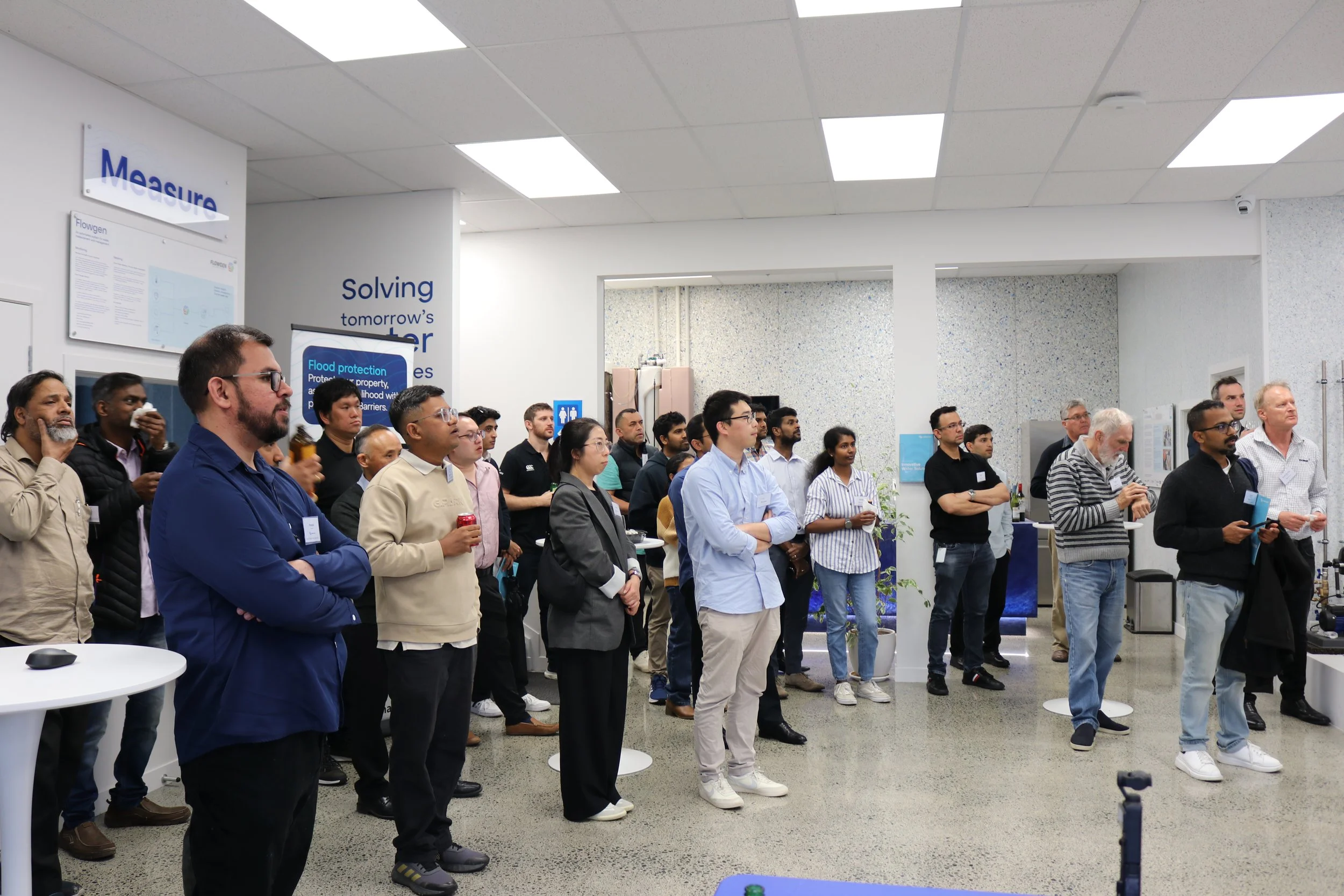
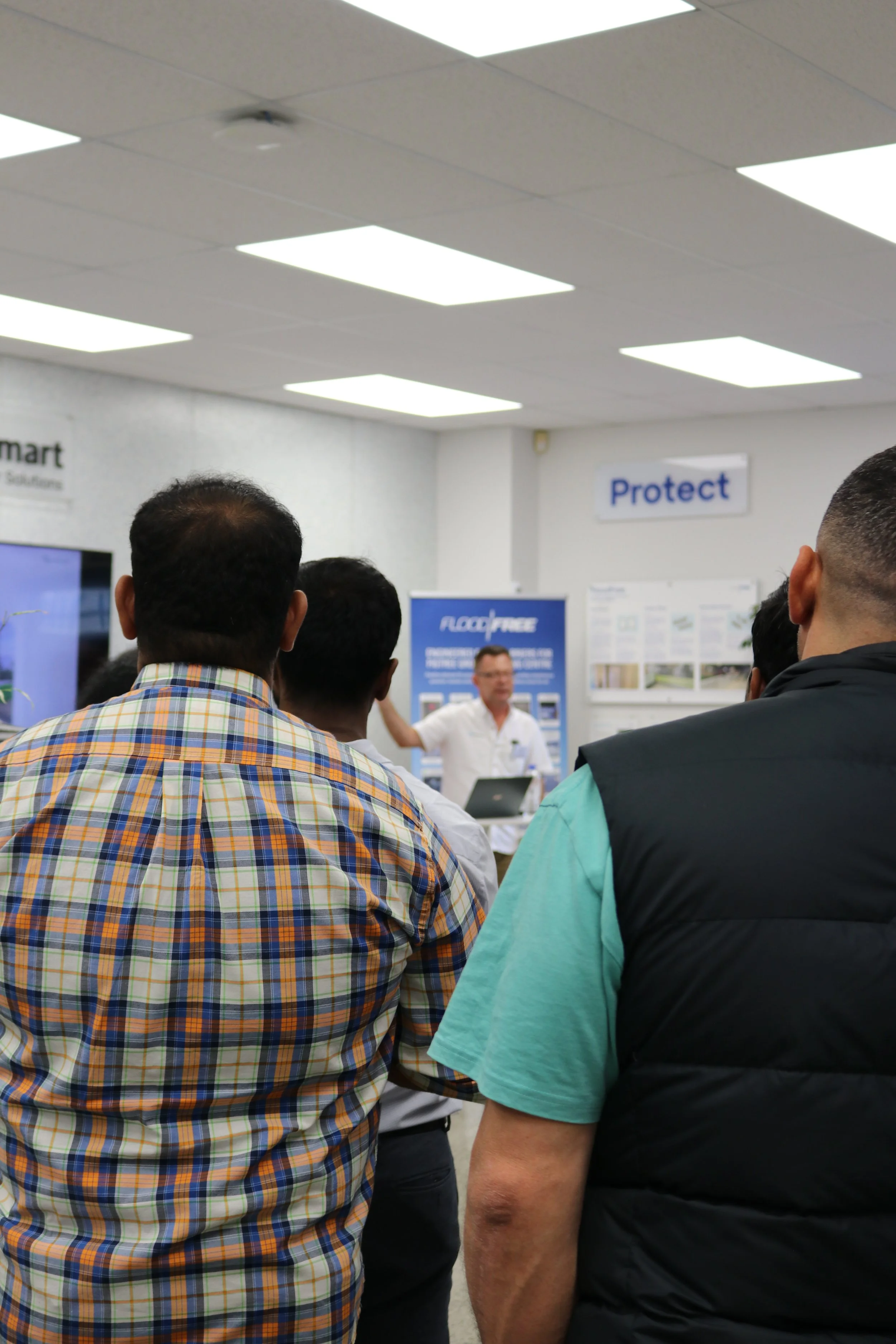

Over four evenings at the Watersmart Innovation Hub, we looked at water from the scale of a whole catchment down to a single building. Our 2026 sessions with Engineering New Zealand covered modern flood defence, how streets and public spaces can help manage stormwater, and how to make room for rainwater harvesting early in a project.
Each session gave us time to get into the practical decisions behind those ideas: where runoff goes, what collected rainwater could be used for, and what makes a flood protection measure suitable for a particular site.
Modern flood defence and resilient communities
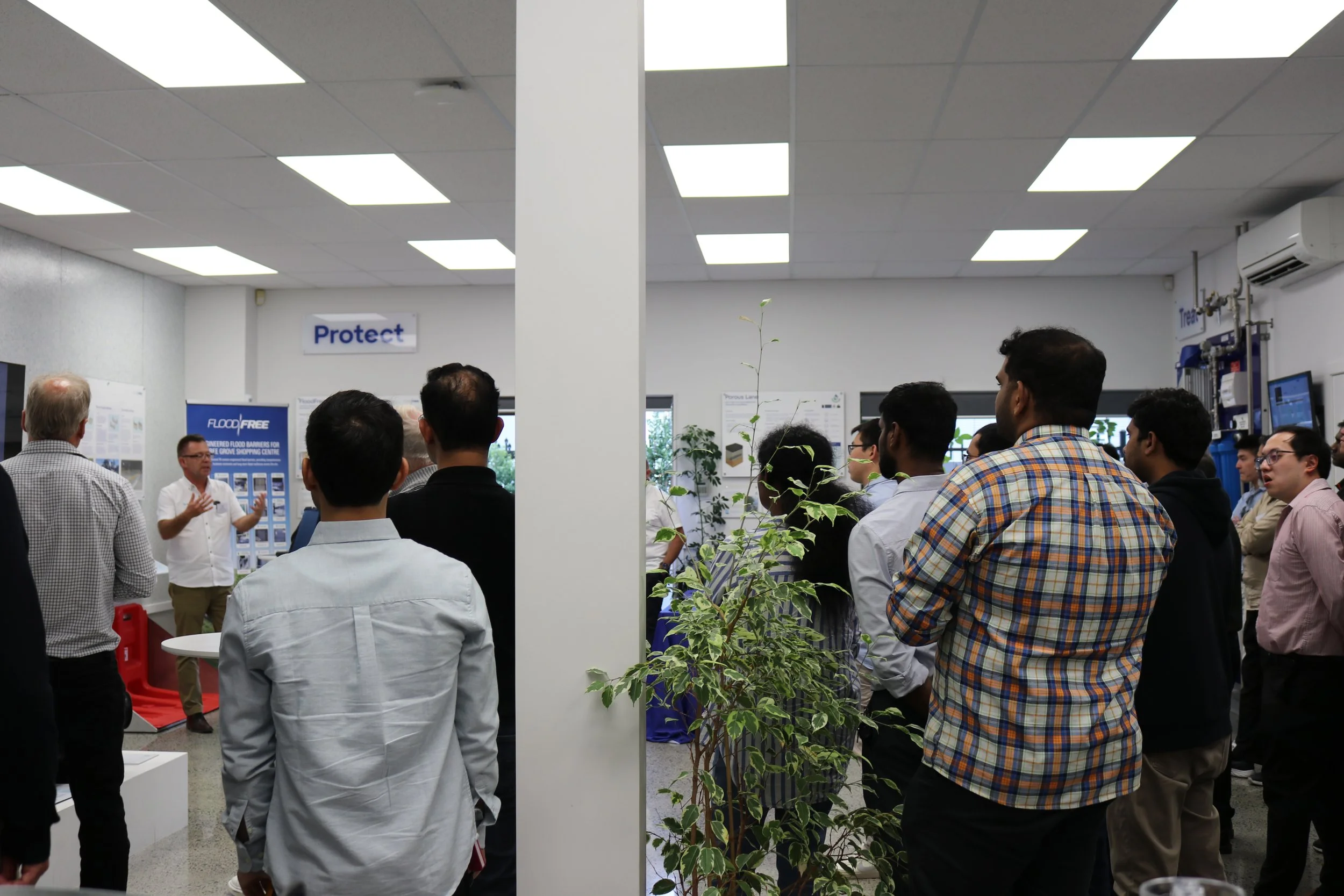
In May, we welcomed Engineering New Zealand members to the Hub for a conversation about modern flood defence and building more resilient communities. We looked at flood resilience at a community scale, where homes, businesses, roads and public spaces can all be affected by the same event. That wider view helps put decisions about protecting individual properties in context.
Designing sponge cities
In June, Watersmart, Engineering New Zealand and industry experts explored how sponge city design and permeable surfacing can help manage stormwater across Aotearoa.
A footpath or car park is an everyday example. Permeable paving allows rainwater to pass through the surface, and what happens next depends on how the pavement is designed and the conditions beneath it. Looking at those surfaces as part of a wider catchment helps explain how decisions on individual sites can affect where runoff goes and where there’s room to slow it down.
Making room for rainwater harvesting
In July, we focused on rainwater harvesting as part of resilient building design. Bringing it into the design conversation early gives project teams time to work out what the water could be used for, how much space is available for storage and how the system would fit with the building and its services.
On a tight site, finding room for storage can influence the layout. It’s a practical example of how considering water early can give a team more options to work with.
Flood protection in practice
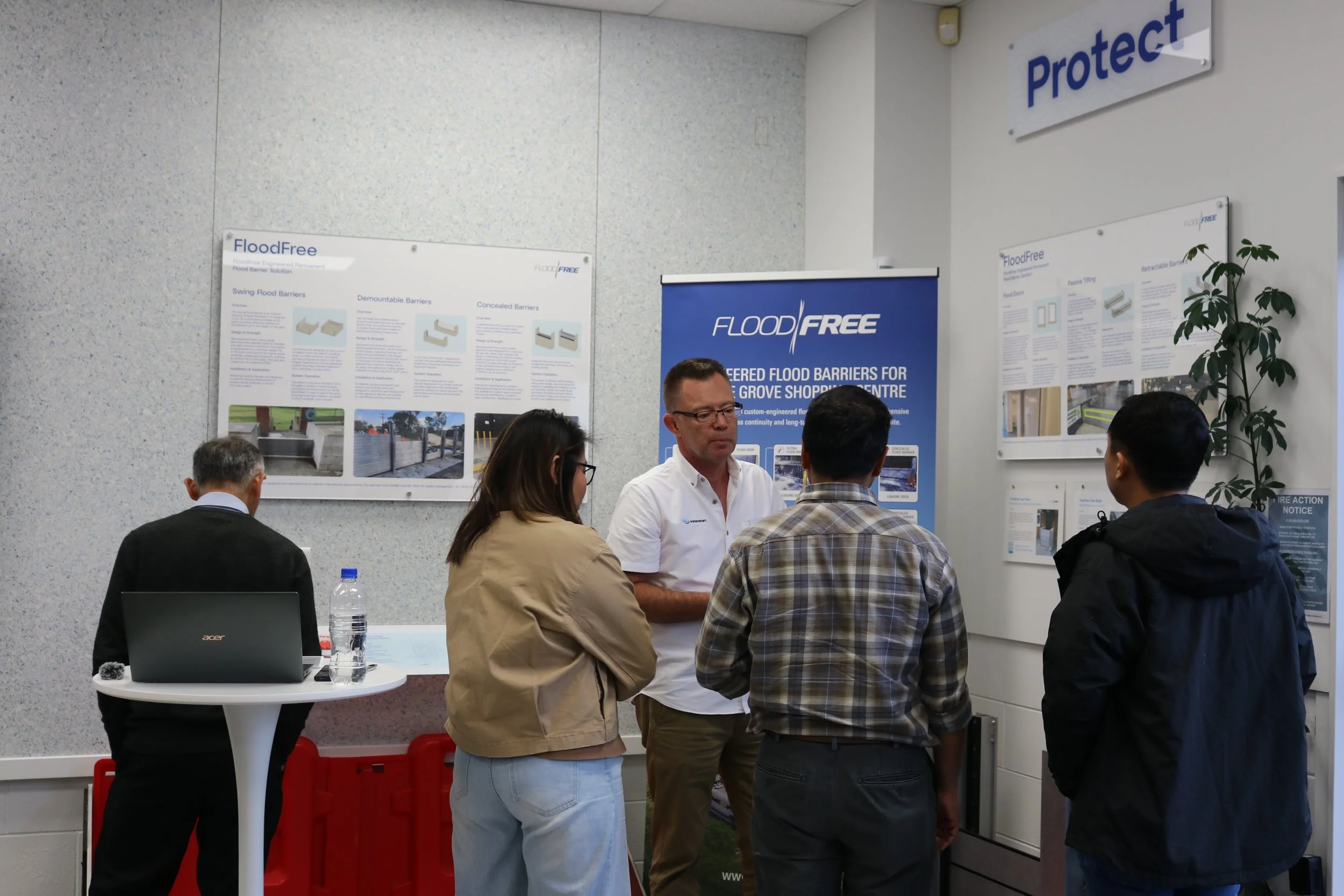
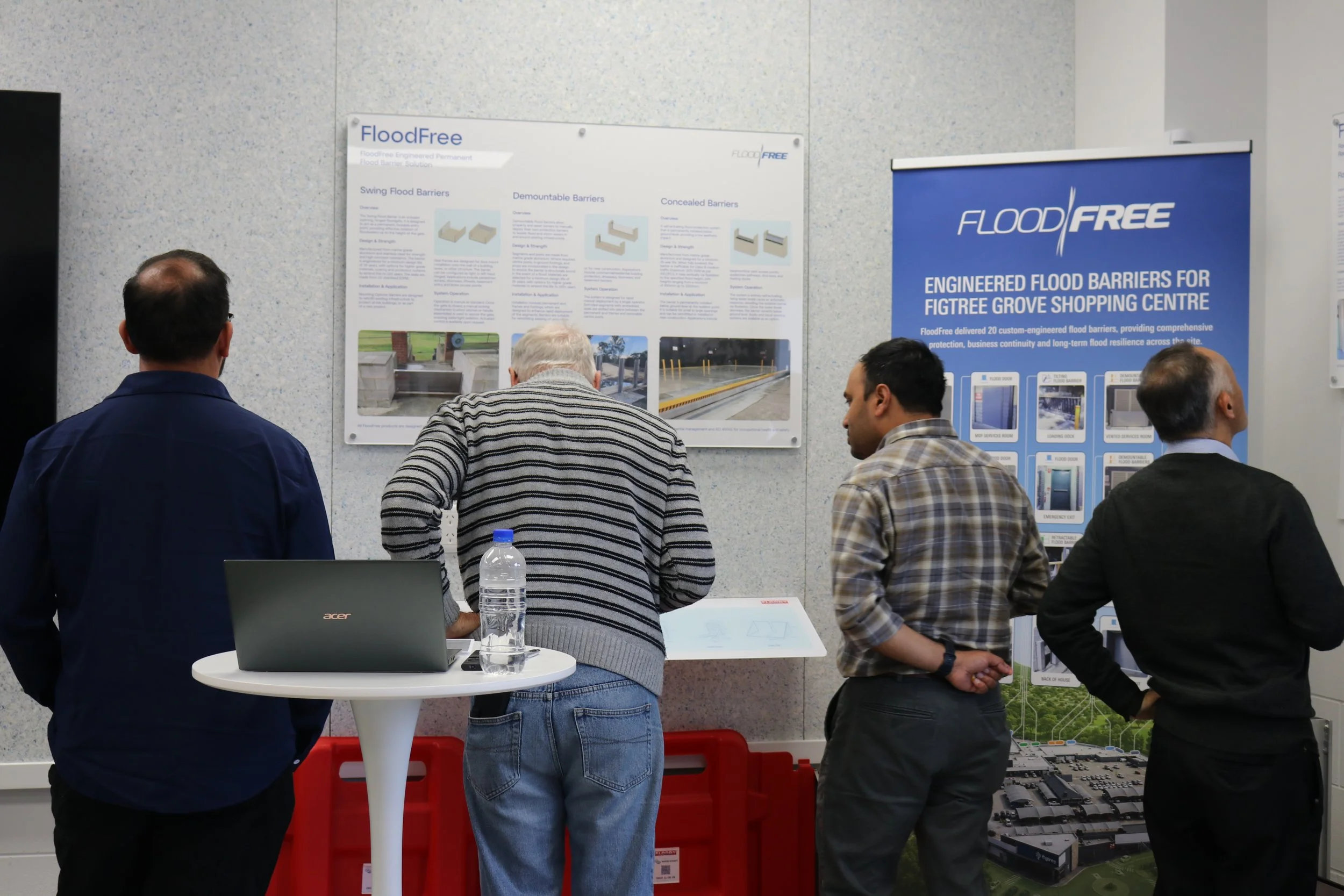
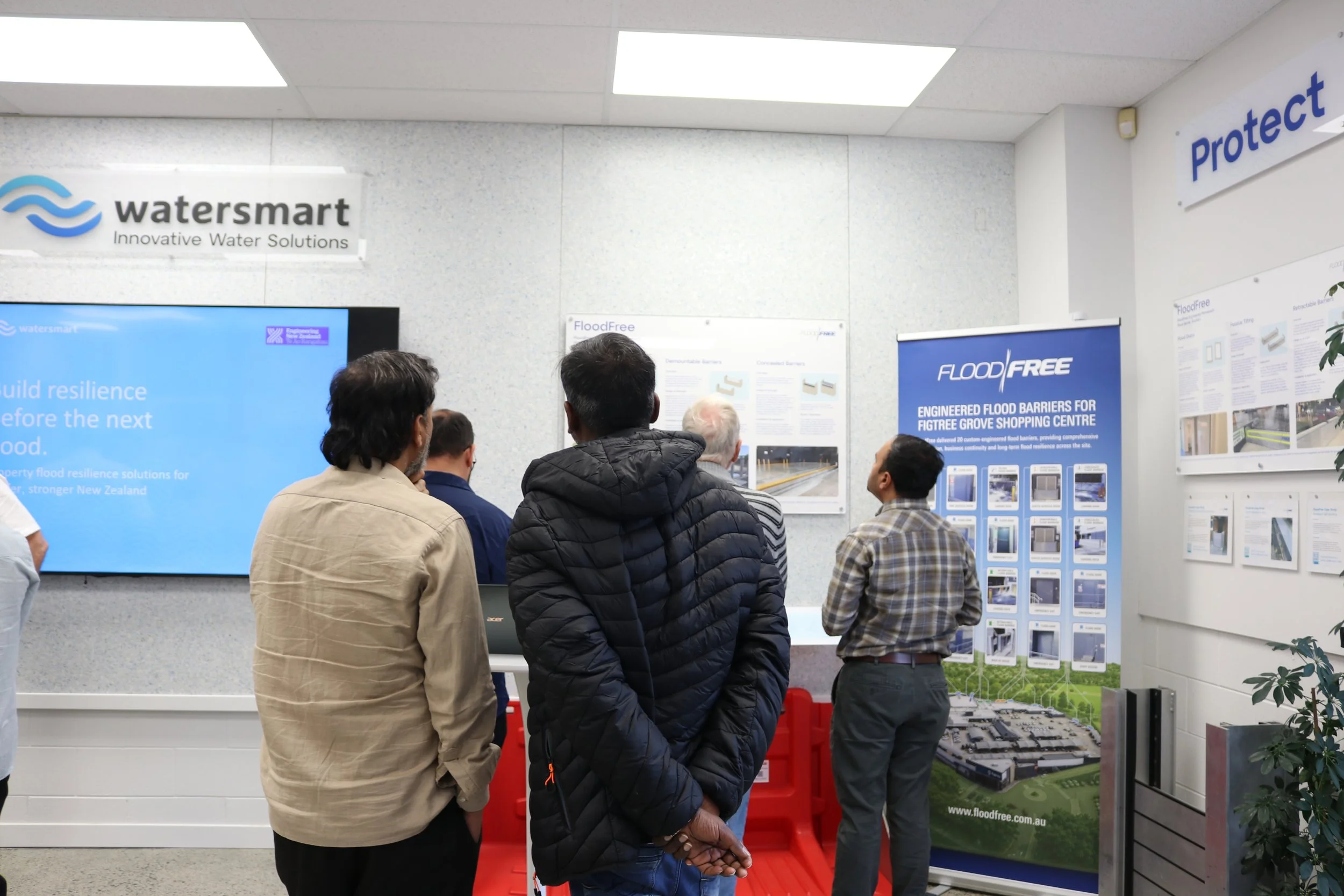
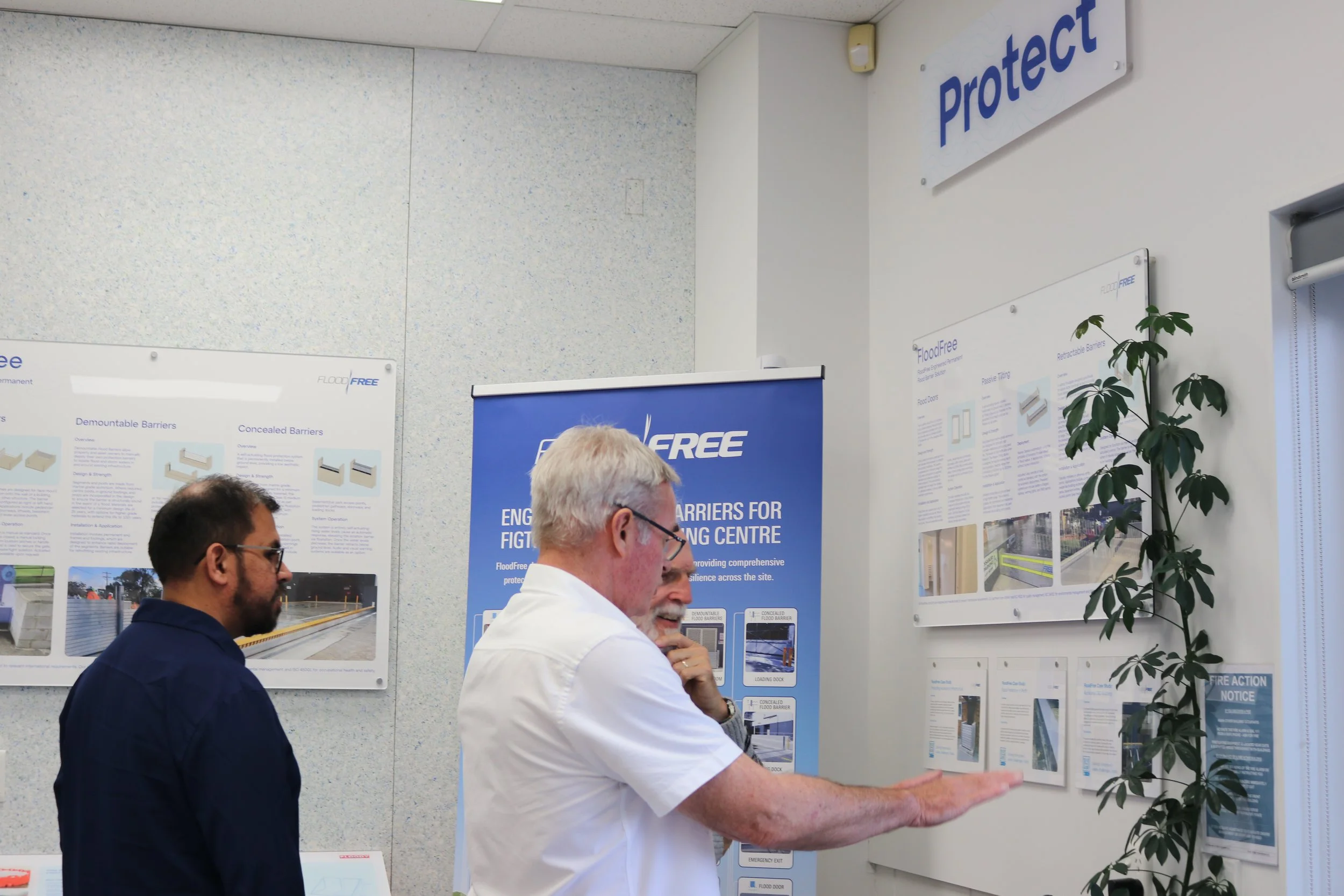
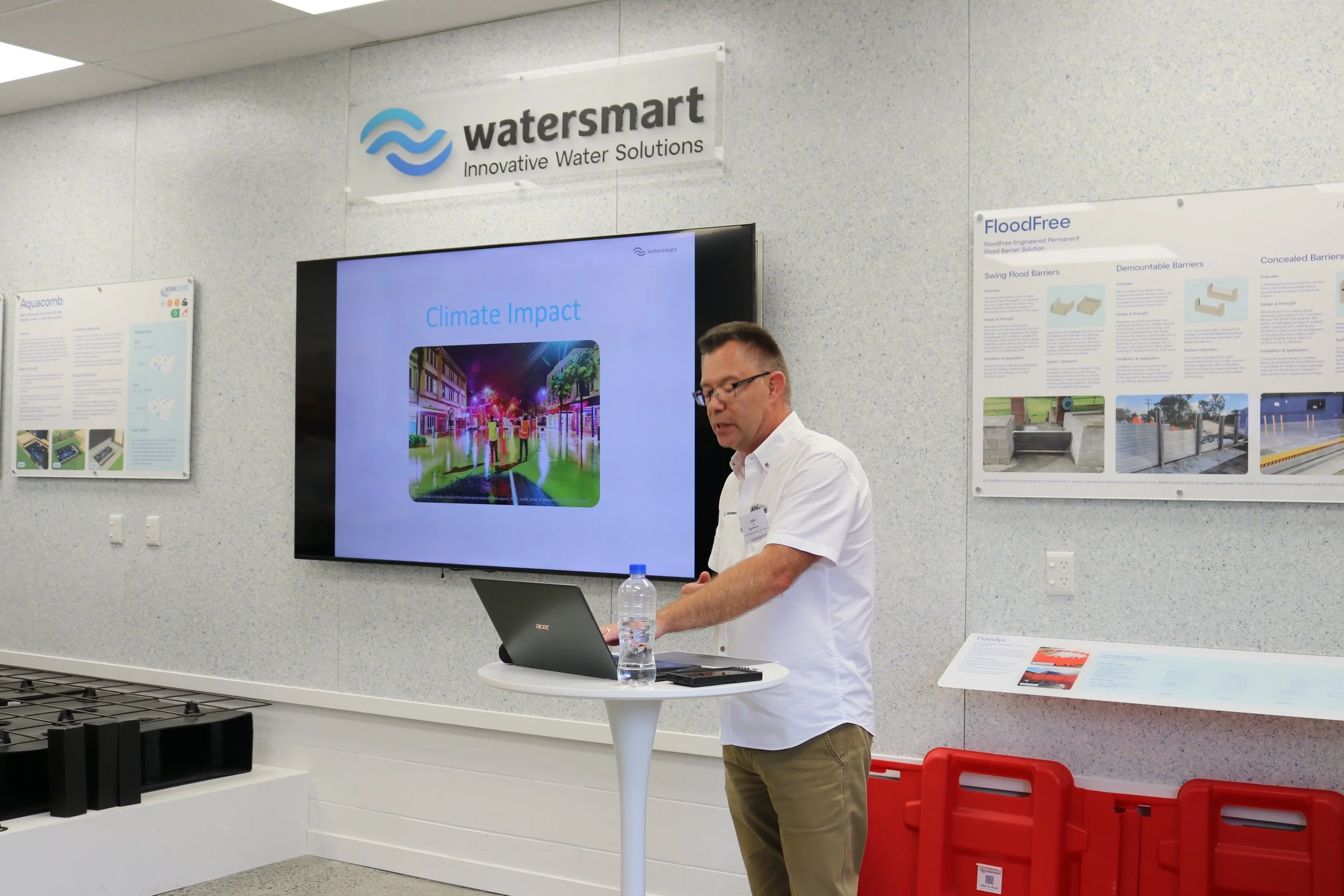
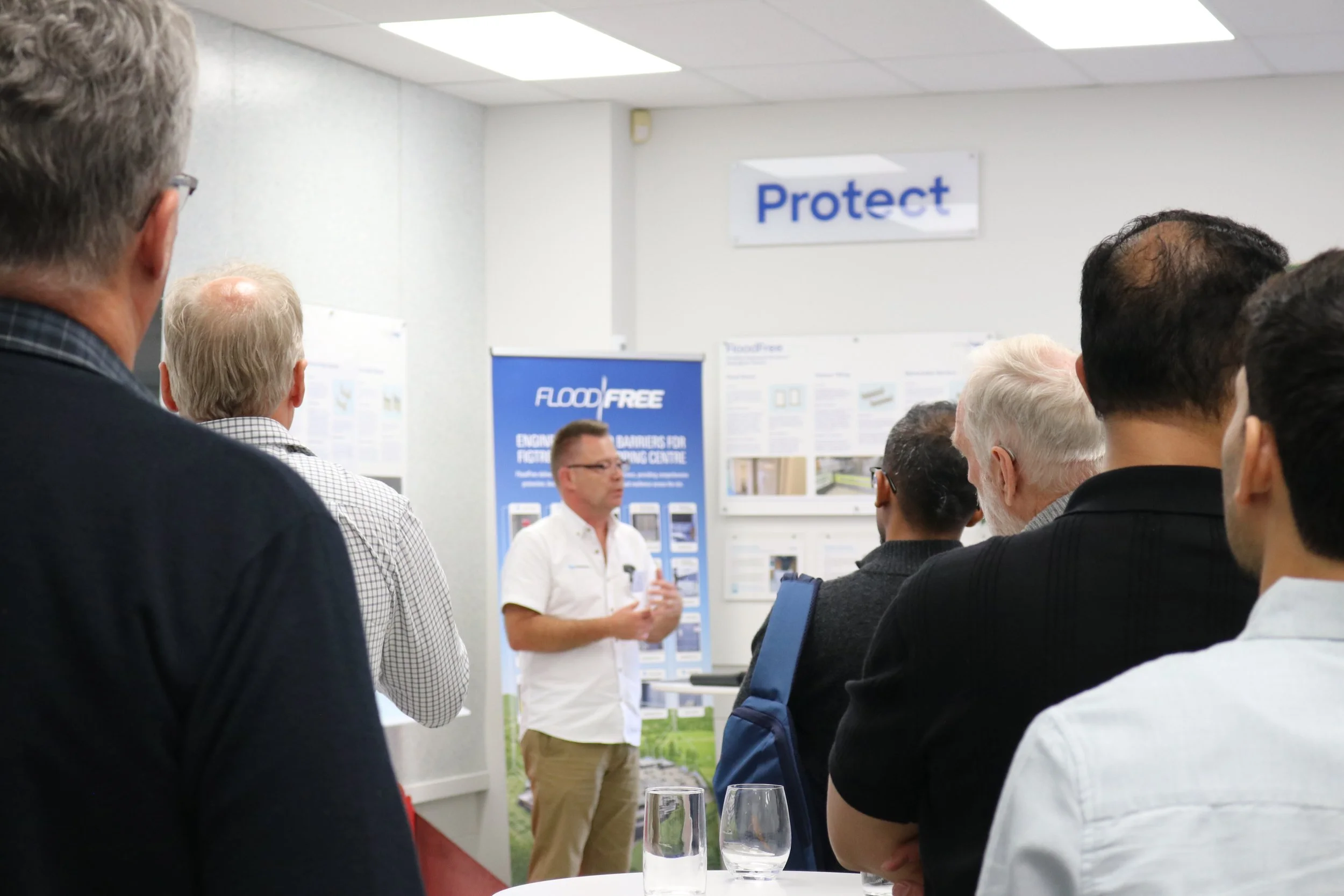
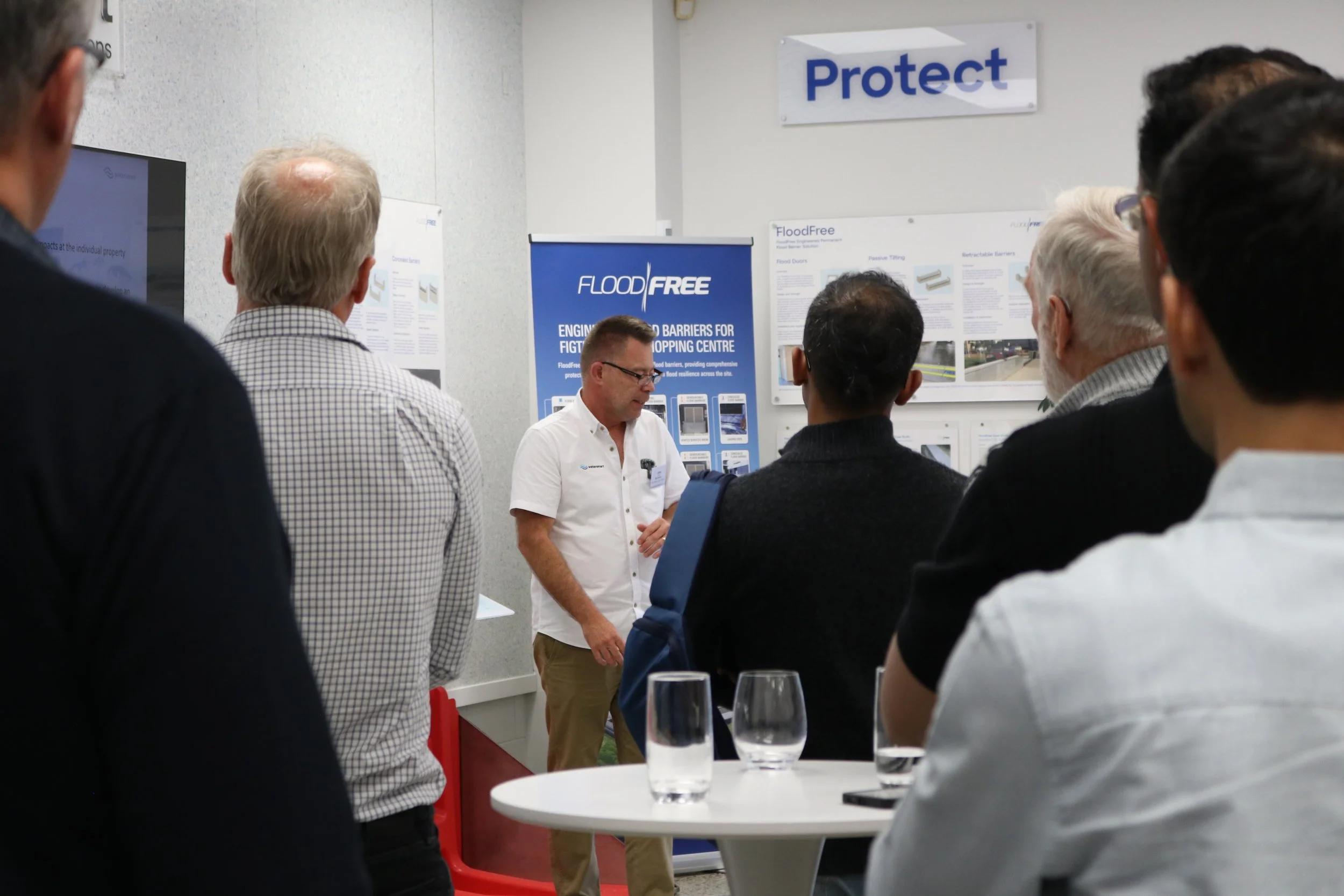
Our final session in November was fully booked. Watersmart’s Flood Resilience Leader, Julian Lough, drew on projects in Aotearoa and overseas to explore practical flood protection options, where they have limitations and how to select an approach for a particular site.
Where May looked at resilience across a community, November brought the discussion down to the decisions a project team has to make for an individual property. The project examples helped show why each site calls for a fresh assessment, even when a protection measure has worked well elsewhere.
Join us at the Hub in 2027
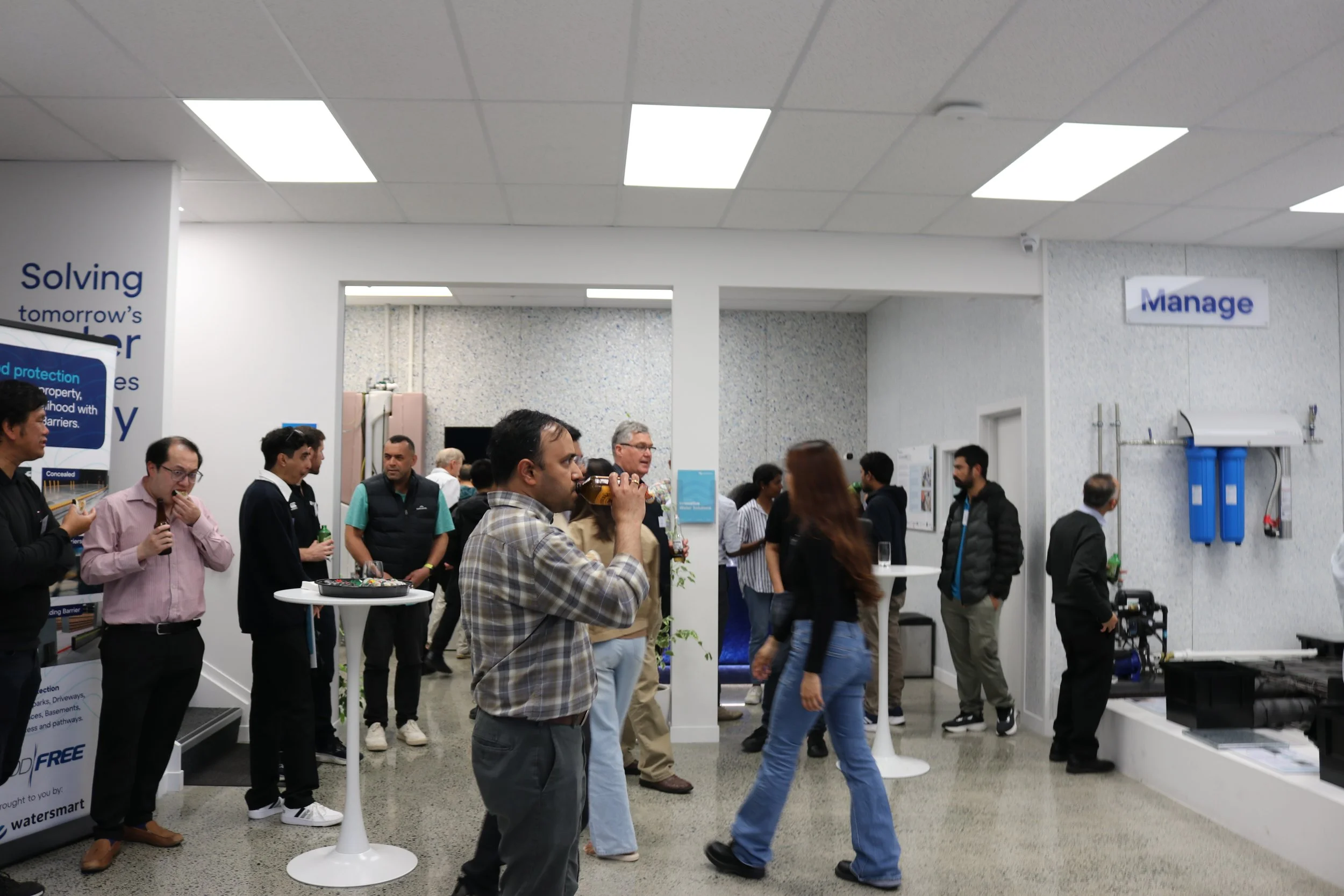
Thank you to Engineering New Zealand and everyone who joined us in Avondale this year. We’ve enjoyed sharing what we’re learning through our work and hearing about the challenges others are working through on their own projects.
At our future sessions, you’ll have the chance to hear how others approach similar design decisions, talk through real project examples and bring your own questions to the discussion.
Become an Engineering New Zealand member and join us at the Watersmart Innovation Hub in 2027.