
Greywater Recycling for NZ Developments: Designing In Hydraloop
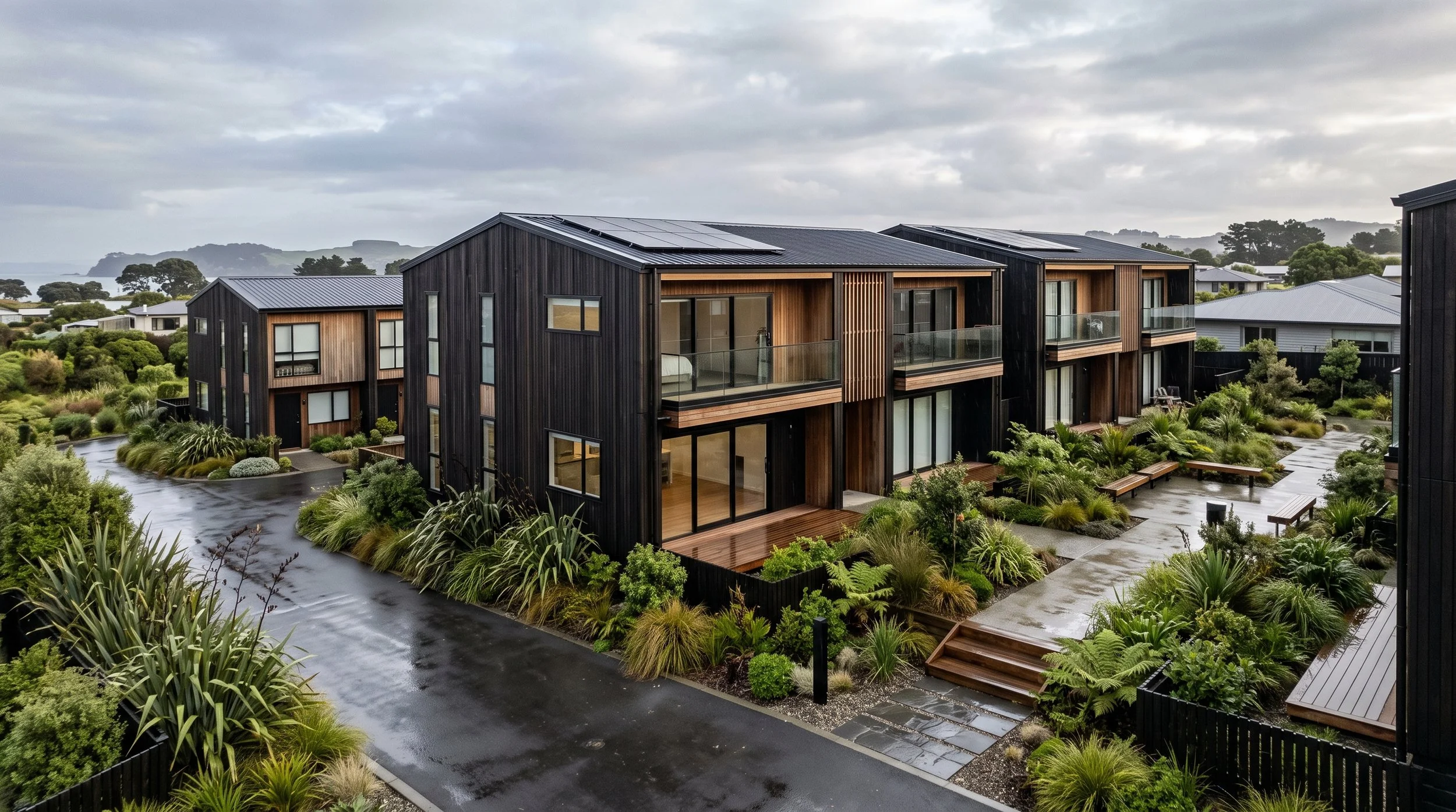
Slimline rainwater tanks beside a New Zealand home, capturing roof water so the property relies less on the mains.
Water is one of the running costs a development carries for its whole life, and most of it is used once and sent down the drain. Greywater recycling changes that. It captures the water from showers, baths, and laundry, cleans it on-site, and puts it back to work for toilets, laundry, and irrigation. For a New Zealand development, designing it at the build stage can recycle up to 45% of a building's water, lowering running costs and strengthening the project's sustainability position.
As more of the country moves to usage-based water billing, that saved water stops being an abstract green benefit and turns into a lower operating cost for the building and the people in it.
What Is Greywater Recycling?
Greywater is the lightly used water from showers, baths, hand basins, and washing machines. It is not sewage, and it is not drinking water. Greywater recycling cleans that water on-site to a safe standard and reuses it for jobs that do not need drinking-quality water, such as flushing toilets and watering the grounds.
For a development, the result is a building that gets two uses out of a large share of its water before any of it leaves the site.
How Hydraloop Fits a Development
Hydraloop is a greywater recycling system that cleans and reuses up to 45% of a building's water for toilets, laundry, and irrigation. It sits within the plumbing, cleans the greywater without chemicals or filters that need constant replacing, and feeds the cleaned water back to the fixtures that can use it.
Specified at design stage, it becomes part of the building rather than a retrofit. For a developer or specifier, that means a measurable cut in the water each dwelling or unit draws from the mains, designed at once and working for the life of the building.
Why This Matters for NZ Developments Now
Two shifts are moving water reuse from a sustainability extra to a practical specification decision.
The first is billing. New Zealand is steadily moving from rates-funded water toward volumetric charging, where a property pays for the litres it actually uses. Auckland already bills this way through Watercare, and metering continues to spread. For a development, lower mains draw means lower ongoing water costs for the building and its occupants.
The second is expectation. Councils, funders, and buyers increasingly look for developments that manage water sensibly. A project that recycles a large share of its own water has a concrete sustainability story to tell, backed by a measurable figure.
A Development-Scale Water Strategy
Greywater recycling reduces how much water a development demands. Rainwater capture adds a second source of supply. Specified together at design stage, they cover far more of a building's water needs than either does alone.
- Hydraloop cuts demand by recycling shower, bath, and laundry water for reuse.
- Rainwater tanks capture roof water for storage. On tight or high-density sites, FenceTank and SlimCity hold water in a slimline footprint; Aquacomb tanks can store more within the building footprint itself.
- A RainSaver pump delivers stored water to the fixtures that use it, at proper pressure.
The right mix depends on the project. A multi-unit residential development might specify Hydraloop across its dwellings and add slimline tanks for irrigation and common areas. A commercial building would size the combination to its own demand. The point is to match supply and demand measures to the development, so each does the job it does best.
What to Specify For
A few things help greywater recycling deliver in a development:
Design it early. Reuse is far simpler and cheaper to build into a development at design stage than to retrofit, because the cleaned water needs its own supply lines to the toilets and outlets that use it.
Size it to the building's water use. The saving scales with how much greywater the building produces. A residential development with showers and laundries in every unit has far more to recycle than a low-occupancy commercial fit-out.
Treat it as part of the water strategy. The biggest reductions in mains use come from pairing reuse with rainwater capture and the right pump, specified together for the development.
FAQ
How much water can greywater recycling save in a development?
A greywater system like Hydraloop can recycle up to 45% of a building's water for reuse in toilets, laundry, and irrigation. The real figure depends on how much greywater the building produces and how the reused water is plumbed in.
Is recycled greywater safe to use?
Yes, for its intended uses. The system cleans the water to a safe standard for non-drinking jobs such as toilet flushing and ground irrigation. It is not for drinking or cooking.
Does greywater recycling lower a building's running costs?
Where a development is on usage-based (metered) water charging, yes. Water recycled on-site is water the building does not draw from the mains, so it does not appear on the bill. As metering spreads across New Zealand, that saving grows in relevance.
When in a project should greywater recycling be specified?
At design stage. Building the reuse plumbing and system from the start is far cheaper than retrofitting, and it lets the development size storage and reuse together.
Getting Started
For a development, reducing mains reliance starts with understanding how the building will use water, then specifying the right combination of reuse, capture, and delivery. Greywater recycling is one of the highest-impact pieces of that picture, and it keeps paying back across the life of the building as water pricing shifts toward usage.
Watersmart works with developers, architects, and specifiers across New Zealand to design water systems into developments, from greywater recycling to rainwater capture and storage. Talk to the team about your project.