
Off-Grid Water in NZ: What It Takes to Rely Less on the Mains
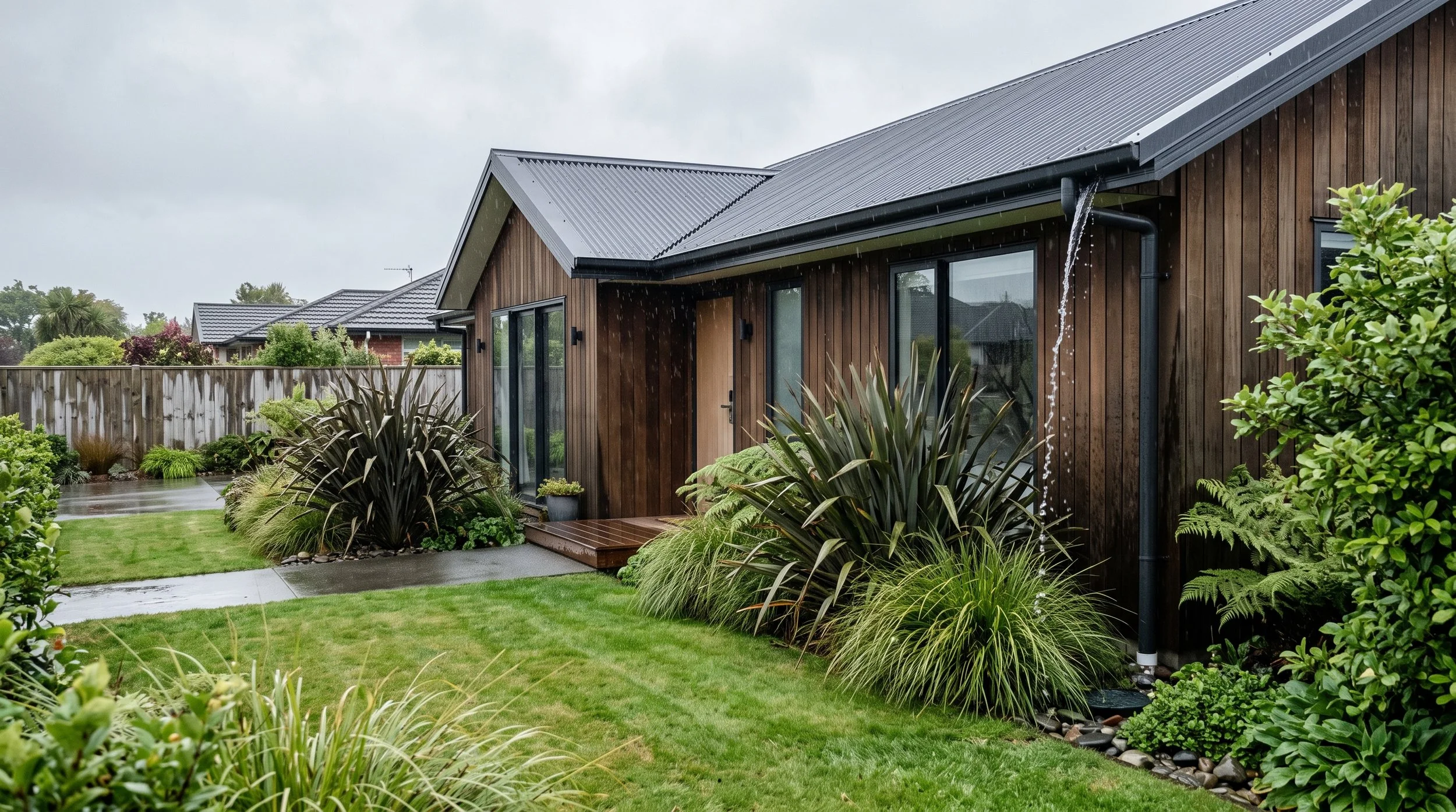
Going off-grid with water sounds like a rural, lifestyle-block ambition. In practice, most New Zealand properties that reduce their reliance on the mains are ordinary suburban homes trimming their usage, not homesteads cutting the connection entirely. The same set of ideas covers both. Capture the water that falls on the property, store it, reuse what you can, and draw less from the network as a result.
For a growing number of NZ property owners, this change is driven less by ideology and more by two practical pressures: water bills that now track actual usage, and summers dry enough to trigger restrictions.
What Does "Off-Grid Water" Actually Mean?
Off-grid water describes a property that supplies some or all of its own water rather than depending entirely on the mains. Full off-grid means the property meets its needs from rainwater and other on-site sources with no town supply. Partial, or lower-grid, means the property still has a mains connection but covers a meaningful share of its use from its own systems.
Most people land in the middle. The useful question is not "on or off the grid," but "how much of our water can we sensibly supply ourselves."
Why More NZ Properties Are Moving This Way
Two forces are pushing water independence from a fringe idea toward a mainstream one.
Usage-based billing. New Zealand is steadily shifting from rates-funded water to volumetric charging, where a property pays for the litres it draws. Auckland already bills this way through Watercare, and metering continues to spread. Every litre a property supplies itself is a litre it does not buy.
Dry-season pressure. Water restrictions have become a regular NZ summer feature. A property that stores and reuses its own water keeps its garden alive and its household running when the network is under strain and restrictions bite.
Neither of these requires going fully off-grid to matter. They reward any reduction in how much a property leans on the mains.
The Four Parts of an Off-Grid Water Setup
Water independence works as a system. It comes down to four jobs, layered to suit the property.
Capture. Rainwater is the primary on-site source, collected off the roof. The more roof area feeding the system, the more water there is to work with.
Store. Captured water has to go somewhere until it is needed. On tight urban sites, slimline tanks like FenceTank and SlimCity hold water without taking much room. On rural and lifestyle blocks with space, larger tanks store the bigger volumes needed to ride out dry spells.
Reuse. Reducing demand matters as much as adding supply. Hydraloop recycles up to 45% of a household's water, cleaning shower, bath, and laundry water for reuse in toilets, laundry, and irrigation. Water reused on-site is water that never has to be captured or bought.
Deliver. Stored water is only useful if it reaches the tap at proper pressure. A RainSaver pump moves water from the tank to the fixtures that use it.
For example, a suburban home might capture roof water into a slimline tank and could add greywater reuse to stretch it further. A lifestyle block would scale up storage and lean harder on capture. The right combination depends on roof area, water use , household size, and how far the owner wants to go.
Where People Get It Wrong
Properties that reduce mains reliance successfully tend to avoid a few common mistakes.
Underestimating storage: A tank sized for an average month runs dry in a drought, right when it is needed most. Storage should be sized for3 months expected household water demand..
Skipping upstream water quality devices to keep your water clean. A Leaf Diverter keeps leaves and debris out of the tank, which protects the quality of the stored water over time.
Retrofitting late. Reuse plumbing and tank placement are far cheaper to design into a build or renovation than to add afterwards.
FAQ
How far can a property realistically go off-grid for water in NZ?
It depends on roof area, storage, and how much reuse is achieved. Many rural and lifestyle blocks cover most of their day-to-day water needs from capture, storage, and reuse; suburban homes usually aim for partial independence while keeping a mains connection. The right target comes down to the site.
How much can a suburban home realistically save?
It depends on roof area, tank size, and whether greywater reuse is added. Greywater recycling alone can cover up to 45% of household water, and rainwater capture adds to that, so a well-designed setup can take a large bite out of mains use.
What is the first step toward water independence?
Work out how the property uses water and how much roof and land are available to capture and store it. That tells you which combination of capture, storage, reuse, and pumping fits the site.
Does reducing mains use lower the water bill?
On usage-based (metered) supply, yes. Water that a property supplies itself is water it does not buy. As metering spreads across New Zealand, these savings will be relevant for more homeowners..
Getting Started
Water independence in NZ is best achieved by steadily covering more of a property's needs from its own systems. Whether that means a suburban home trimming its usage or a lifestyle block aiming for full self-sufficiency, the steps are the same: capture, store, reuse, deliver.
Watersmart works with homeowners, developers, specifiers, and rural property owners across New Zealand to design water systems that reduce mains reliance, from rainwater capture and storage to greywater reuse and delivery. Talk to the team about how far your project or property can go.