
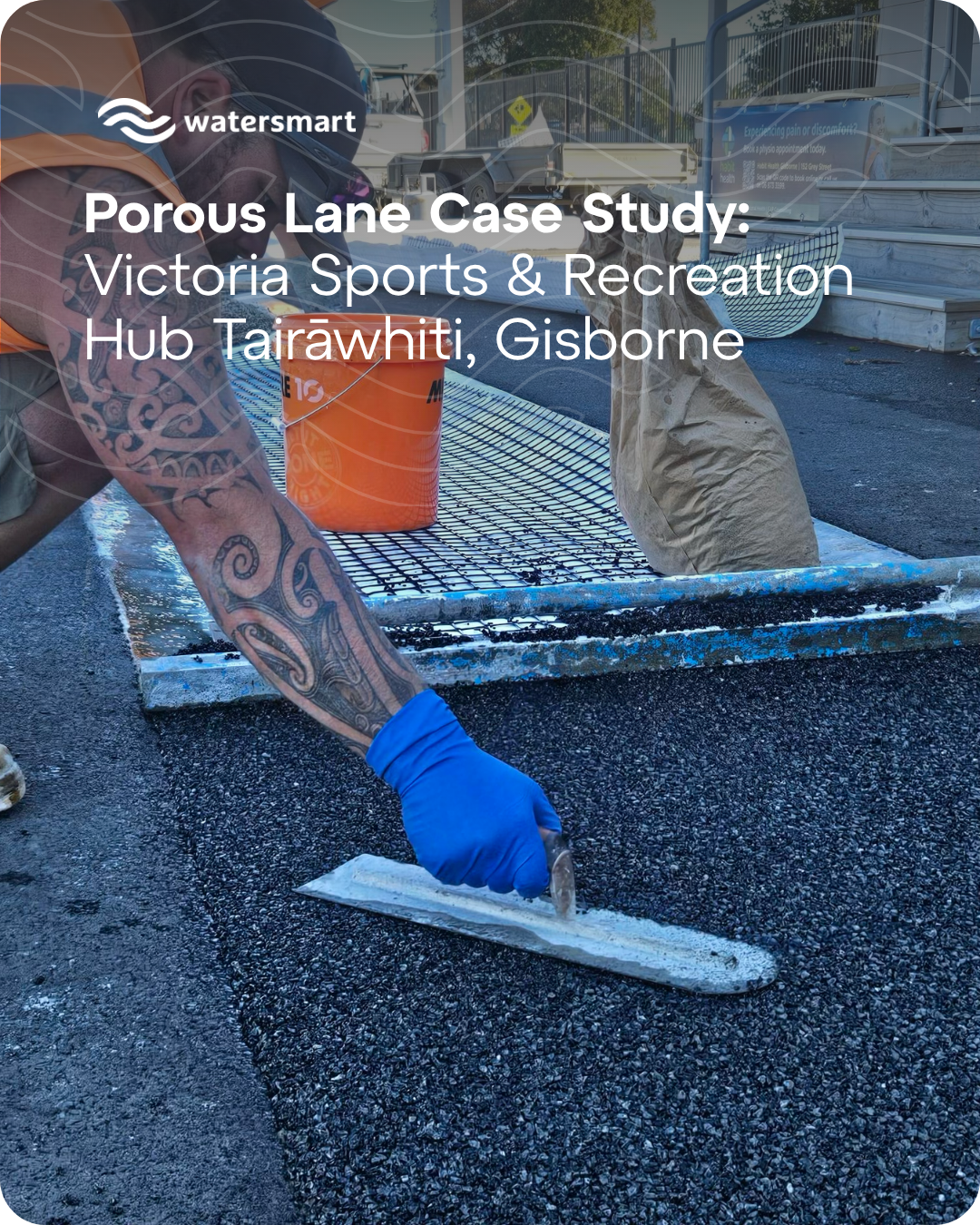
Project Recap
Client: Victoria Sports & Recreation Hub
Location: Victoria Domain, Tairāwhiti Gisborne
Solution: Reimagining Sports Court Drainage with Porous Lane
Area: 204m²
Tyres Recycled: Approx ~240
Project Summary
As part of the redevelopment of the Victoria Sports & Recreation Hub in Tairāwhiti Gisborne, the project team sought a drainage solution that would safely manage stormwater around newly constructed sports courts without compromising accessibility, aesthetics or hydraulic performance.
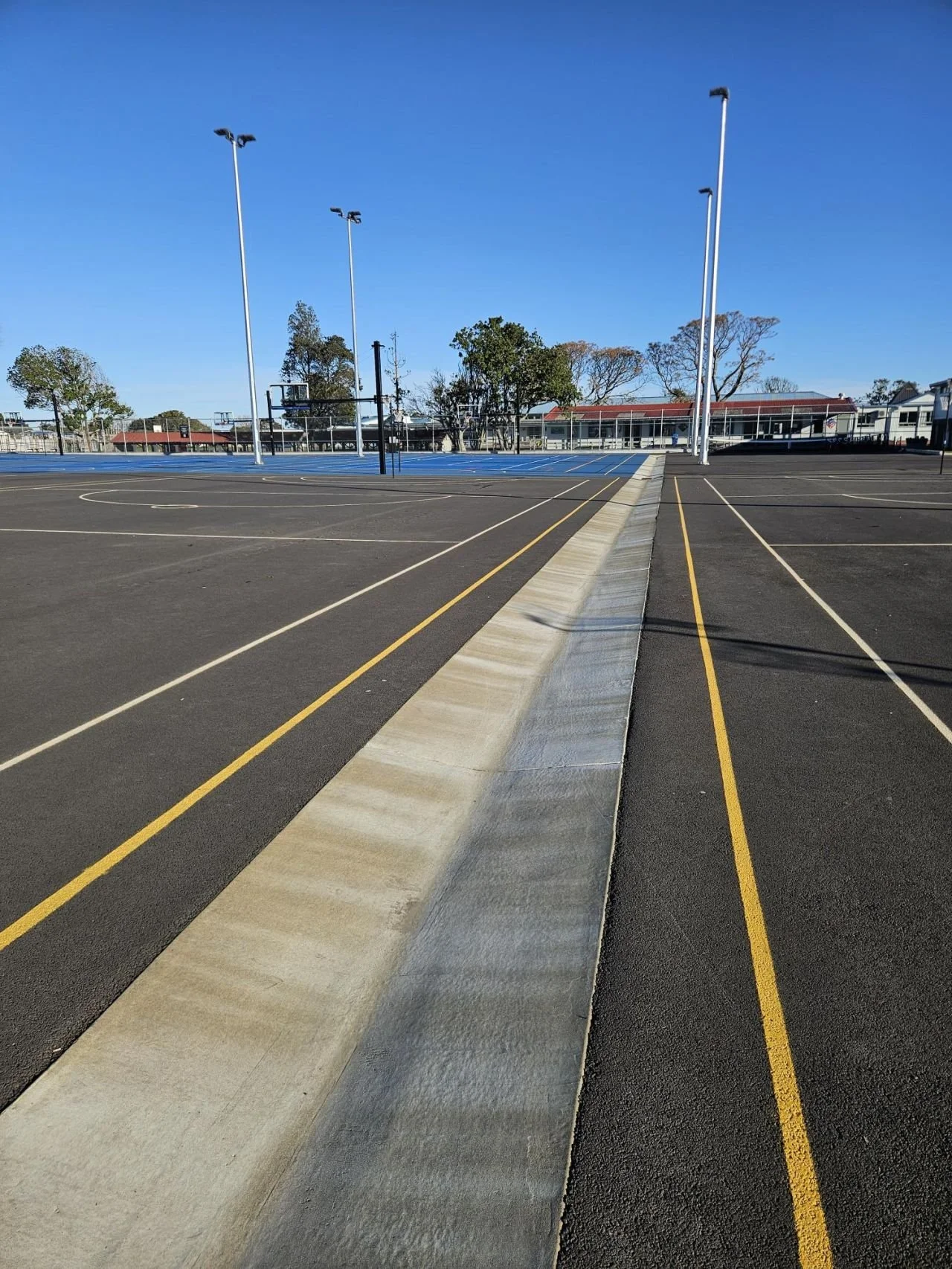
Rather than installing conventional metal drainage grates, the team adopted an engineered alternative by installing Porous Lane directly over the existing channel drains. The result is a continuous, permeable surface that allows stormwater to infiltrate into the drainage system below while eliminating exposed grates and creating a seamless architectural finish.
The project demonstrates how permeable pavement technology can be applied beyond traditional footpaths, integrating stormwater management, accessibility and circular economy outcomes within a single infrastructure solution.
“The drain is still there, the hazard isnt”
The Challenge
The new sports courts required perimeter drainage capable of rapidly capturing stormwater while remaining safe, durable and visually unobtrusive.
Traditional grated channel drains provide effective hydraulic performance but introduce visible interruptions within pedestrian areas and can create potential trip hazards. The project team sought a solution that would:
Maintain effective stormwater drainage
Eliminate exposed drainage grates
Provide a continuous accessible surface
Integrate seamlessly with the surrounding asphalt
Deliver a clean architectural appearance
Support the project's sustainability objectives
Design Options
Option 1 – Custom Metal Drainage Grates
Traditional grated channel drains provide reliable hydraulic performance but remain visually prominent, interrupt the pavement surface and create potential trip hazards around high pedestrian areas.
Option 2 – Porous Lane
Porous Lane was selected as the finished surface directly over the drainage channel, allowing stormwater to infiltrate vertically through the pavement before entering the drainage system below.
The solution concealed the drainage infrastructure beneath a continuous permeable surface while maintaining accessibility, aesthetics and hydraulic performance.
Engineering the Solution
Although the finished installation appears simple, significant engineering was undertaken before construction.
Material permeability testing was completed to verify hydraulic performance and optimise the aggregate grading for the site's specific conditions, ensuring sufficient infiltration while maintaining structural integrity.
The final system comprised:
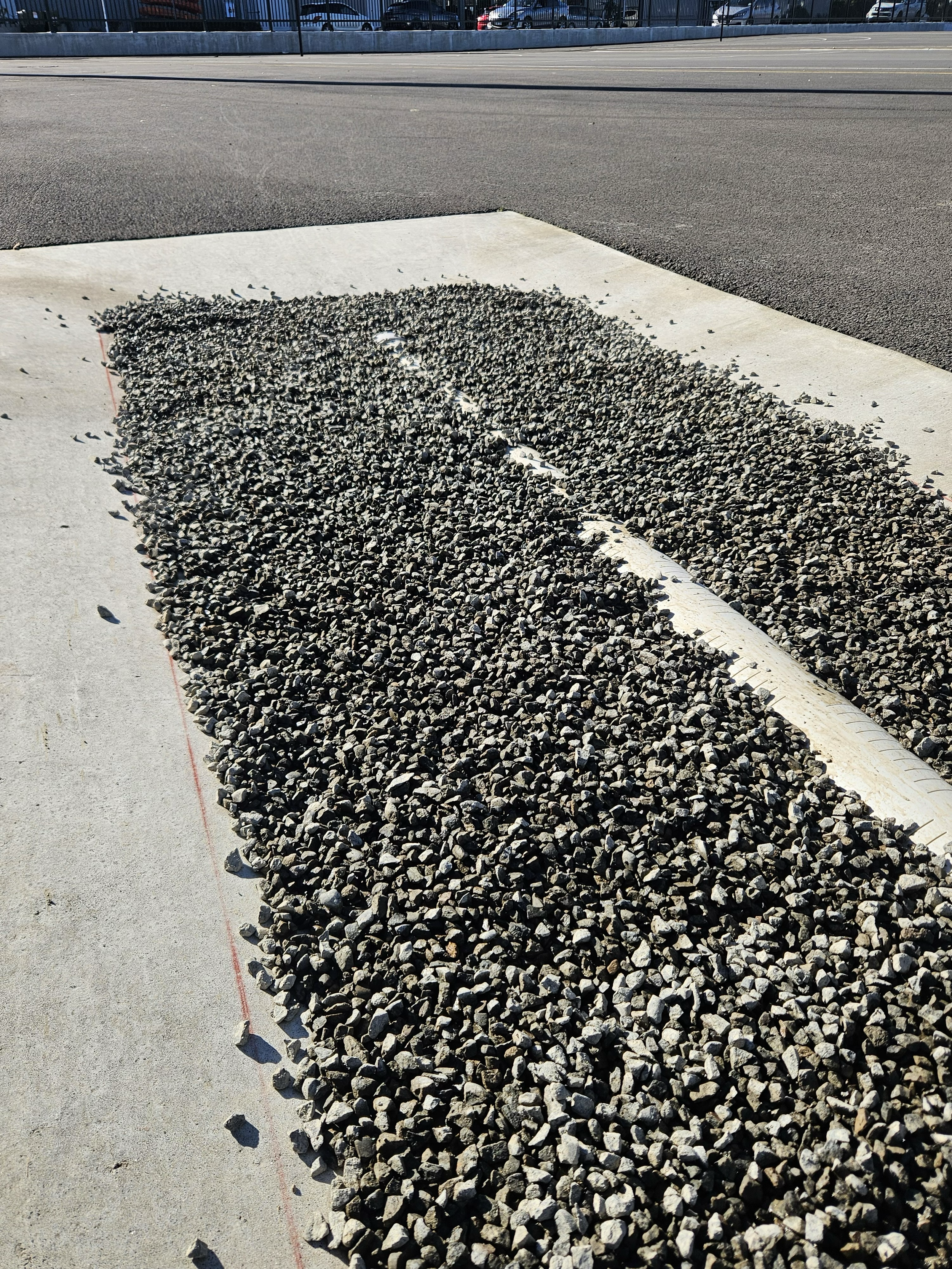
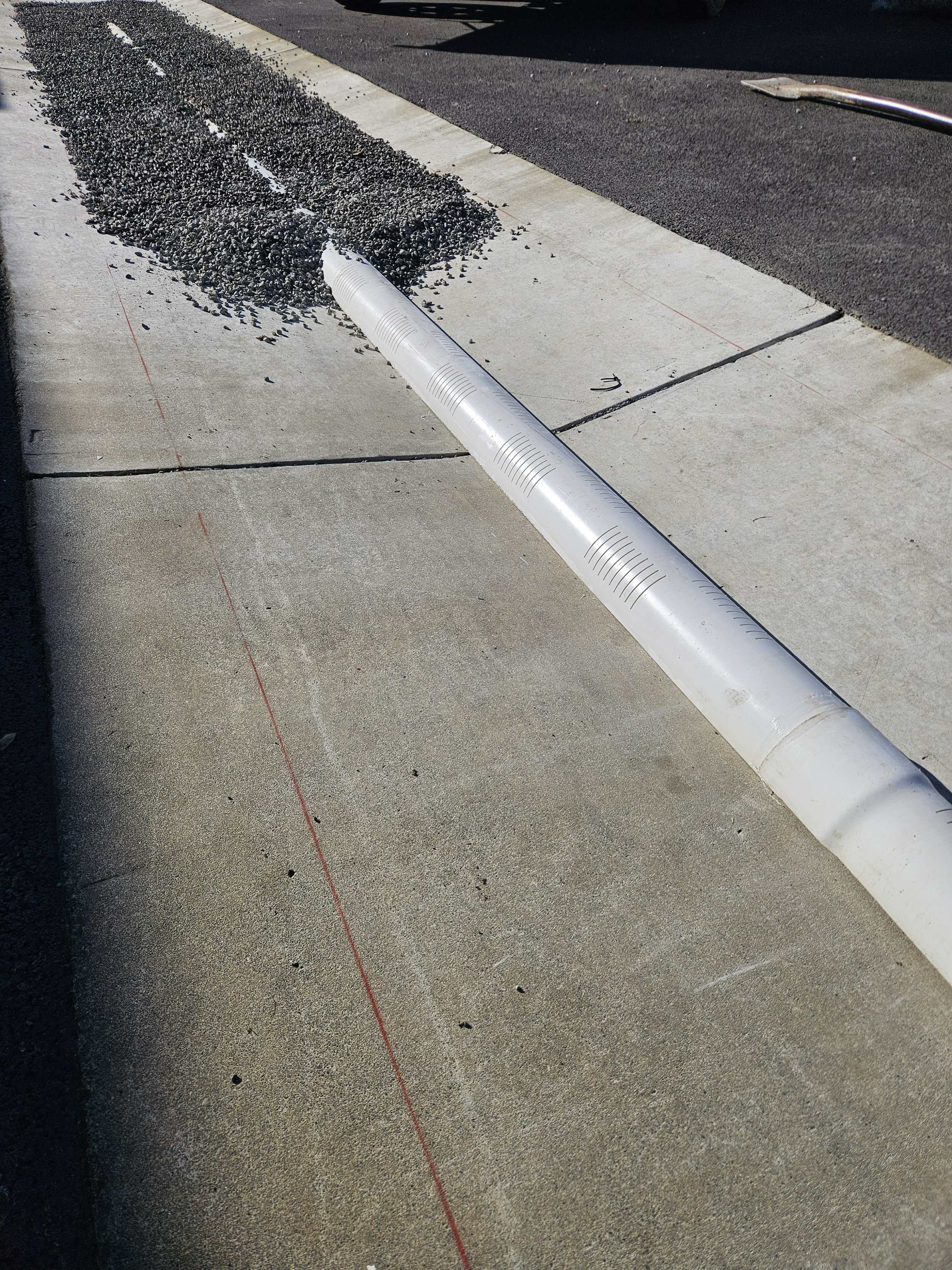
Shelved slotted channel drain
Thin permeable screening aggregate layer beneath the surface to encourage lateral flow into the drain
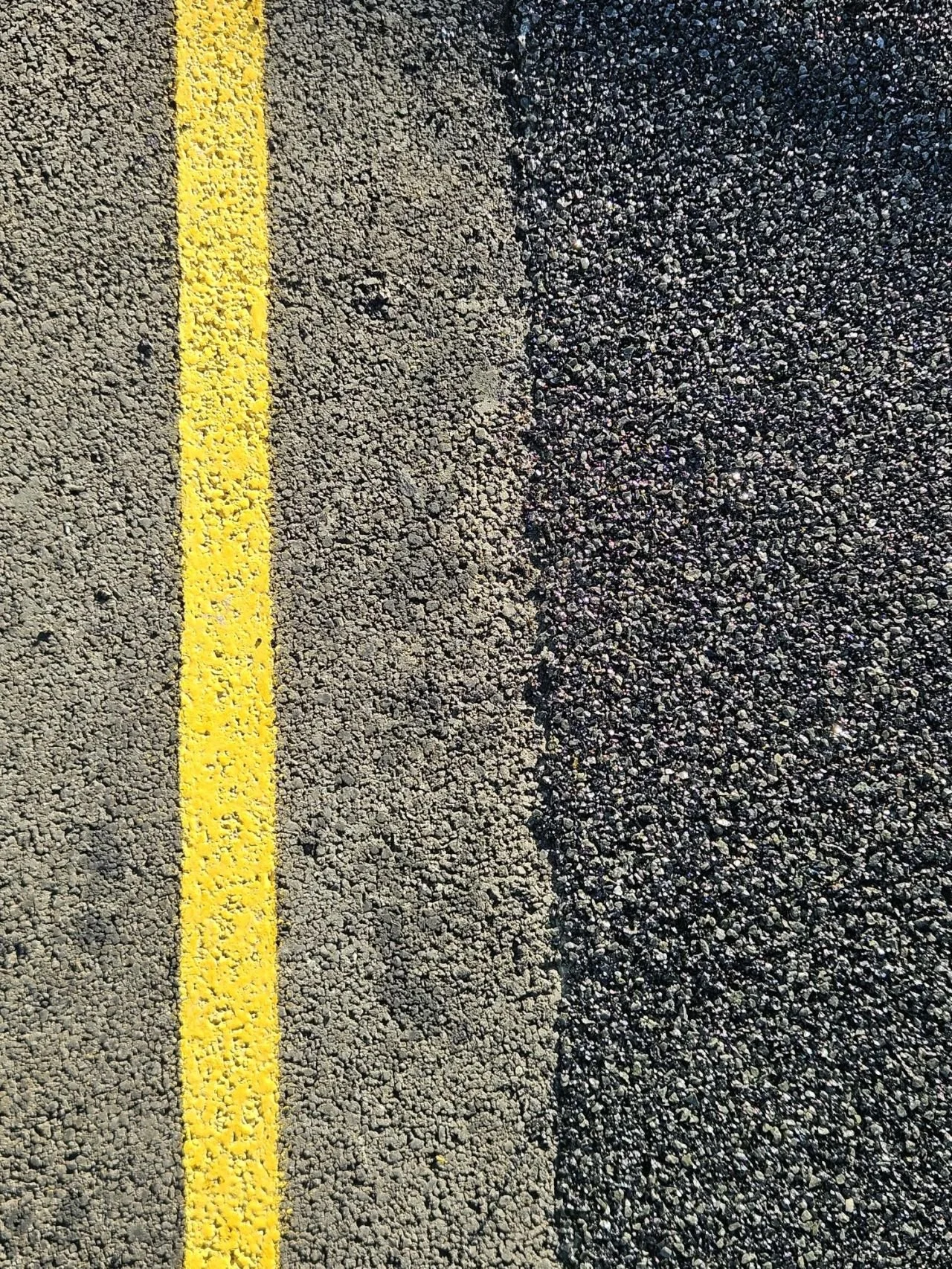
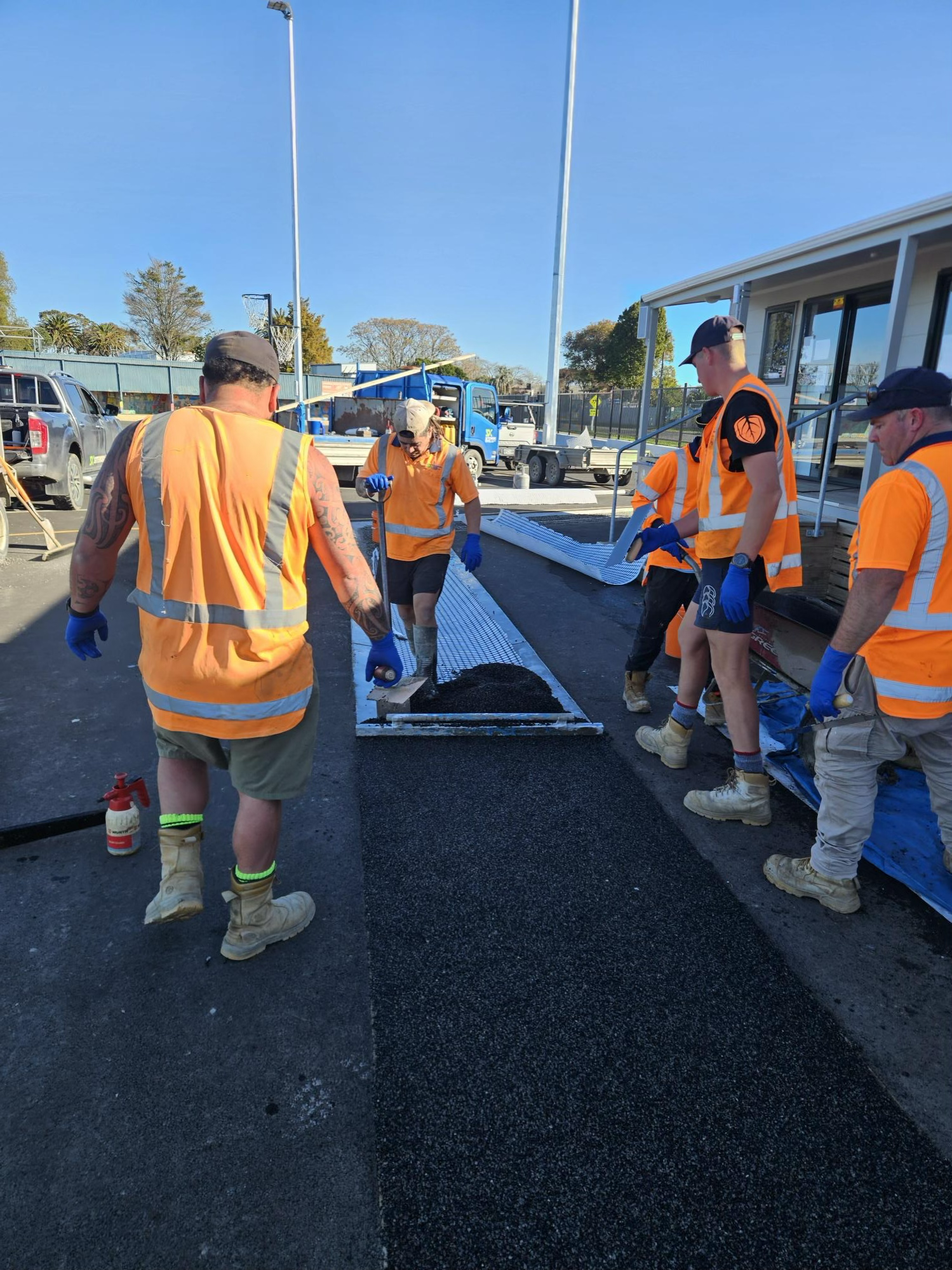
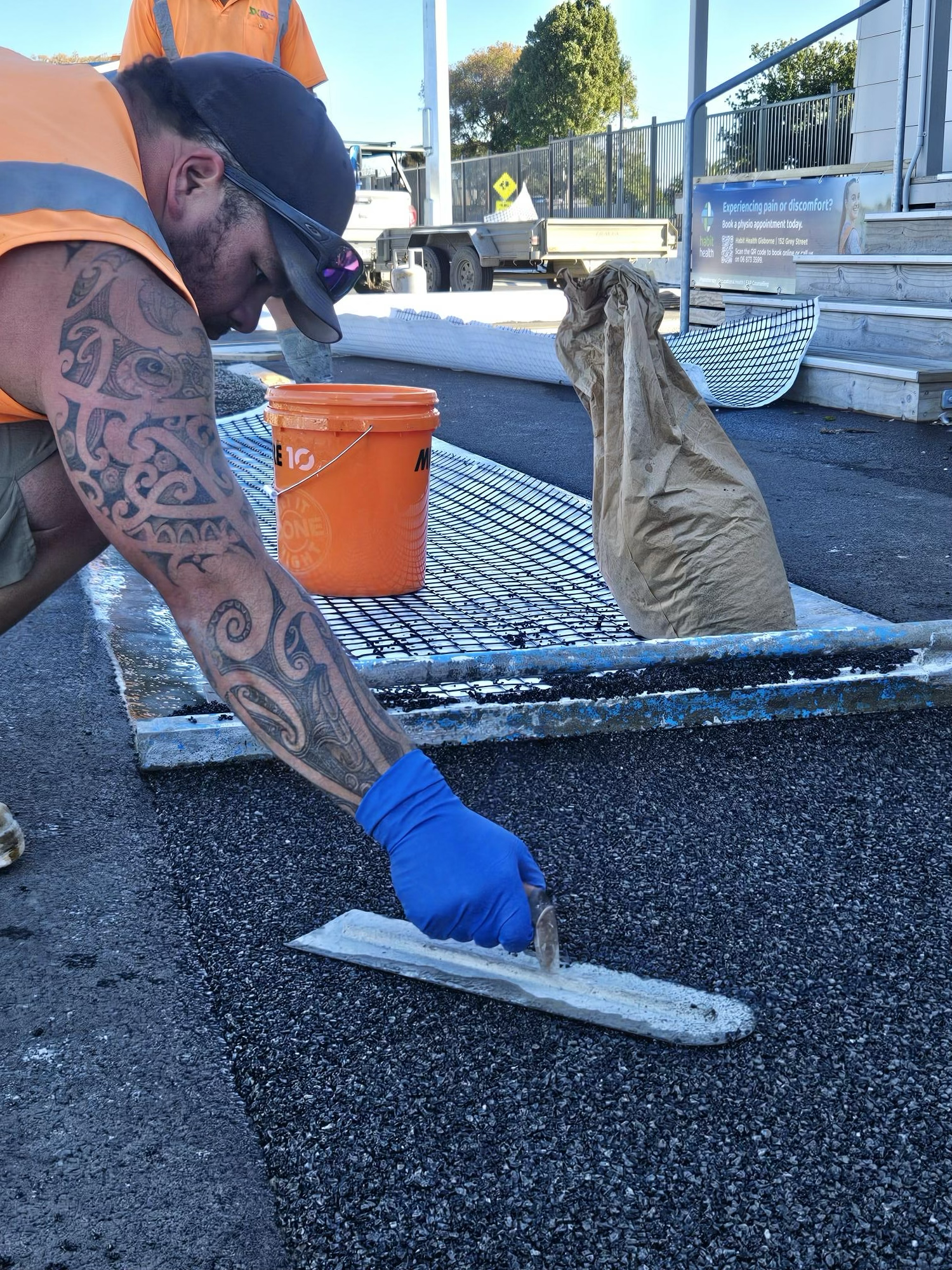
30 mm Porous Lane surface installed directly over the drain
Seamless interface with the surrounding asphalt pavement
Stormwater infiltrates vertically through the Porous Lane surface before passing through the permeable aggregate layer into the underlying drainage channel. While the drainage system remains fully operational, users experience a continuous, flat and accessible pavement with no exposed grates.
Project Gallery
Why Porous Lane Was Selected
Engineering Benefits
• Continuous stormwater capture through the pavement surface
• Eliminated exposed drainage channels
• Reduced trip hazards
• Maintained effective hydraulic performance
Architectural Benefits
• Continuous surface finish
• Drainage integrated almost invisibly into the landscape
• Seamless transition with surrounding asphalt
Sustainability Benefits
• Approximately 240 end-of-life passenger tyres diverted from landfill
• Circular use of recycled tyre rubber
• Reduced material consumption compared with conventional drainage treatments
Project Outcomes
• Continuous accessible surface around the sports courts
• Effective stormwater capture and conveyance
• Elimination of exposed drainage channels
• Reduced trip hazards
• Clean architectural finish
• Approximately 240 passenger tyres diverted from landfill
The completed installation demonstrates that effective drainage infrastructure does not need to remain visible to perform.
Beyond Traditional Permeable Pavements
Porous Lane is commonly specified for footpaths, tree surrounds and permeable pavements. This project illustrates its broader capability as an engineered infrastructure solution.
By integrating drainage, accessibility, architectural design and sustainability into a single permeable surface, the project demonstrates how innovative engineering can simplify construction while delivering improved outcomes for both users and asset owners.
Rather than treating drainage as a separate piece of infrastructure, the drainage system became part of the pavement itself.
Learn more about Porous Lane.