
Rainwater Harvesting in NZ: Drought-Proofing a Property When the Weather Won't Stay Still
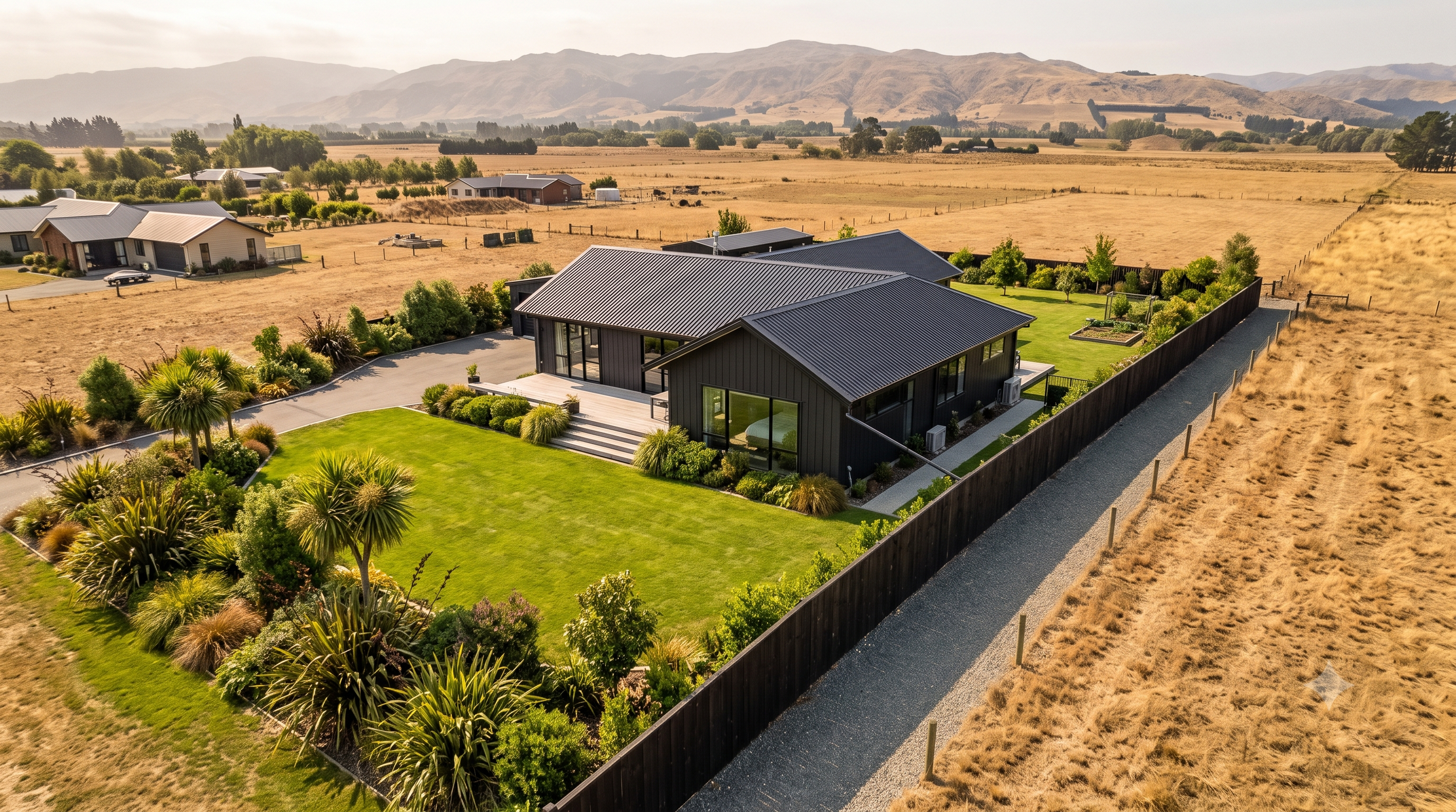
New Zealand's weather has stopped behaving predictably. The same regions that flooded in 2023 have since sat through long, dry stretches that emptied reservoirs and triggered water restrictions. The pattern isn't "wetter" or "drier", it's both, in sharper swings, with less warning.
For anyone who depends on a reliable water supply, a household on town water, a lifestyle block on a bore, a developer planning for the next 30 years, that volatility is the real problem. And capturing rainwater when it falls is one of the few levers a property owner actually controls.
The Swing Is the Story
New Zealand moves between La Niña and El Niño cycles that push rainfall to extremes. Recent years have delivered both ends inside the same 24 months: record rainfall and flooding, then drought declarations across multiple regions.
Auckland is the clearest example. The 2020 drought drew the city's dam storage down to around 42% and forced mandatory water restrictions that ran into 2021: no hoses, no waterblasting, irrigation banned. Three years later the same city was managing the opposite problem.
Rural NZ feels it harder. When the Government declares a drought a "medium-scale adverse event," it's confirming what farmers already know: pasture has stopped growing, stock water is short, and bore levels are dropping. Lifestyle blocks and rural homes relying on tank or bore supply have no council network to fall back on.
The trend line matters more than any single season. The swings are getting wider, and a water strategy built for the average year is the wrong strategy for a volatile one.
Why Rainwater Harvesting Is the Practical Solution
Rainwater harvesting is simple in principle: capture rain off the roof, store it, use it when supply is tight. The value isn't the novelty, it's that stored water is independent of the things that fail during a drought.
When restrictions hit, a property with its own captured supply keeps watering the garden, topping the pool, and washing the car while neighbours can't. When a rural bore drops, stored rainwater covers the gap. When mains pressure falls during a regional shortage, an on-site tank keeps the house running.
The practical benefits stack up:
- Restriction-proofing. Council water bans apply to mains supply, not your own stored rainwater. A tank keeps non-potable use going through a restriction.
- Drought buffer for rural sites. Stored capacity bridges the weeks between a bore running low and the next decent rain.
- Lower water bills. In metered areas, harvested rainwater offsets mains use for toilets, laundry, irrigation, and outdoor tasks.
- Reduced demand on stressed networks. Every litre captured on-site is a litre the regional supply doesn't have to provide during a shortage.
Rainwater harvesting won't make a property fully self-sufficient overnight. But it converts an erratic supply into a predictable one, important when the weather refuses to cooperate.
One Size does not Fit All
The most common mistake is treating storage as one-size-fits-all. The right capacity depends on roof area, local rainfall, how the water will be used, and, critically, how much space the site actually has.
A 200m² roof in Auckland can capture well over 200,000 litres a year. The constraint is almost never how much rain falls. It's how much you can store before the next dry spell, and where the tank physically goes.
That's where matching the system to the site matters. NZ properties vary enormously, a tight urban townhouse and a sloping rural block need completely different solutions.
Matching Storage to the Site
Watersmart's rainwater storage range exists because no single tank suits every property. The right setup is about layering the correct solution to the site's constraints.
For tight urban sites, FenceTank and Slim City solve the space problem. FenceTank is just 410mm deep, mounts to fence posts, and links in series to scale capacity along a boundary. Slim City packs 2,000–3,000L into a slimline footprint built for urban sections where every metre counts. Where there's no room for a conventional round tank, these put storage in space that would otherwise be wasted.
For sites with no surface room to spare, Aquacomb stores water in the slab, under a driveway, deck, or under the lawn or patio. It was designed for high-density NZ development where above-ground storage isn't an option, and it scales from 250L to 30,000L+.
For rural and lifestyle blocks with the land to use it, larger above-ground tanks can deliver high-volume storage that bridges long dry spells.
To make any of it usable, a RainSaver pump system moves stored water to where it's needed at proper pressure, the difference between a tank that just sits there and a supply the property actually runs on.
The point isn't which product is "best." It's that a townhouse, an infill development, and a 4-hectare block each need a different answer, and the right combination depends on the site.
Built for Reuse, Not Just Storage
Drought resilience and everyday efficiency are the same investment. A rainwater system sized for a dry-season buffer also cuts mains use every ordinary week of the year, irrigation, toilet flushing, laundry, outdoor cleaning.
For developers, this is increasingly a design consideration rather than an add-on. Captured rainwater can reduce a development's potable demand, support water-sensitive urban design goals, and in many cases be combined with stormwater detention requirements in a single system, managing runoff and storing reuse water at the same time. That dual function turns a compliance cost into an asset.
The household version is the same logic at smaller scale: the tank that gets you through a restriction is also quietly lowering the water bill the rest of the year.
Getting Ahead of the Next Dry Spell
Rainwater harvesting works best when it's installed before it's needed. A tank commissioned during a drought is already too late, it needs rain to fill, and the rain is exactly what's missing.
The properties that handle the swings well are the ones that put storage in during the wet, so it's full and ready when the dry arrives. Given how short the warning now is between one extreme and the next, "before" is the only timing that reliably works.
Watersmart works with homeowners, rural property owners, and developers across New Zealand to design rainwater harvesting systems matched to the site, the roof, and the way the water will actually be used. Talk to the team about drought-proofing your property before the next dry season.
