
Rethinking the Relationship Between Buildings and Water Infrastructure
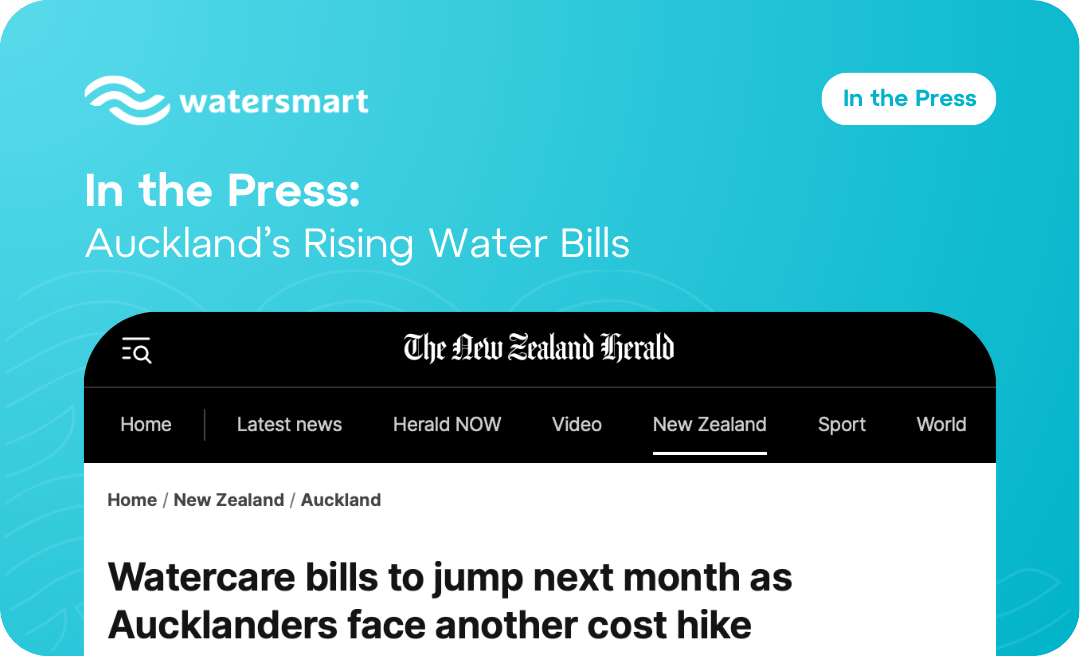
How on-site water systems are changing the way we think about resilience, growth, and network capacity
Recent headlines around rising water charges and major infrastructure investment programmes have reignited discussion about the future of water in New Zealand.
The focus is often on the scale of investment required to maintain and expand our water networks. Less discussed is what these changes mean for the buildings, developments, and communities that rely on them.
As New Zealand faces increasing pressure from population growth, climate change, ageing infrastructure, and rising investment requirements, an important question is beginning to emerge:
What role can buildings themselves play in supporting the performance and resilience of our water infrastructure?
This is not a question about replacing public infrastructure.
Water networks remain essential to the way our communities function. Significant investment will continue to be required to maintain, upgrade, and expand them.
The question is whether future buildings can do more than simply connect to those networks.
From passive consumers to active participants
A useful comparison can be found in the energy sector.
Historically, buildings consumed electricity supplied by a centralised network.
Today, many properties contribute to the system through solar generation, battery storage, smart controls, and demand management. Buildings are no longer just consumers. They are active participants.
A similar shift is beginning to occur in water.
Rainwater harvesting allows properties to capture and use water where it falls.
Water recycling systems enable water to be reused before leaving a site.
Stormwater detention and retention systems help manage rainfall closer to its source, reducing pressure on downstream networks and waterways.
Individually, these solutions may seem modest.
Collectively, they represent a different way of thinking about how buildings interact with water infrastructure.
Why this matters
Water infrastructure providers face a complex balancing act.
Communities are growing. Infrastructure is ageing. Environmental expectations are increasing. Climate resilience is becoming a greater priority.
Meeting these challenges requires investment, planning, and innovation across the entire water sector.
Increasingly, there is recognition that resilience is not solely created through larger pipes, bigger reservoirs, or expanded networks. It can also be supported through smarter management of water closer to where it falls and where it is used.
Rainwater harvesting can reduce demand on potable water supplies.
Water recycling can help make better use of existing resources.
Stormwater management systems can reduce peak flows entering public networks during rainfall events.
When multiplied across hundreds or thousands of properties, these small interventions can contribute meaningfully to the overall performance of the wider system.
A changing design conversation
Perhaps the most interesting shift is not technological.
It is cultural.
Historically, conversations around water infrastructure often centred on compliance. How do we meet requirements? How do we connect to existing services? How do we manage runoff?
Increasingly, we are seeing broader questions emerge.
How resilient is this development likely to be in twenty or thirty years' time?
How can we make better use of the water already available on-site?
How can buildings contribute positively to the resilience and efficiency of surrounding infrastructure rather than simply relying on it?
These are not questions that can be solved by a single product or technology.
They require a different way of thinking about the relationship between buildings, communities, and infrastructure.
What we're seeing
Over the past nine years, Watersmart has worked on thousands of projects across New Zealand, ranging from individual homes through to large-scale residential, commercial, and public infrastructure developments.
One trend is becoming increasingly clear.
Clients are beginning to think differently about water.
Where conversations once centred almost exclusively on compliance and environmental outcomes, they are increasingly focused on resilience, resource efficiency, and long-term infrastructure performance.
In many ways, the conversation around water is beginning to mirror the conversation around energy. Property owners, designers, and developers are asking whether there are smarter ways to capture, store, recycle, and manage water on-site while working alongside public infrastructure.
The technologies themselves are not new.
Rainwater harvesting, water recycling, stormwater detention and retention systems, and permeable surfaces have existed for years.
What is changing is the role they play.
Rather than being viewed as standalone sustainability initiatives, they are increasingly being considered as part of a broader approach to building resilient communities and supporting the long-term effectiveness of public infrastructure.
As our towns and cities continue to grow, the most important question may not be how we connect to water infrastructure.
It may be how buildings and infrastructure can work together to create a more resilient future.
The projects that lead the next generation of development may not be defined by a single technology.
They may be defined by a different way of thinking about water.