
Case Study: Porous Lane St. Marys Park Carpark
The Challenge
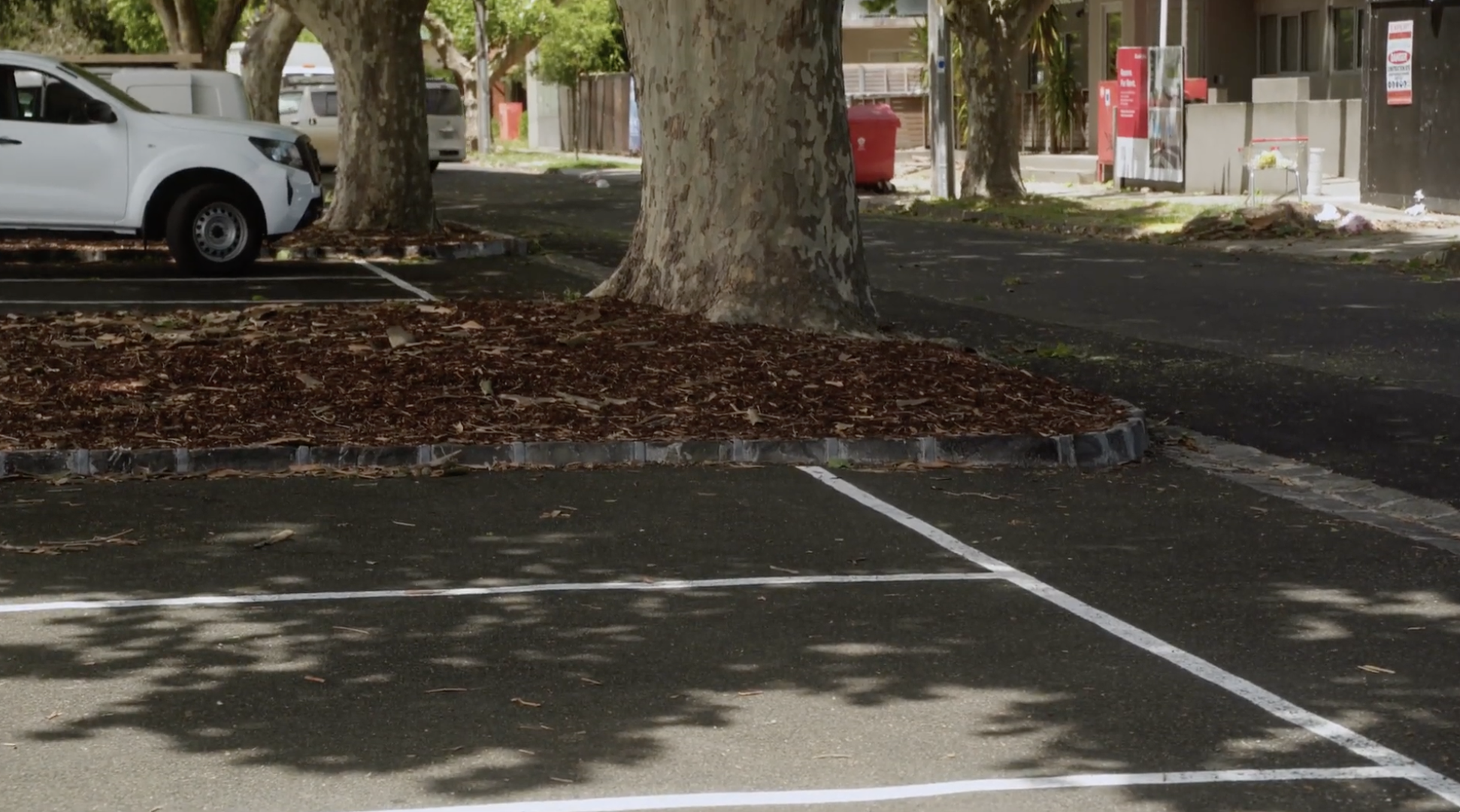
Urban areas like the City of Mitcham in Adelaide, Australia, frequently face issues with underperforming traditional pavements that exhibit poor water infiltration, leading to excessive stormwater run-off and inadequate moisture for localised vegetation.
Conventional solutions, such as covering an entire carpark with traditional porous asphalt, typically offer lower permeability and limited flow reduction, with full infiltration occurring only during minor, short-duration storms.
Cities need a more efficient, cost-effective water management strategy that reduces surface run-off while simultaneously harvesting stormwater to passively irrigate urban trees and reduce flooding risk.
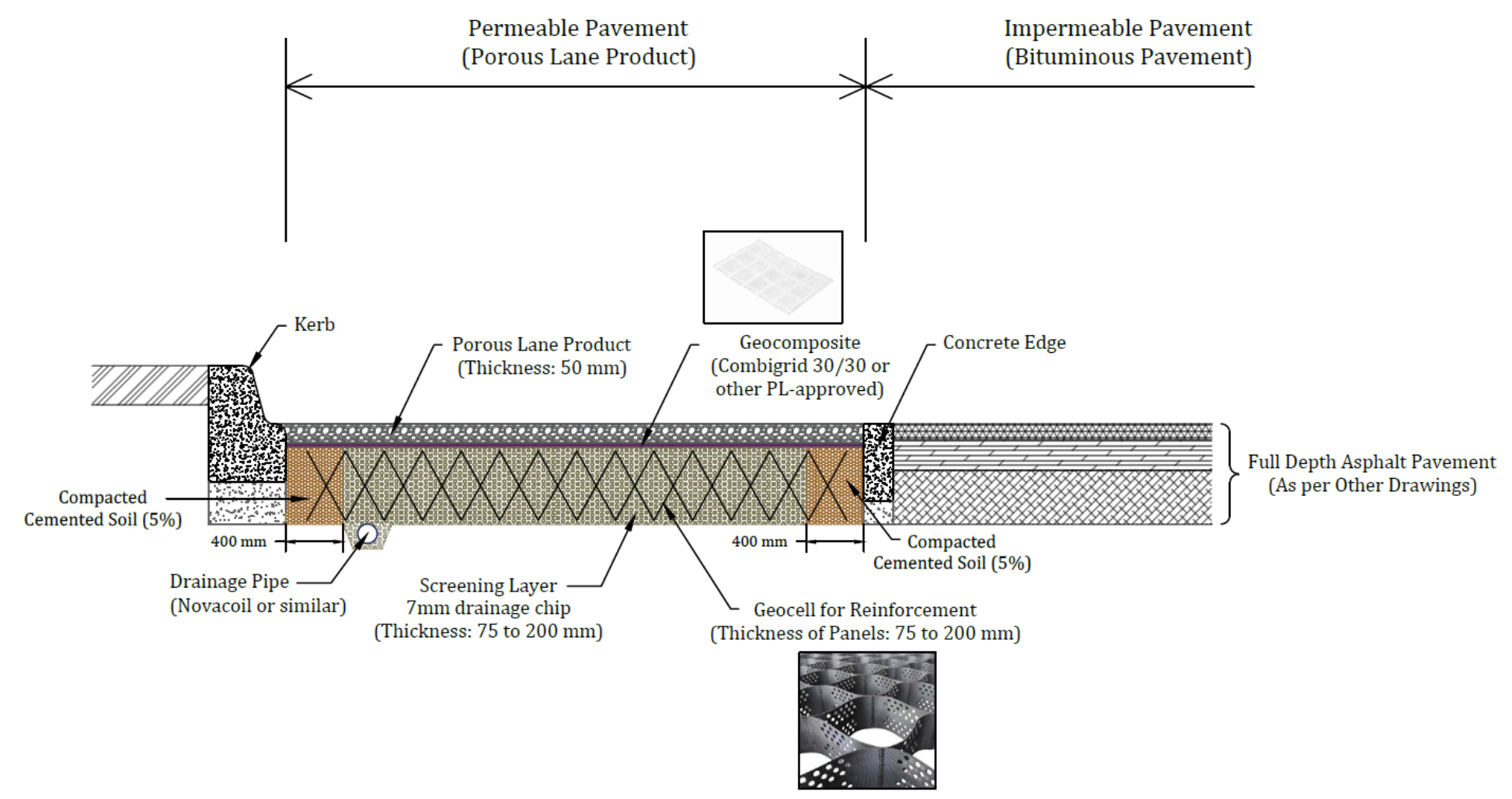
Cross-sectional detail of a Porous Lane permeable carparking bay with water storage underneath pavement layer, adjacent to impermeable pavement
The Solution
Instead of resurfacing the entire 1,604 sqm carpark at St. Marys Park, Porous Lane was selectively installed on just 420 sqm across three pairs of parking bays flanking a tree pit.
The 50mm Porous Lane surface layer features a 40–50% porosity and a high permeability rate of 3.0–3.5 cm/s. It was combined with a 300mm underlying washed gravel storage layer, a geocell for reinforcement, and a geocomposite layer. This specific profile was designed to capture and hold water without letting it infiltrate further down into the subgrade native soil layer. This profile was specifically designed to capture and temporarily store stormwater, allowing it to either infiltrate into the native subgrade or be gradually collected by the drainage coil.
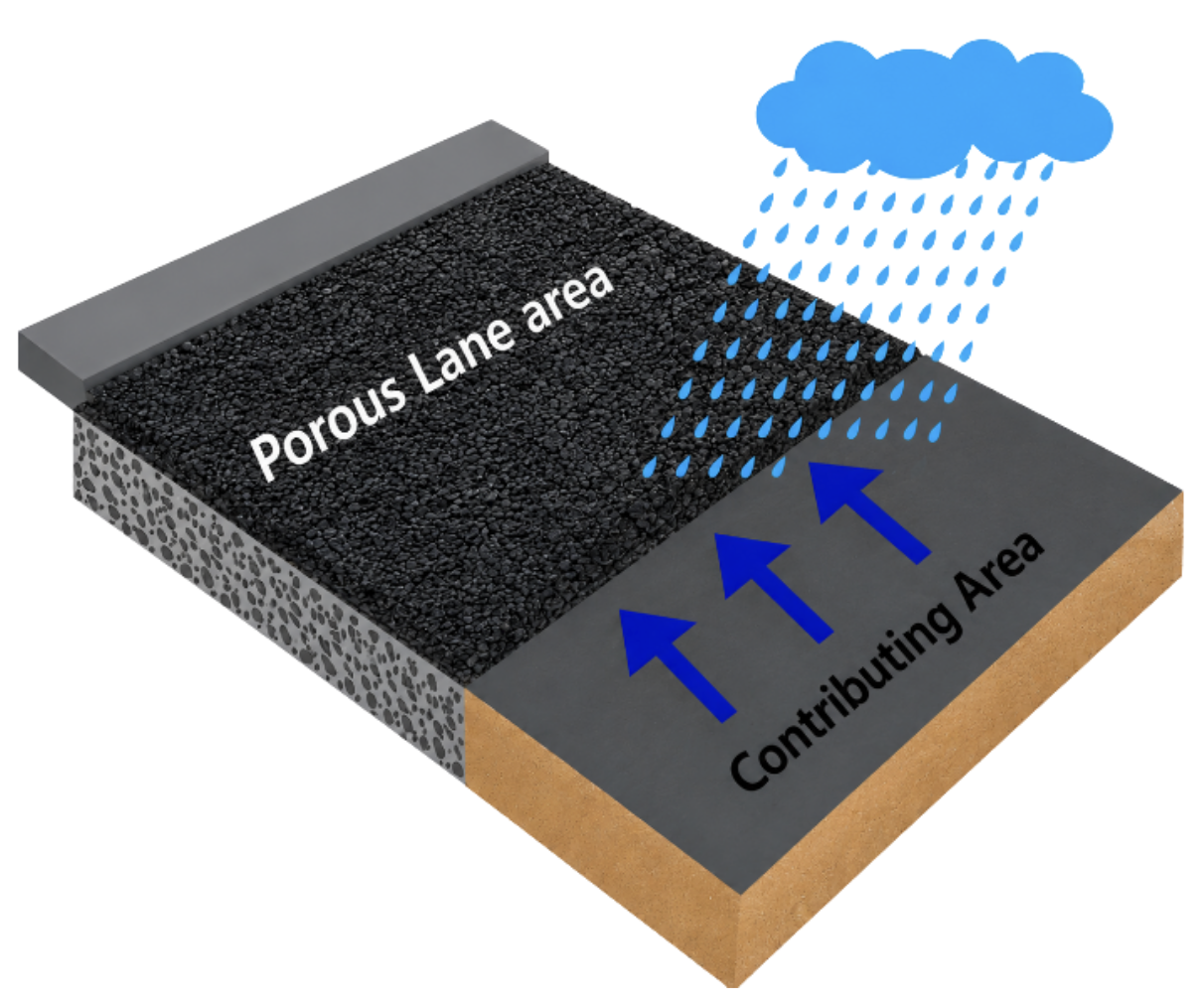
Rainfall from adjacent impermeable surfaces is captured and infiltrated through the Porous Lane pavement into the storage layer
The Outcome
The selective combination of Porous Lane and the storage layer delivered highly efficient stormwater management and environmental benefits:
Covering just 26% of the carpark achieved 100% flow reduction during major and intense storm events, vastly outperforming full-surface alternatives.
The harvested stormwater and passive irrigation directed into the tree pit resulted in young tree growth that was three times greater than that of young trees planted at the same time without the system.
This targeted approach successfully reduced overall project costs, shortened construction timelines, and maintained design flexibility for alternative materials across the remaining 1,184 sqm of impermeable bituminous pavement.
Learn more about Porous Lane.