Watersmart Insights
Filter
Tag
- Aquacomb 22
- Education 10
- Events 3
- FenceTank 12
- FloodFree 26
- Floody 19
- Flowgen 1
- Hydraloop 13
- Hydraloop NZ 1
- Leaf Diverter 1
- Porous Lane 23
- RainStick 1
- SMAF requirements 1
- SlimCity 5
- WaterSAFE 2
- case study 14
- greywater recycling NZ 1
- greywater recycling developments NZ 1
- off grid living NZ water 1
- off grid water NZ 1
- off grid water systems NZ 1
- permeable driveway consent 1
- permeable pavement NZ 1
- permeable paving NZ 1
- porous paving driveway 1
- rainwater self sufficiency NZ 1
- reduce mains water reliance 1
- reduce mains water use NZ 1
- stormwater runoff NZ 1
- sustainable development water NZ 1
- water independence NZ 1
- water reuse commercial NZ 1
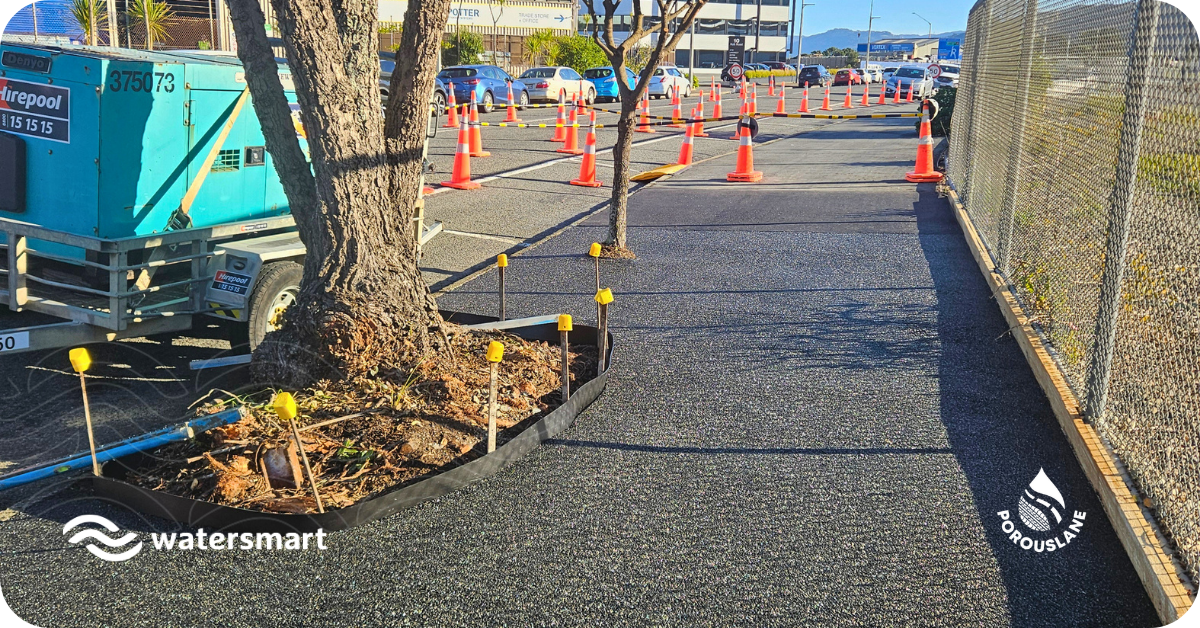
Porous Lane Case Study: Hutt Road, Lower Hutt
Hutt City Council is using Porous Lane to replace damaged asphalt around established pōhutukawa on Hutt Road, creating a permeable surface that better supports tree roots while maintaining a durable, accessible footpath.

Porous Lane Case Study: Victoria Sports and Recreation Hub, Gisborne
At the Victoria Sports & Recreation Hub in Tairāwhiti Gisborne, we worked alongside Civil Assist, Architects44 and Siteworx Civil Ltd to rethink how drainage could be integrated around the new sports courts. Together, the project team engineered a Porous Lane surface over the existing channel drains, creating a seamless, accessible finish that manages stormwater, removes exposed grates and diverts approximately 240 end-of-life tyres from landfill.

Can a Pavement Clean Stormwater?
Permeable pavements are widely recognised for reducing runoff, but research suggests their benefits may extend beneath the surface. Explore how Porous Lane’s pavement profile can help filter sediment, nutrients and heavy metals from stormwater, offering new possibilities for resilient, water-sensitive urban design.
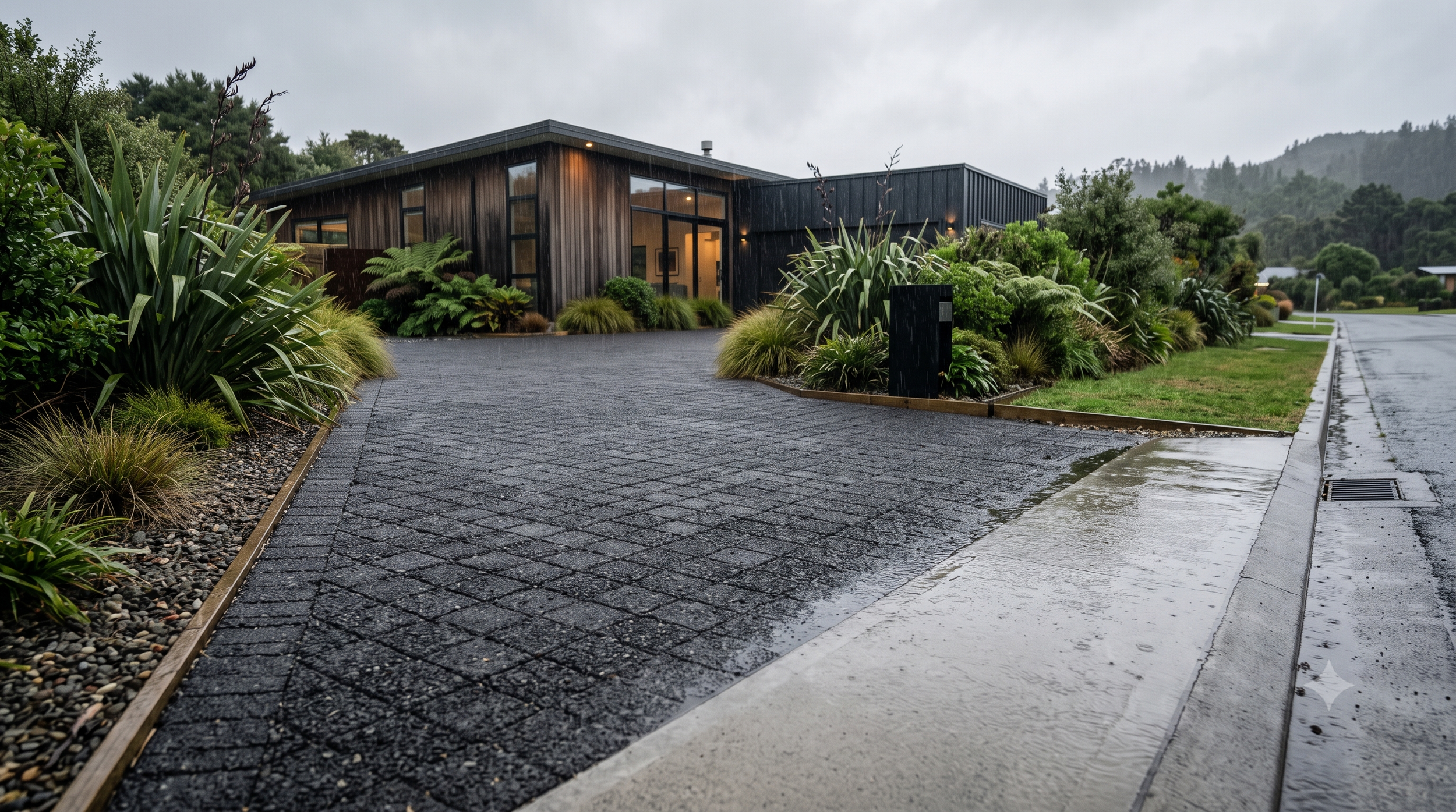
Permeable Paving Is One Layer of the Solution
Permeable pavement helps NZ sites cut stormwater runoff and meet consent conditions. How Porous Lane works, where it fits, and what to plan for.
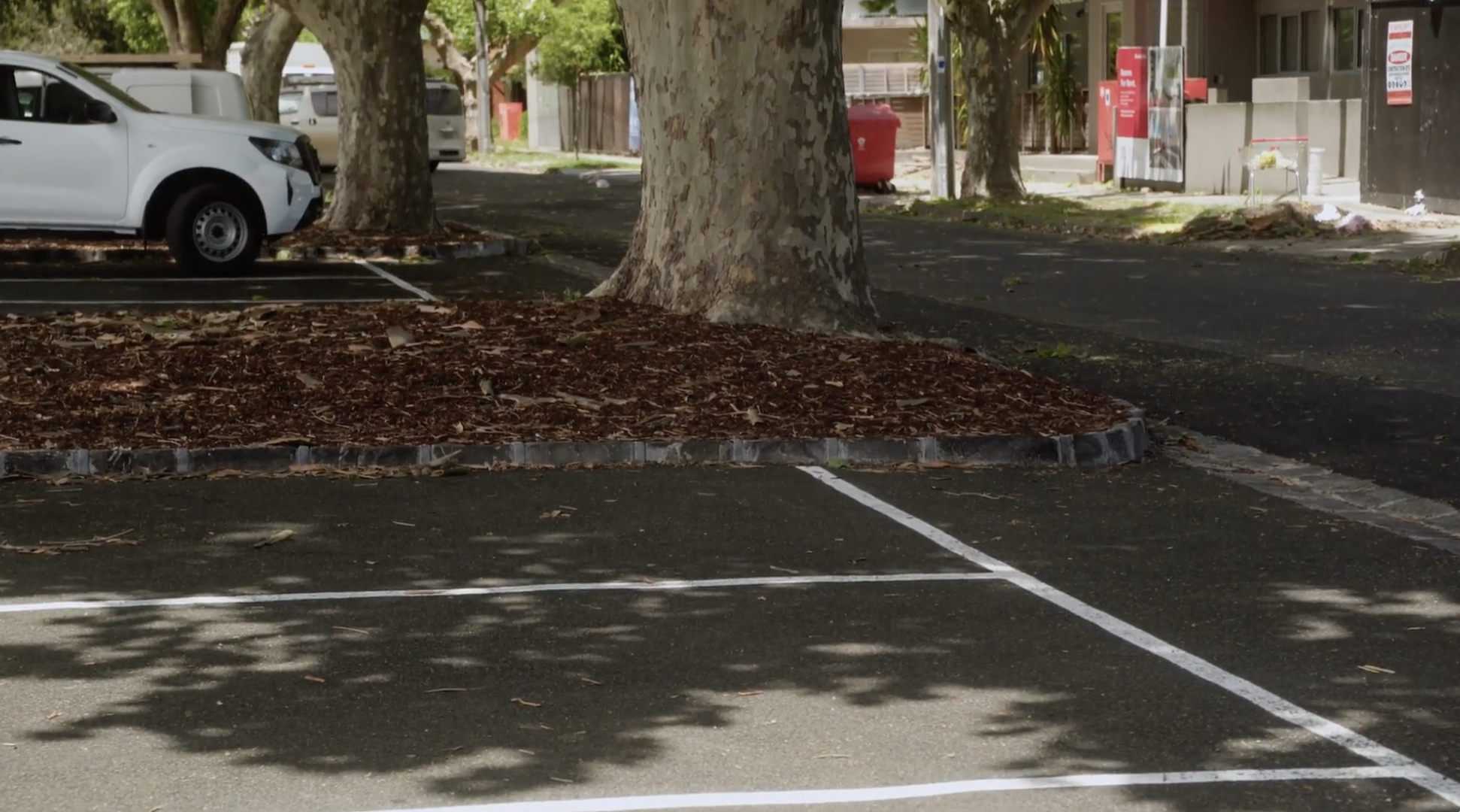
Case Study: Porous Lane St. Marys Park Carpark
This St. Marys Park case study explores how Porous Lane permeable paving was installed across just 26% of a carpark to capture stormwater, reduce surface runoff and support passive irrigation for surrounding urban trees.
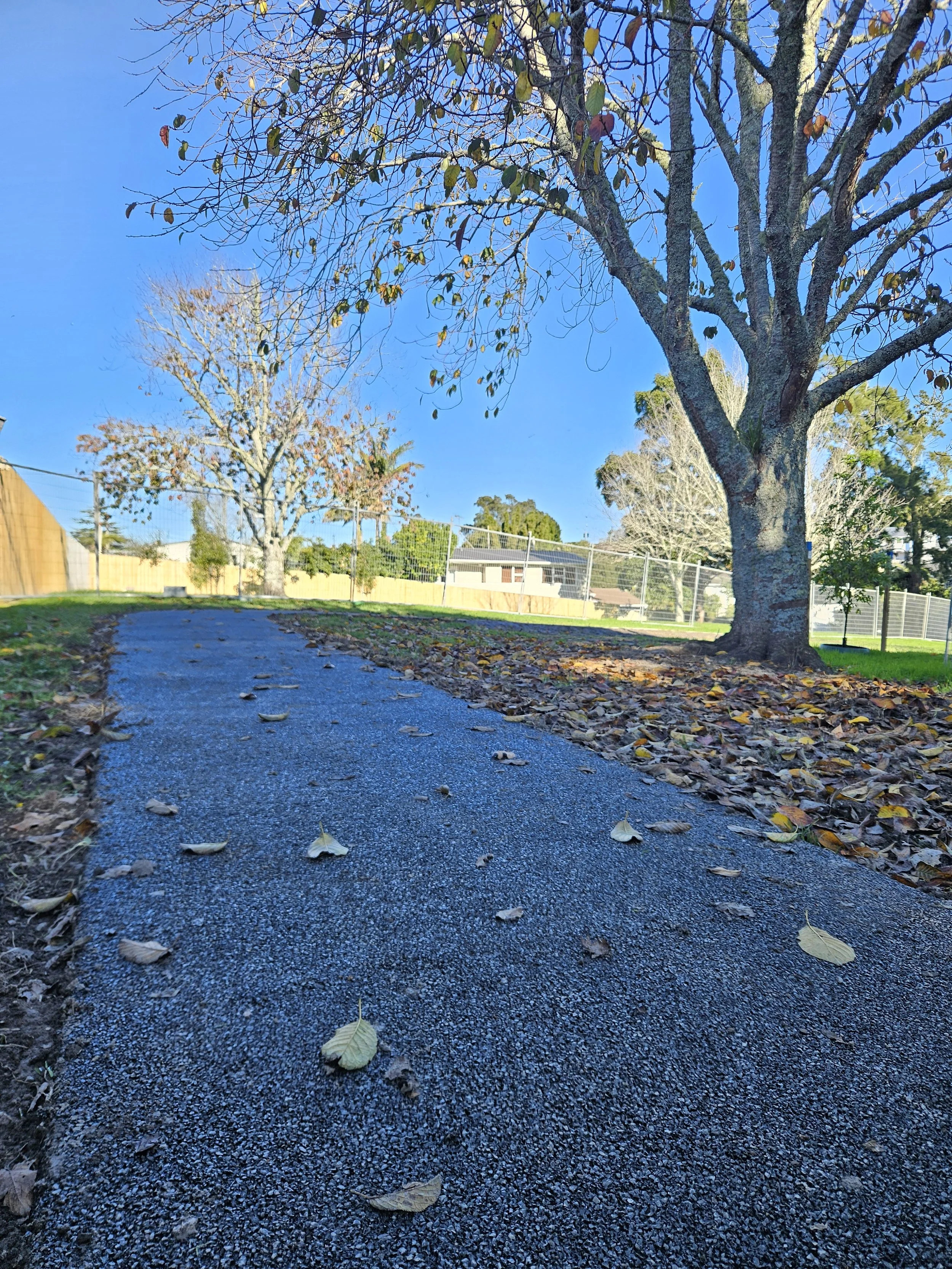
Porous Lane Case Study - Elliott Reserve, Auckland
Delivering a durable footpath while protecting mature trees
Elliott Reserve presented a common challenge for urban infrastructure projects: how to construct a new footpath through an area with established tree root systems without compromising either the asset or the trees.
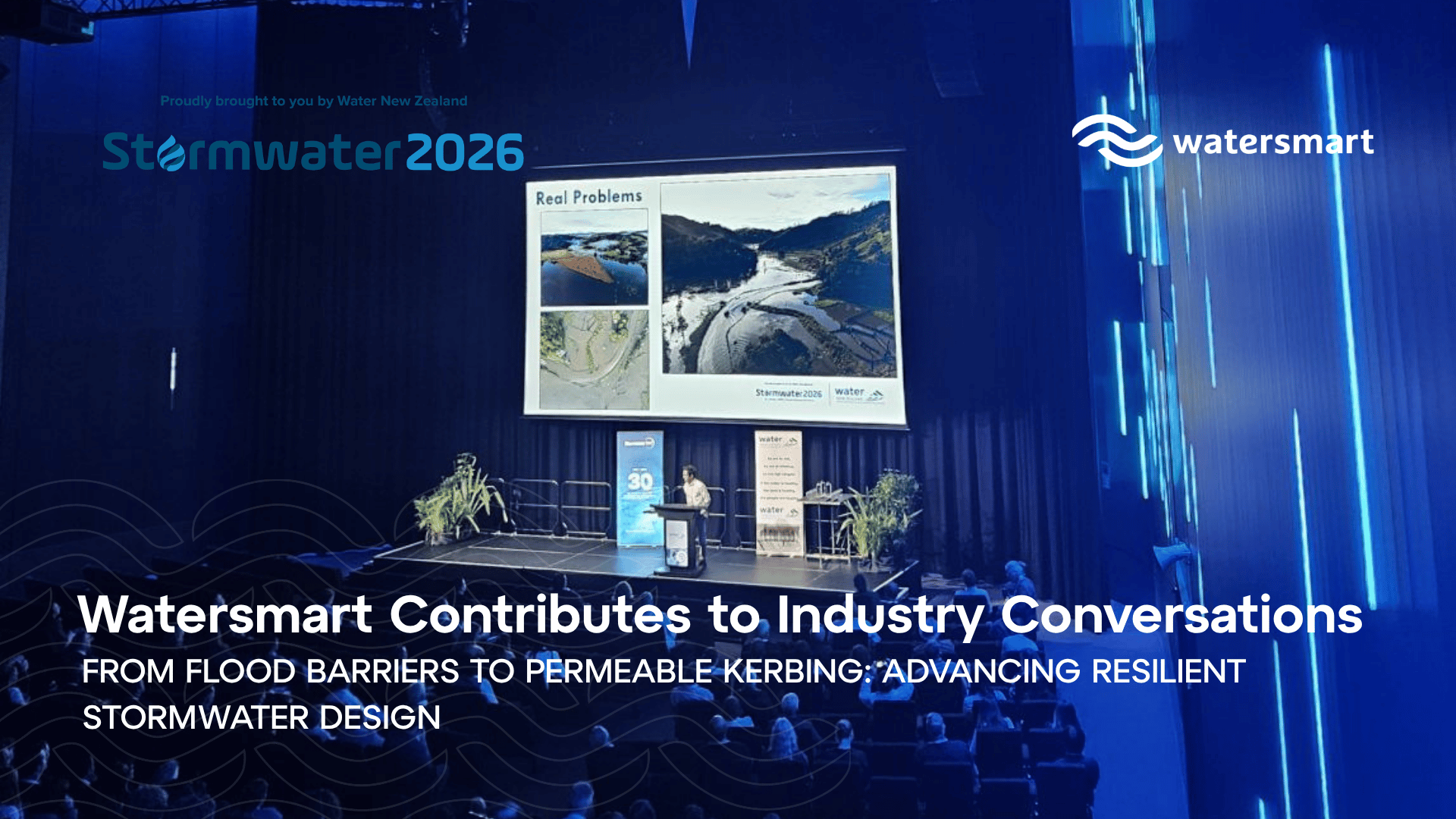
Watersmart Contributes to Industry Conversations at the 2026 Stormwater Conference
The 2026 Stormwater Conference brought together councils, engineers, consultants, contractors, and industry leaders from across New Zealand and Australia to tackle one of the sector’s biggest challenges: how we build more resilient communities in the face of increasing climate and infrastructure pressure.
This year, the Watersmart team was proud to contribute not only through our exhibition presence, but also through two technical presentations that explored practical, real-world approaches to stormwater resilience, flood mitigation, and distributed water management.
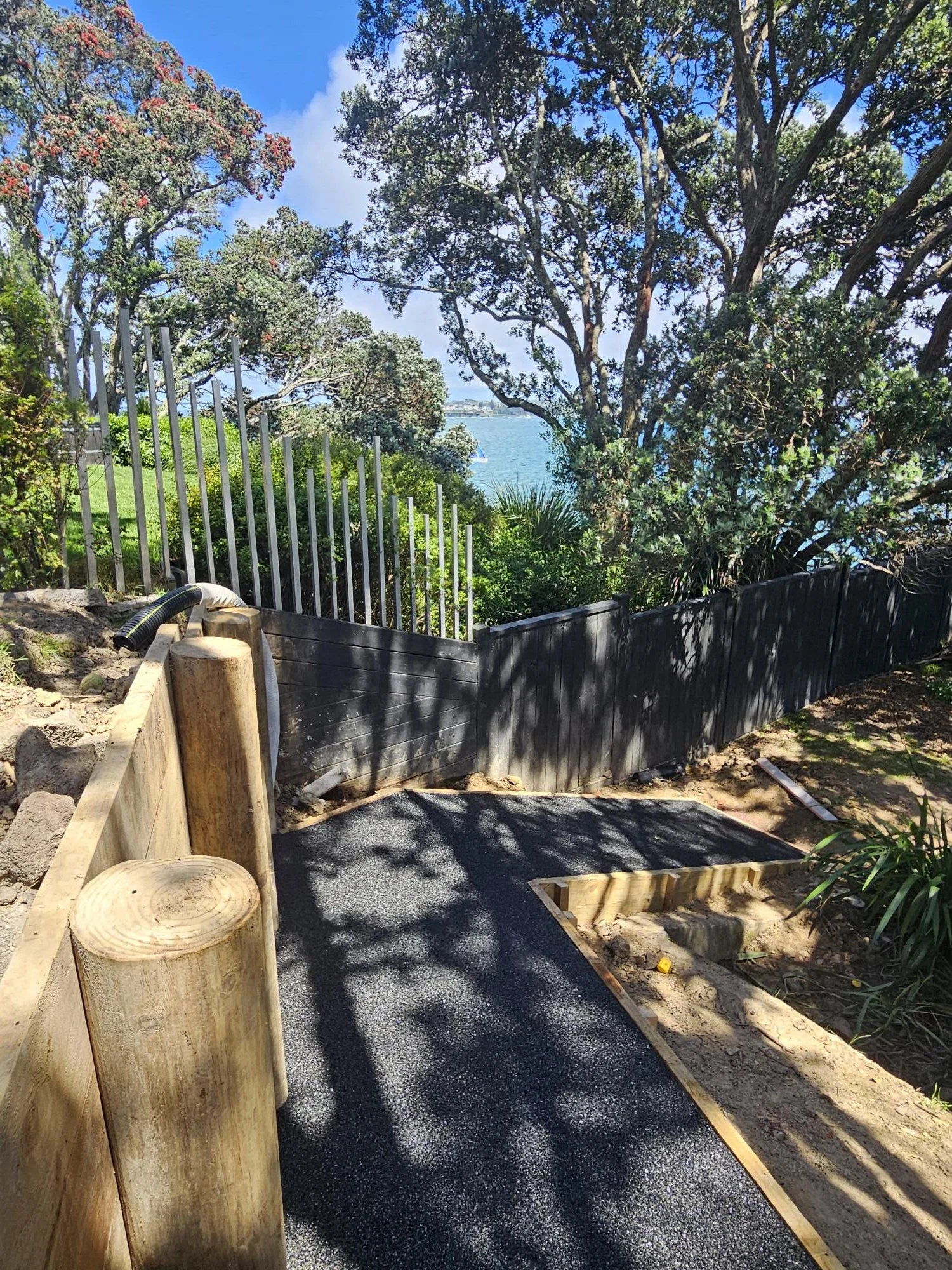
Porous Lane Case Study: Blair Park, Auckland
This Auckland Council project was delivered by Ventia, who are leading the way in integrating low-carbon, sustainable materials into public works. Ventia introduced Porous Lane as an alternative to a traditional timber boardwalk and tree root bridging detail to improve long-term performance, reduce environmental impact, and enhance safety for users on a steep, tree-sensitive slope. Watersmart was engaged to support the delivery of this solution.
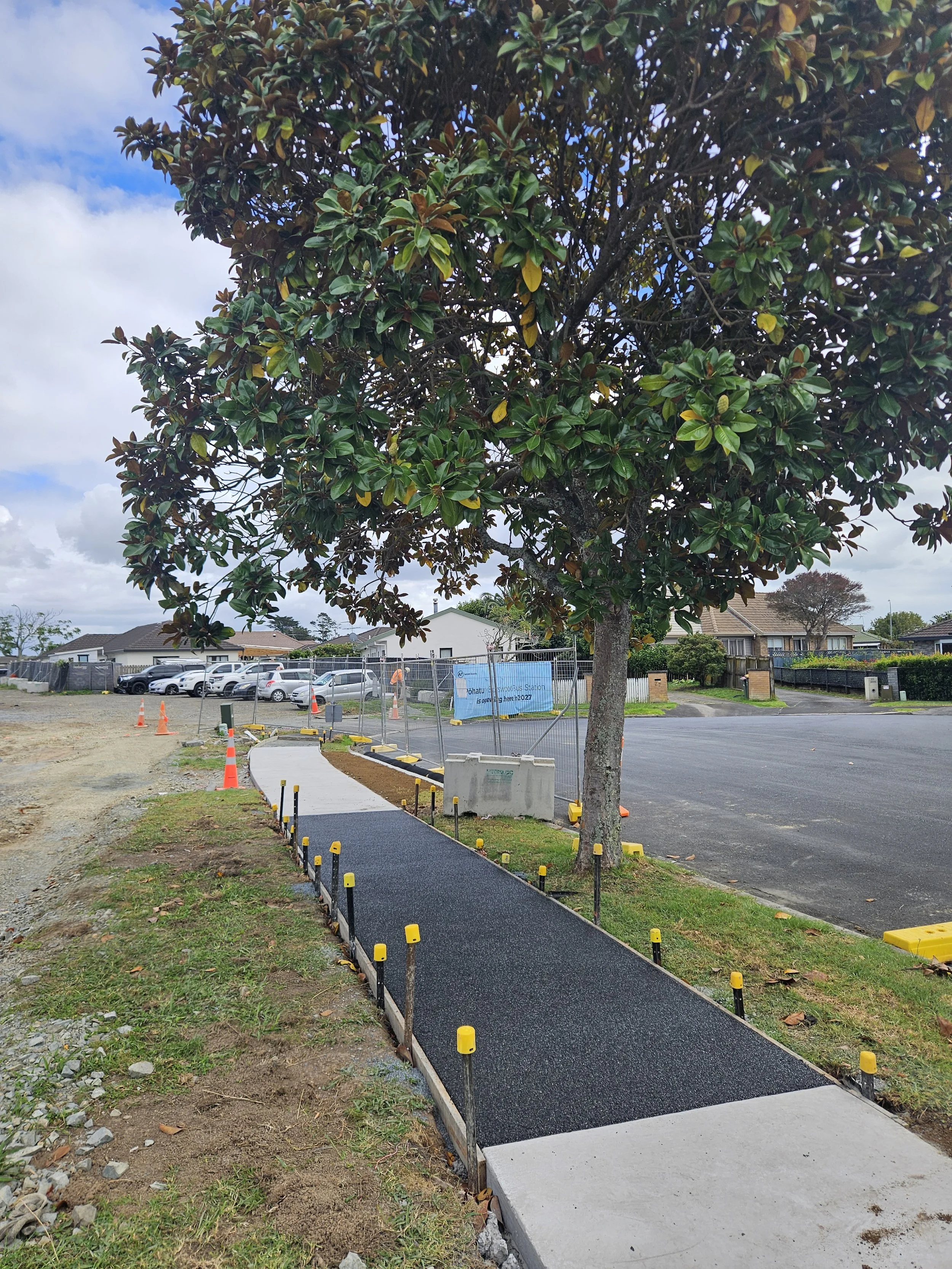
Porous Lane Case Study: Auckland Transport – Eastern Busway Project
Read more about how Auckland Transport used prous lane to create resilient and future proofing footpaths for the Eastern Busway Project.
Sponge Cities: Building Urban Resilience Without Slowing Growth
Around the world, leading cities are adopting a more integrated approach: designing urban environments to behave like sponges — absorbing, storing, filtering and gradually releasing rainwater rather than immediately channelling it away.
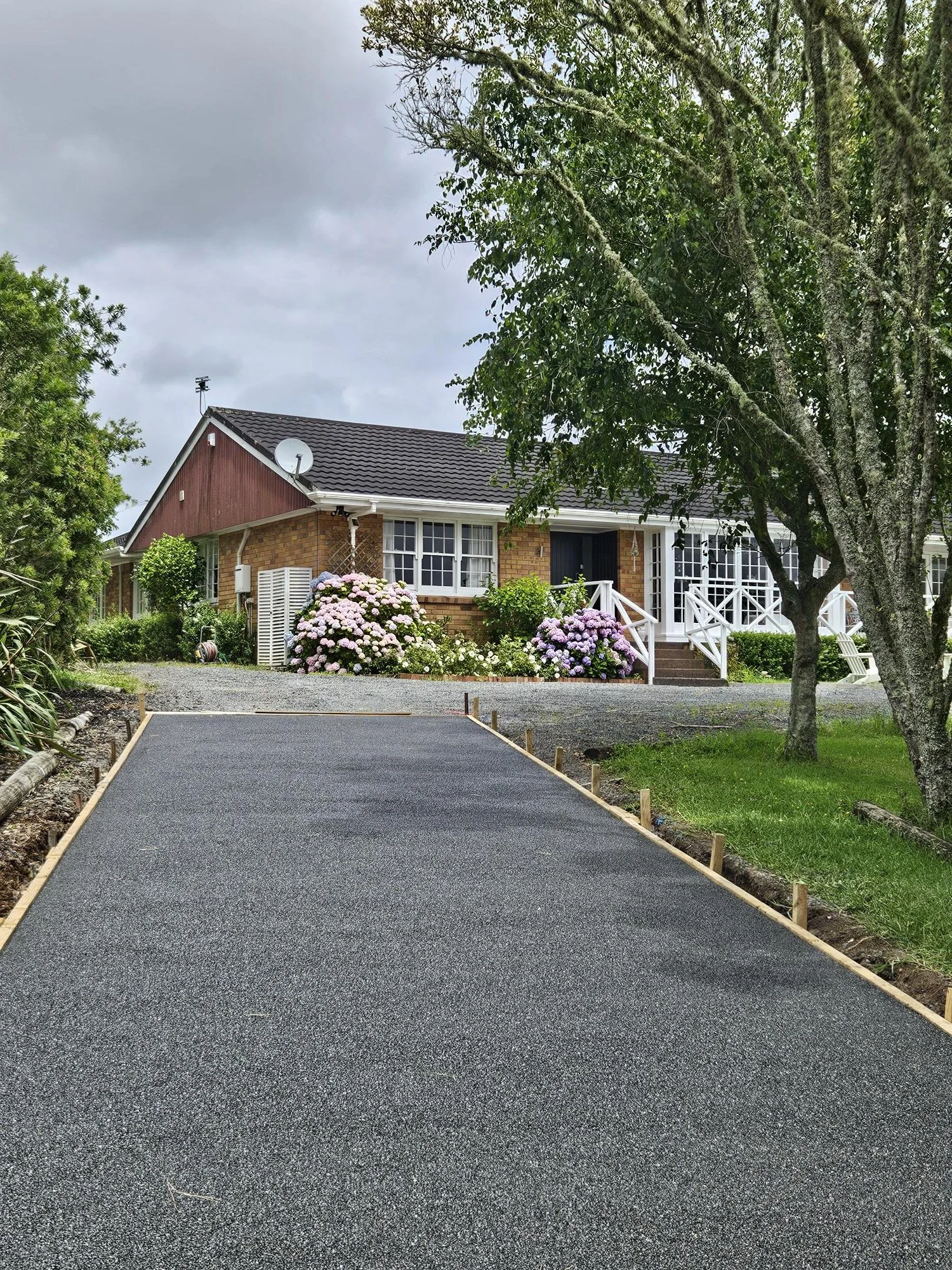
Porous Lane Case Study: Driveway, Henderson Valley
Porous Lane driveway installed on in Henderson Valley to prevent water pooling and help stormwater management.
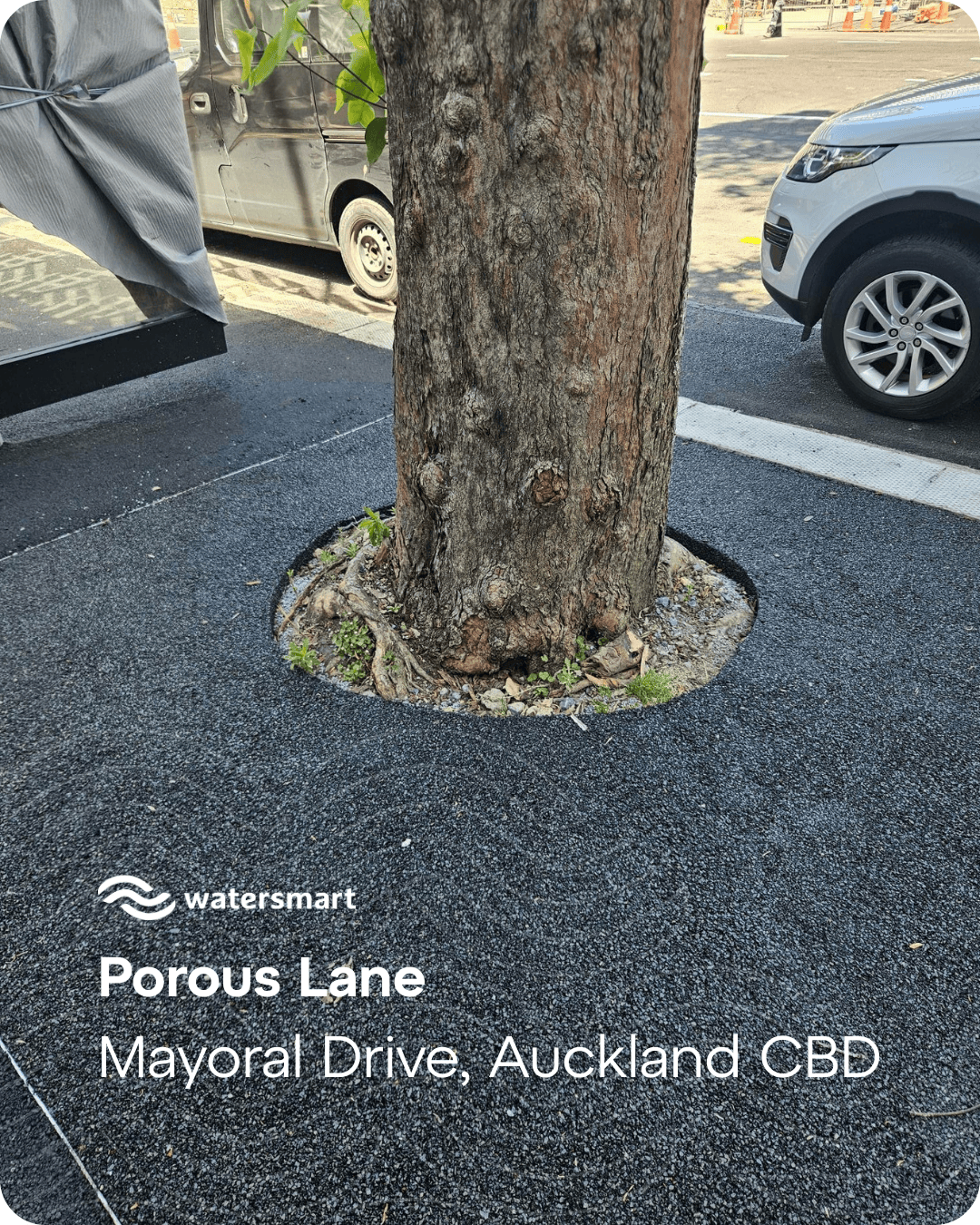
Porous Lane Case Study: Tree Pits - Mayoral Drive, Auckland CBD
Porous Lane tree pits installed on Mayoral Drive, Auckland CBD to encourage tree growth and reduce maintenance.

Porous Lane Delivers Sustainable, Low-Impact Surfacing for Te Whare Pora at Auckland Botanic Garden in Manurewa
Te Whare Pora, a significant cultural and community space, required a landscape design that expressed sustainability, honoured local heritage, and created a warm, accessible environment for all visitors.
Early discussions between the designer and Mana Whenua highlighted a preference for natural, non-traditional surfacing materials; something that would complement the whenua and minimise environmental impact. This direction created an opportunity to introduce Porous Lane, a permeable pavement made from up to 60% recycled tyres, as a naturally visual, durable, and low-impact alternative.

New Zealand’s First Porous Lane Residential Parking Bay
New Zealand’s First Porous Lane Parking Bay – Te Atatū
Watersmart has completed New Zealand’s first Porous Lane parking bay in Te Atatū — a milestone in sustainable stormwater design. Installed on a steep residential site, the 55m² Porous Lane Traffic Mix in Grey provides a strong, low-maintenance, and highly permeable surface that blends seamlessly with the existing driveway. The result: improved drainage, reduced runoff, and performance exceeding international permeability standards.

WaterSmart Delivers NZ's First Porous Lane Footpath - Homes Hamilton
Watersmart has delivered New Zealand’s first Porous Lane footpath at the Jack’s Landing subdivision for Golden Homes Hamilton. In partnership with Siteworks Limited, 207m² of this innovative permeable pavement was installed, recycling thousands of tyres while easing pressure on stormwater systems.
Developed by the University of Melbourne and introduced to New Zealand by Watersmart in May 2025, Porous Lane is a durable, sustainable alternative to traditional concrete. The success at Jack’s Landing marks a major milestone for greener urban infrastructure in Aotearoa.

Porous Lane Case Study: City of Sydney
In the heart of Sydney, more than 150 tree surrounds have already been upgraded with Porous Lane permeable pavement, covering over 350m² and recycling 1,050+ tyres to date. The City of Sydney is replacing cracked concrete surrounds with a solution that is both resilient to root movement and designed to support healthier urban trees through high infiltration.

Porous Lane Case Study: Tuggeranong Foreshore, ACT
A 156 m² Porous Lane footpath at Tuggeranong Foreshore is helping trees thrive by recycling 468 tyres into a flexible, permeable pavement that delivers water to the roots while resisting cracks from root growth.
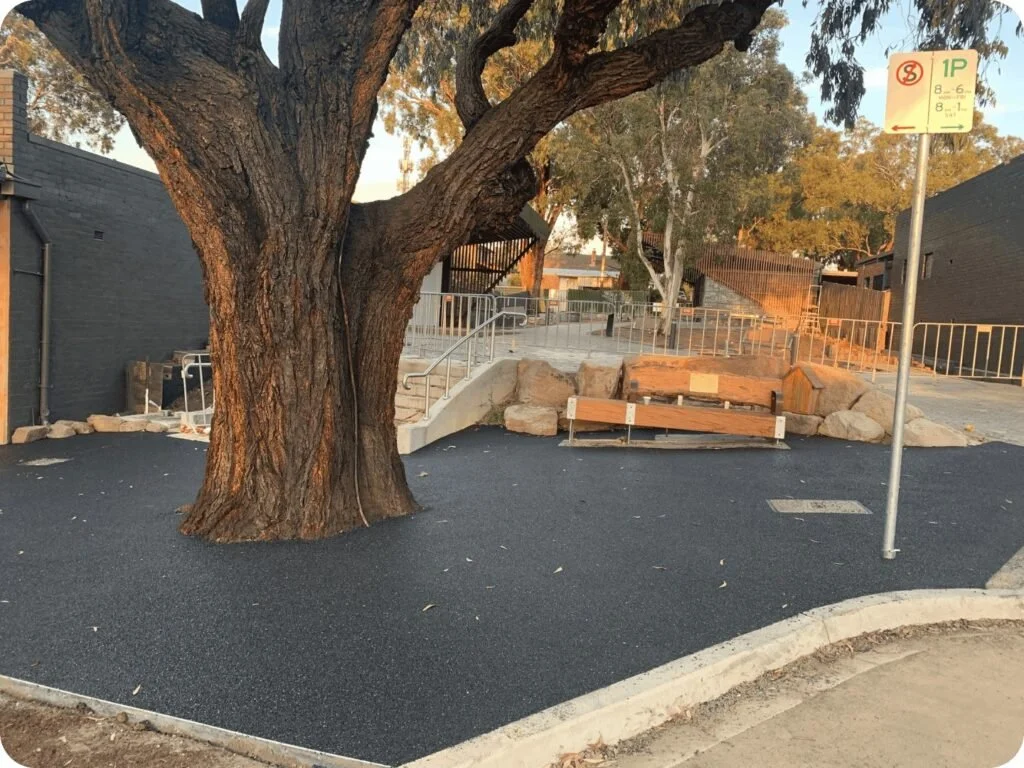
Porous Lane Case Study: City of Banyule
High performance permeable pavement | The installation of Porous Lane for a permeable tree surround in the City of Banyule to accomodate root growth.

Porous Lane Case Study: City of Melbourne
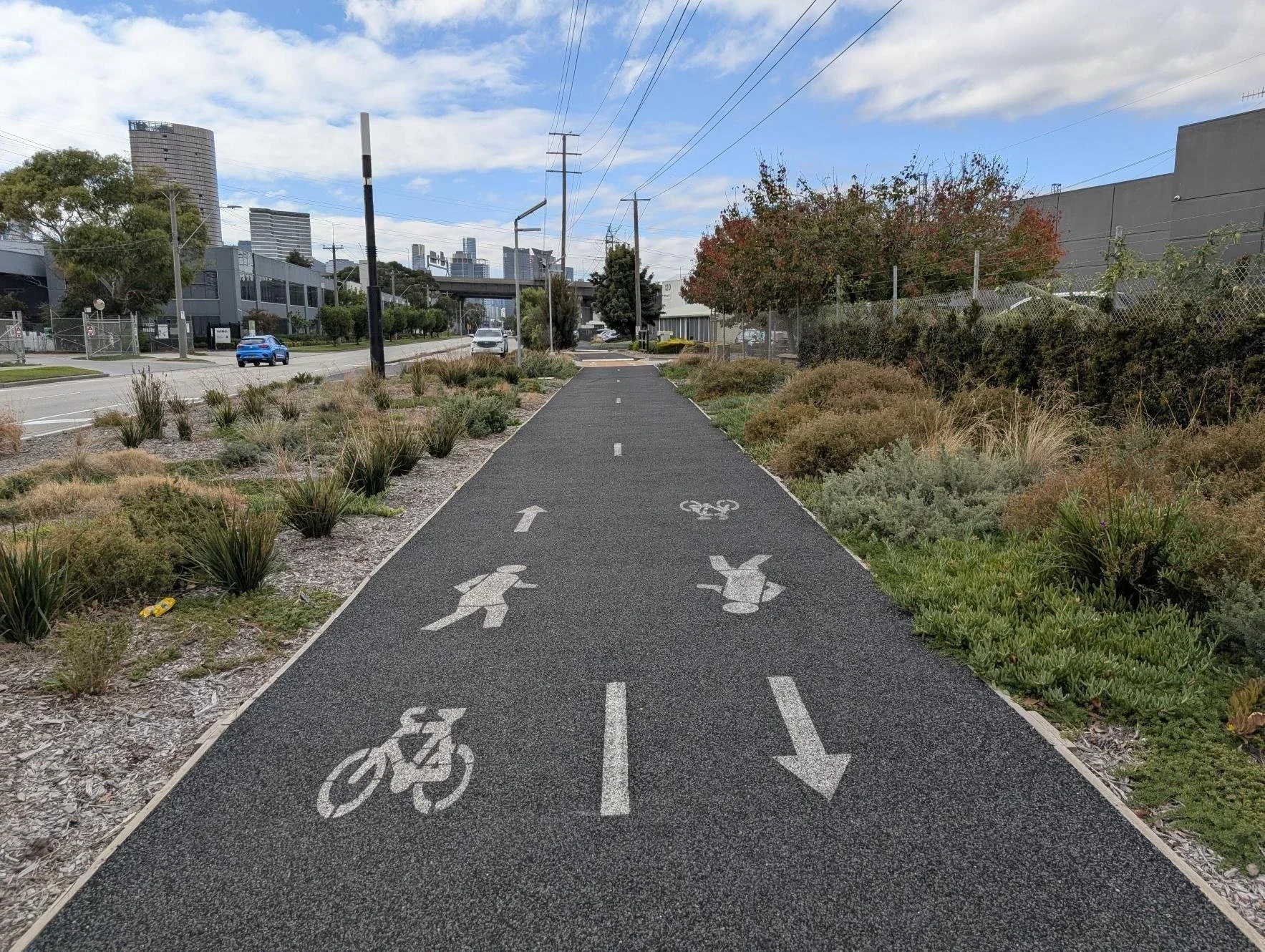
High performance permeable pavement | The installation of Porous Lane for a permeable bike path in the City of Melbourne to prevent water pooling.

Watersmart Wins Stormwater Innovation Award 2025
Watersmart Wins Prestigious National Innovation Award for Stormwater Solution Porous Lane
Tell Us About Your Project
From conceptualising to constructing, we’re ready to design your architectural dream. We promise a client-centric approach that empowers ideas, eases concerns, and delivers quality craftsmanship we’ll all be proud of.