When a tyre reaches the end of its life on the road, valuable material remains. Recovering that material creates an opportunity, but its next purpose depends on industries finding practical ways to use it.
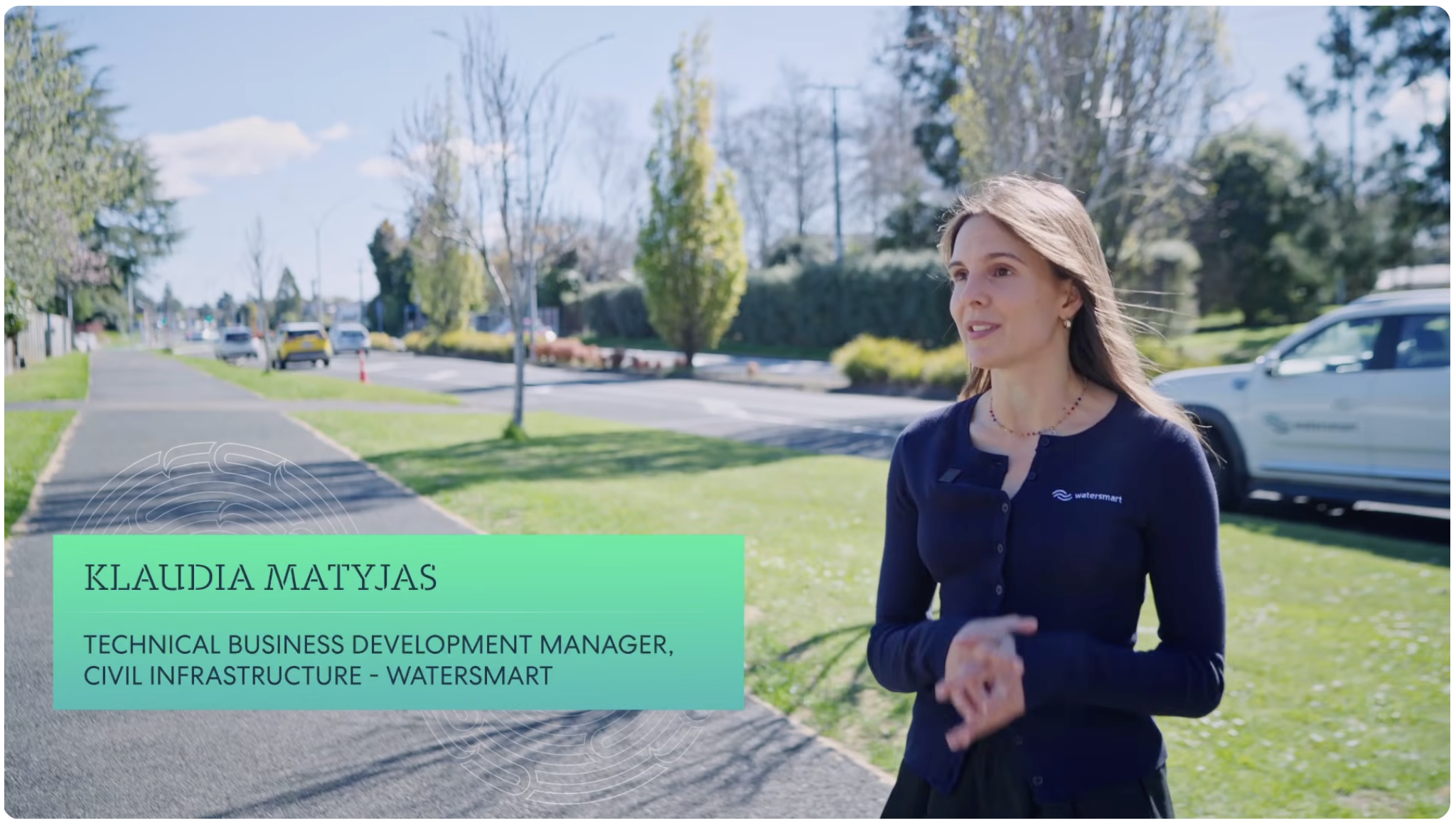
A recent Tyrewise video explores this connection, bringing together perspectives from across New Zealand’s tyre recovery and reuse sector. Among them is Watersmart’s Klaudia Matyjas, our Technical Business Development Manager for Civil Infrastructure and Porous Lane specialist.
For Watersmart, the story connects directly with our focus on sustainability: incorporating recycled materials into solutions that address real infrastructure challenges.
Connecting recovery with practical use
A key theme in the video is the importance of creating demand for material recovered from end-of-life tyres. Collection and processing need to be supported by applications that give designers, councils and businesses a reason to specify and use that material.
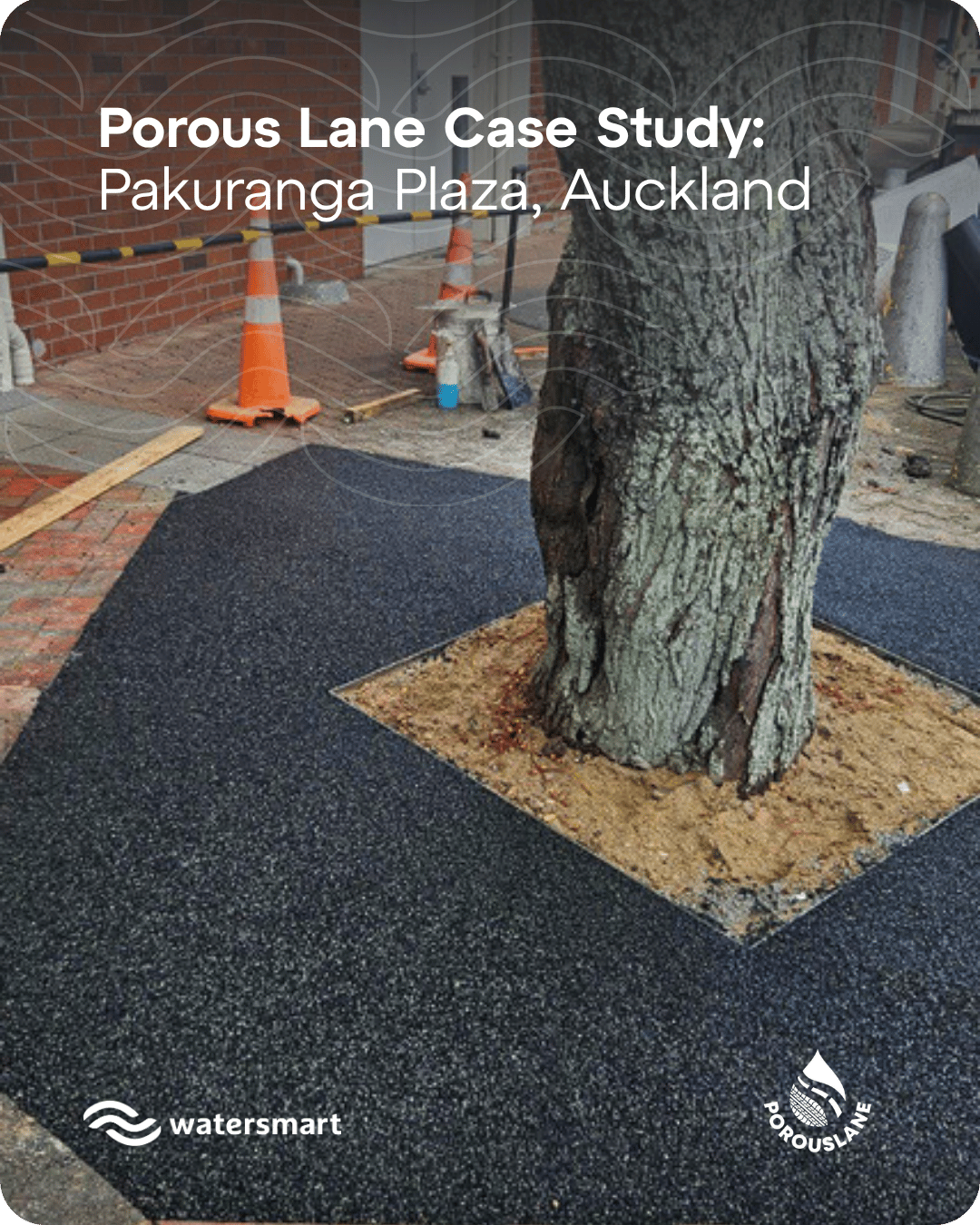
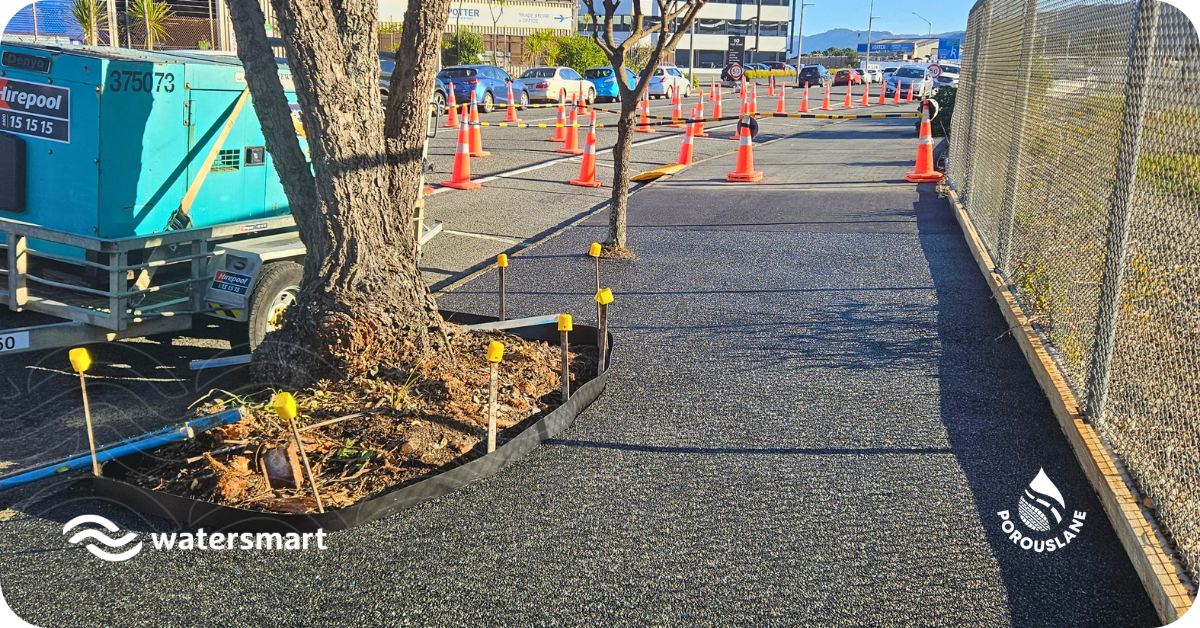
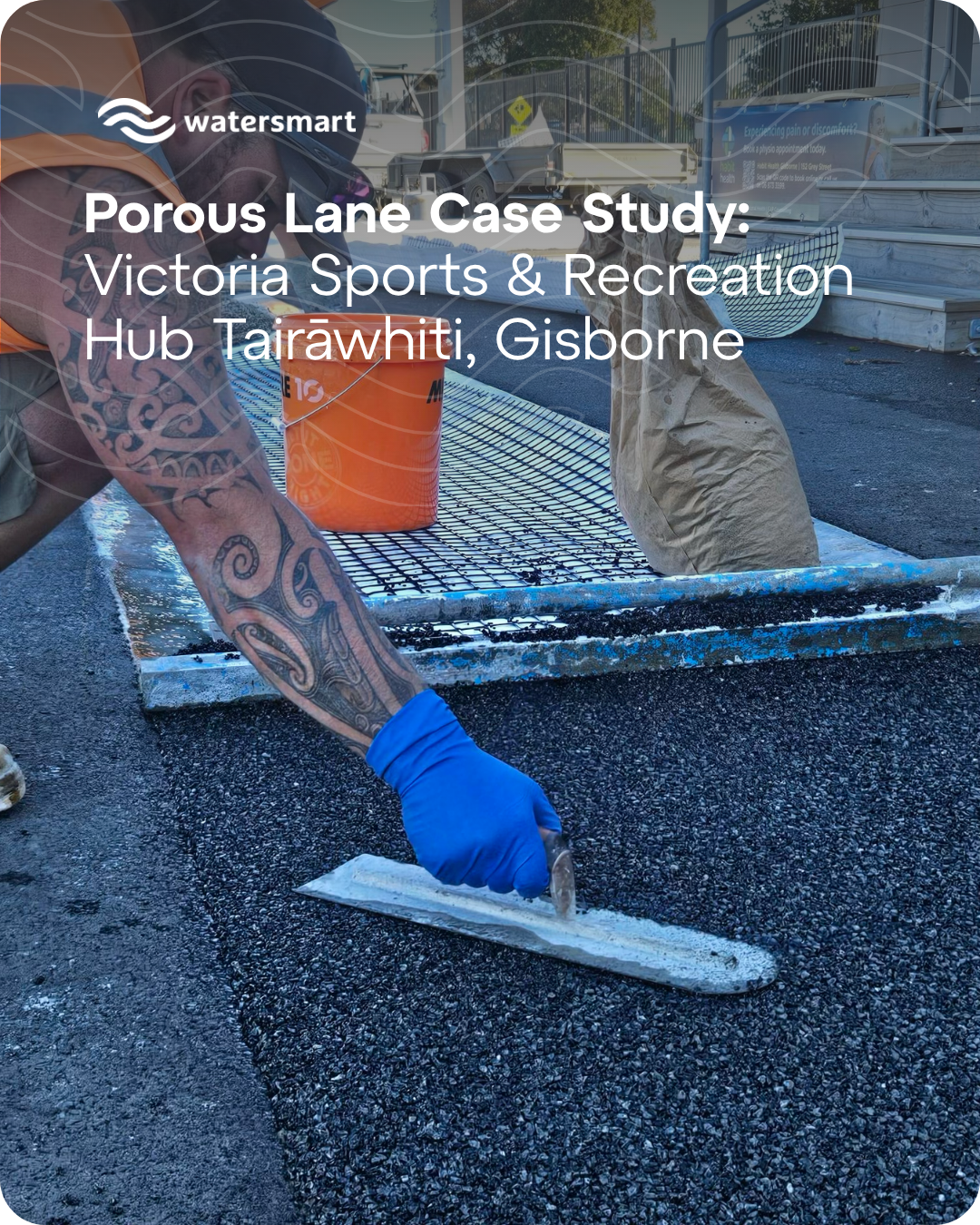
Porous Lane is one example. The permeable pavement incorporates recycled tyre rubber into a surface designed to allow water to pass through, helping project teams manage stormwater across applications such as footpaths, tree surrounds and carparks.
This gives the recovered rubber a functional role in the built environment, connecting material reuse with the water management needs of a project.
Confidence in the supply chain
Bringing a solution to market also requires confidence that its components will be available.
In the video, Klaudia explains that knowing Tyrewise operates as a tyre stewardship scheme in New Zealand gave Watersmart confidence in the accessible supply chain for rubber crumb, a key component of Porous Lane.
That connection matters. Reliable access to recovered materials helps businesses plan, develop applications and support their adoption. It links the work of tyre collectors and processors with the people designing and delivering infrastructure.
Progress through industry collaboration
The video also highlights the value of people across different sectors working towards shared outcomes. Klaudia reflects on seeing designers, councils and regulators come together at a recent water conference, and the opportunity to integrate more sustainable technologies across New Zealand.
For us, that collaboration is an essential part of progress. Introducing a material is one step. Helping project teams understand where it fits, assess its suitability and incorporate it into a workable design is what supports its use.
Recycled content is part of that conversation, alongside performance, site conditions, installation and ongoing maintenance. A sustainable material choice needs to work for the project throughout its service life.
Porous Lane demonstrates how resource recovery and water management can connect in a practical application. It is one way Watersmart is helping create opportunities for recycled materials within New Zealand’s infrastructure.
Watch the Tyrewise video to hear from Klaudia and others working to give end-of-life tyres a new purpose.