
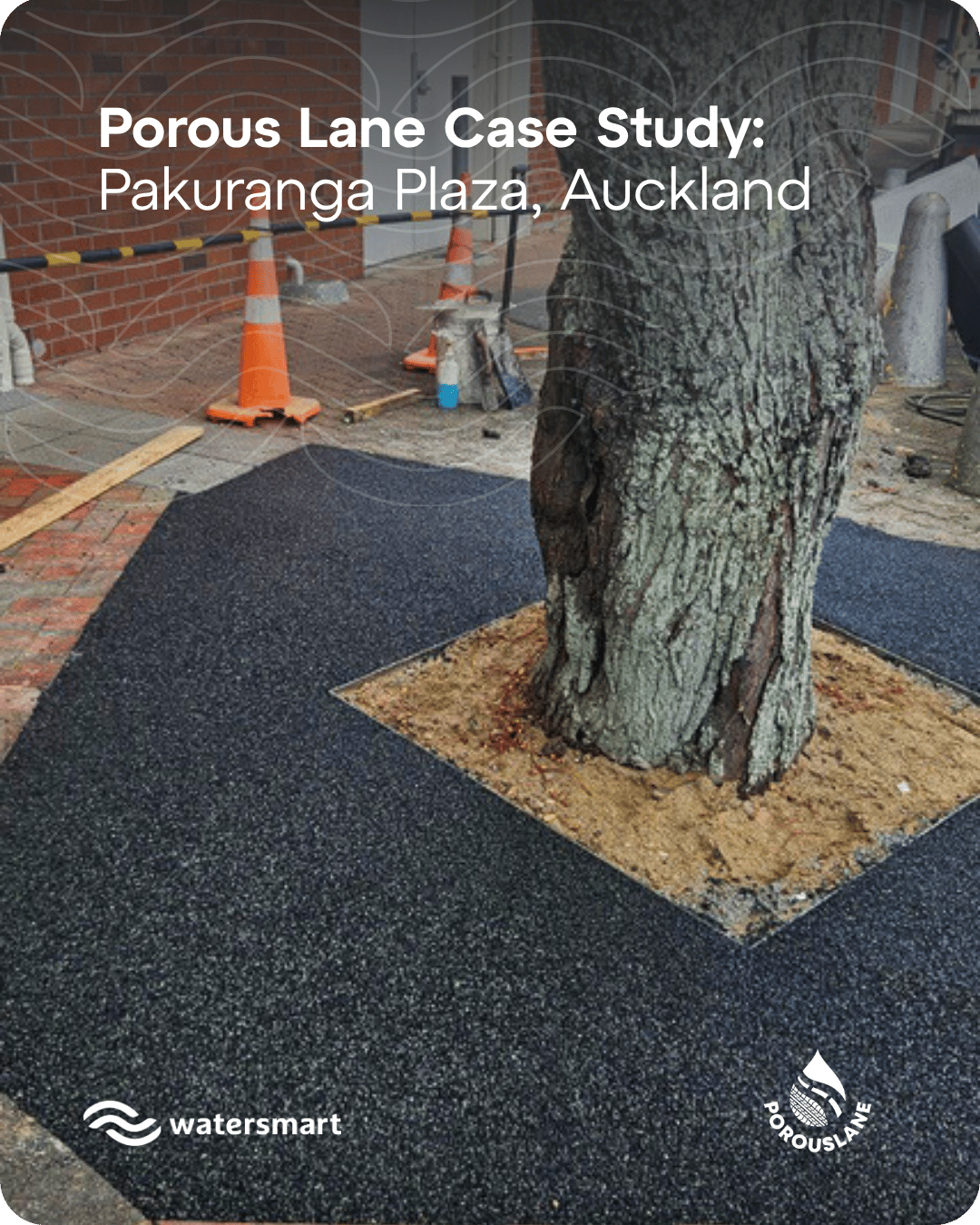
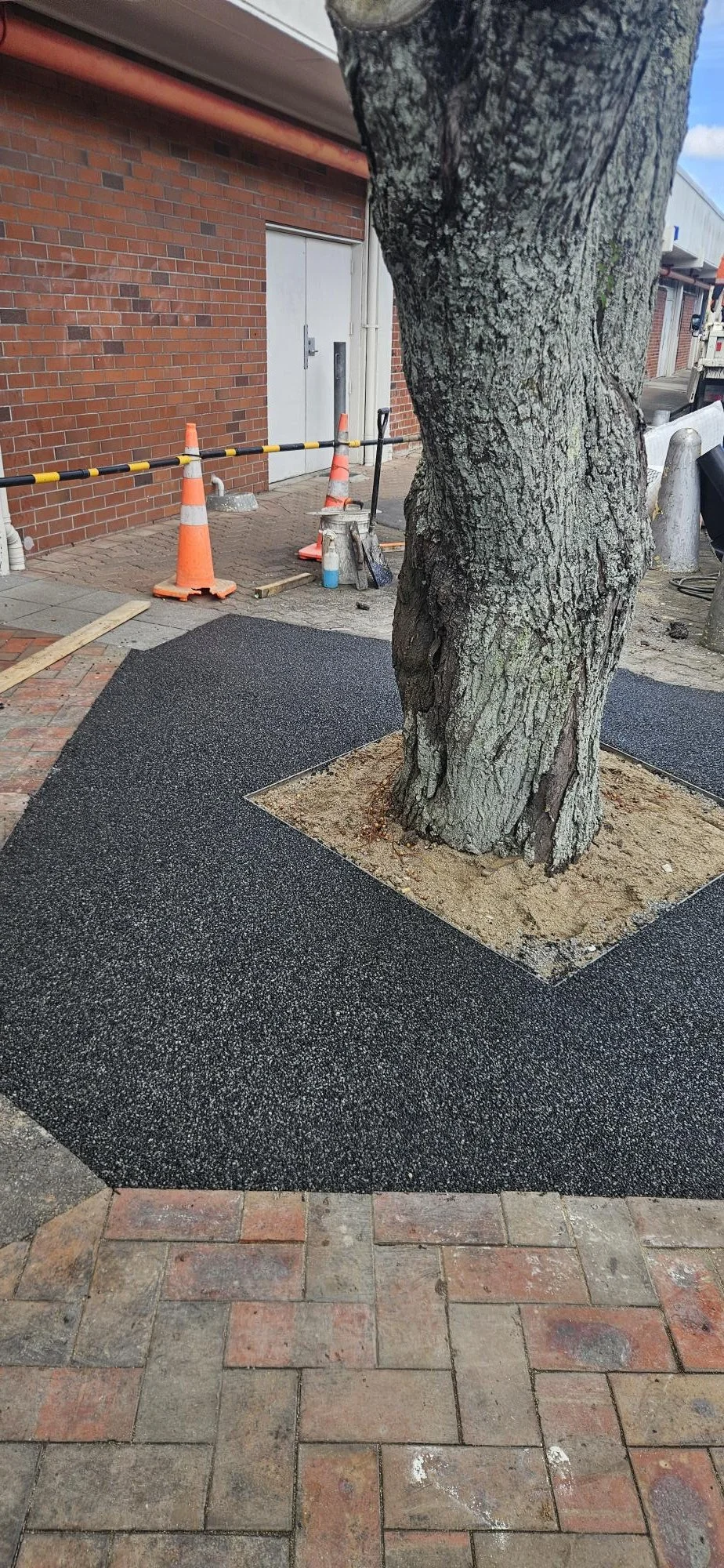
After:
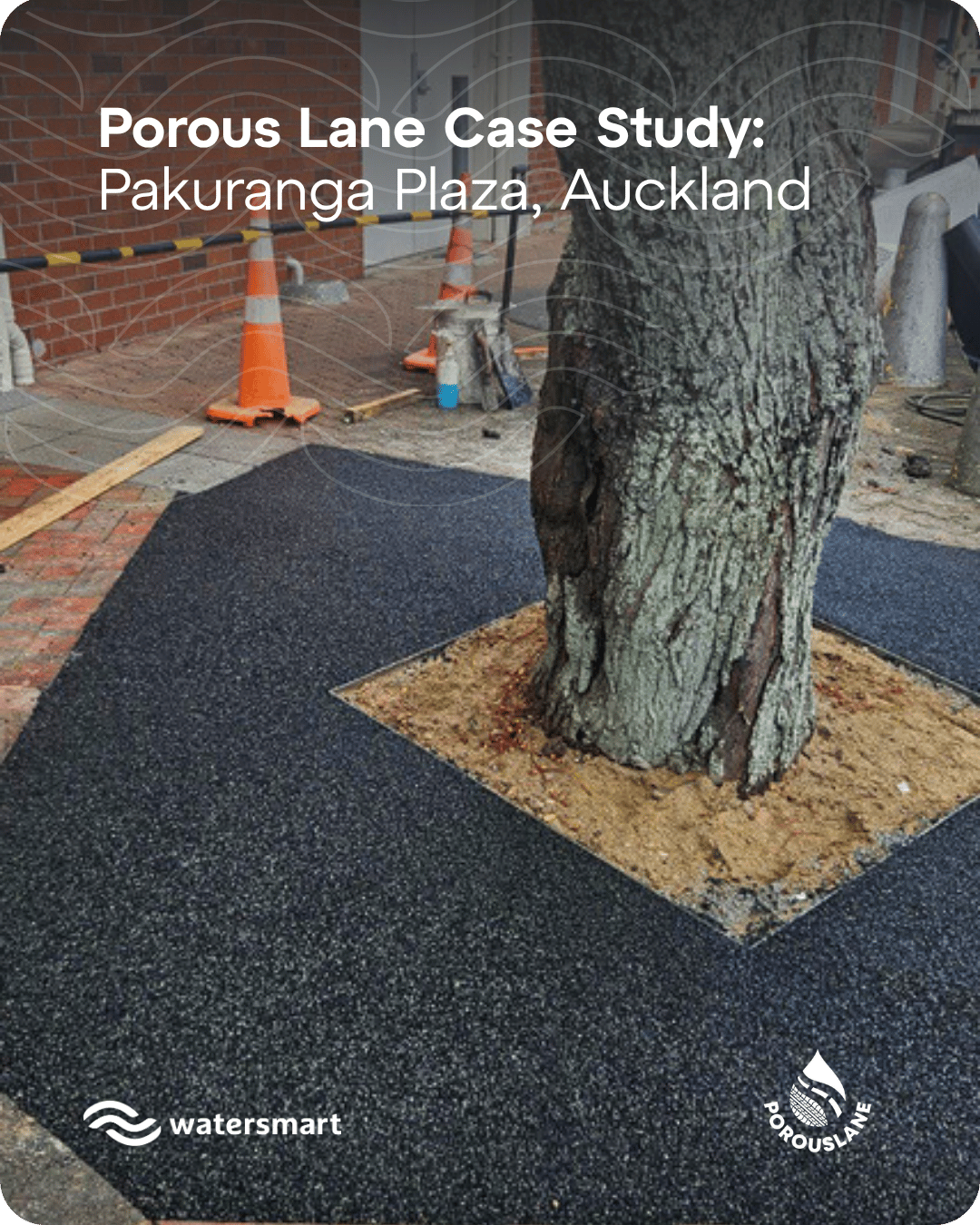
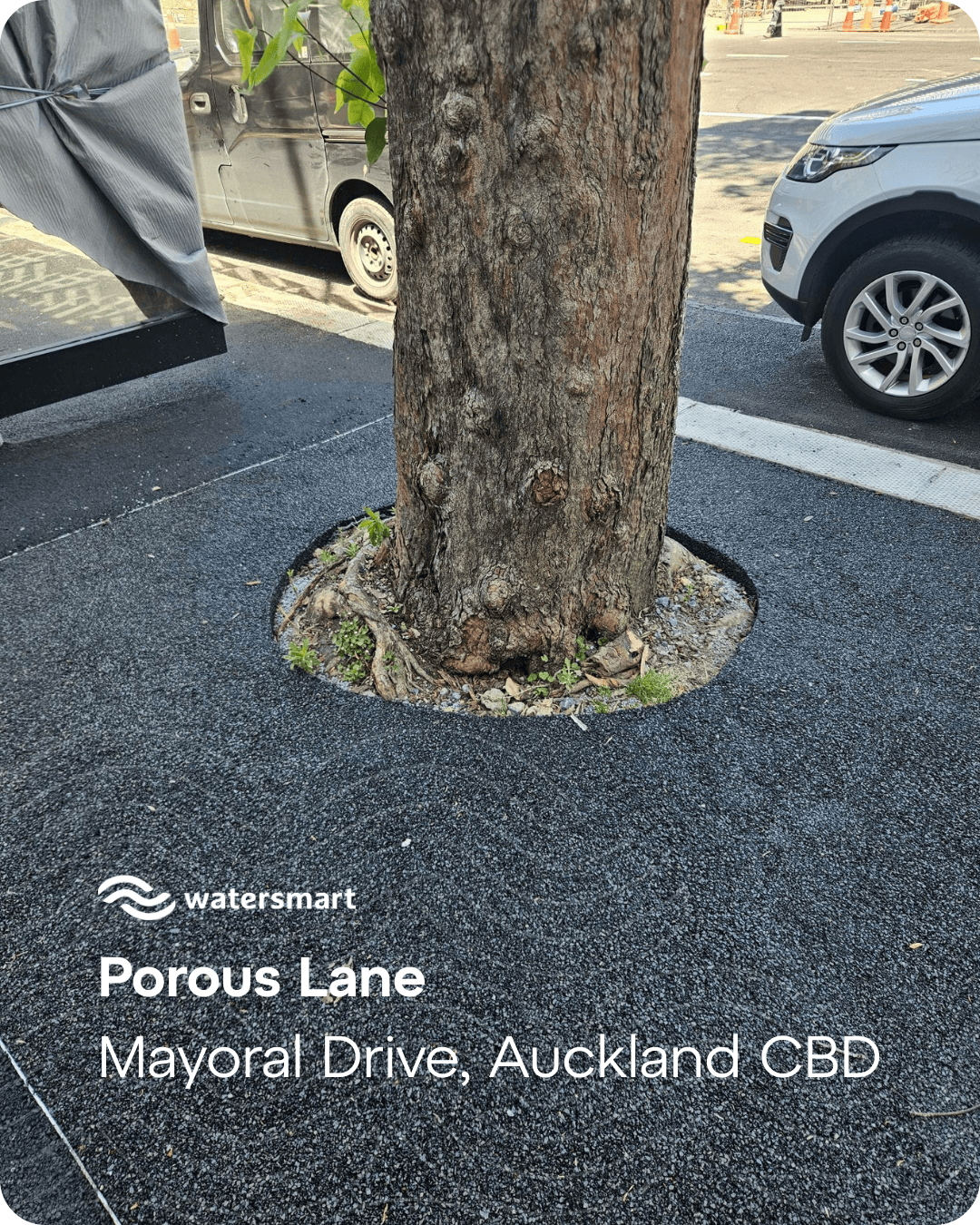
Continuous permeable Porous Lane surface around the tree
Replacing repeated patch repairs with a permeable, semi-flexible surface designed for safer pedestrian access and healthier urban trees.
The challenge
At Pakuranga Plaza, an established tree sits within a busy paved environment. As roots grow, conventional rigid paving can lift and crack, creating uneven edges and pedestrian trip hazards. Repeated patching addressed the immediate surface defect but left the underlying conflict between tree growth and paving unresolved.
The redevelopment offered an opportunity to move from recurring reactive maintenance towards a longer-term solution that considers pedestrian safety and the needs of the tree together.
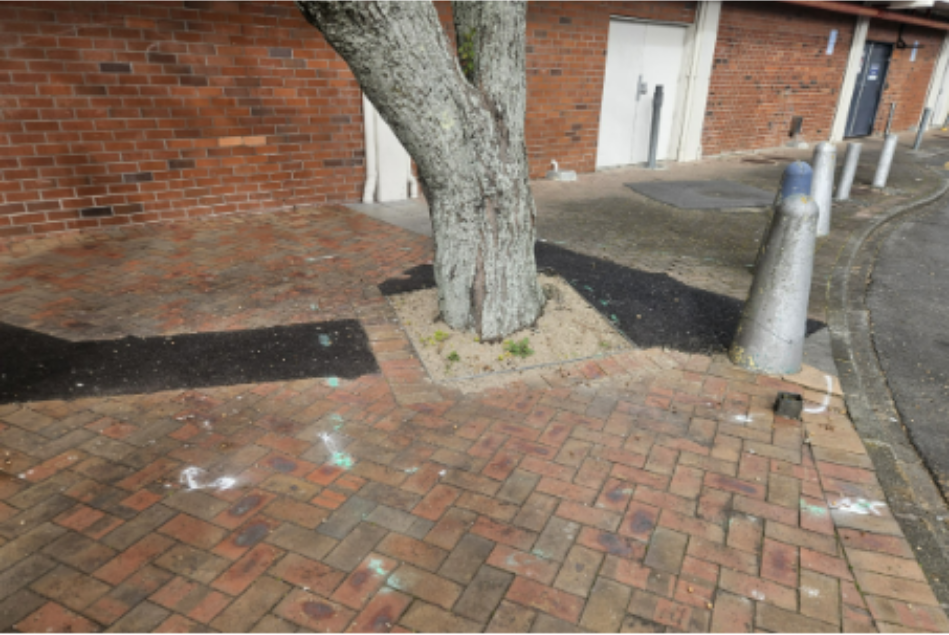
Before
Repeated asphalt patching to address uneven and lifted pavers
The solution
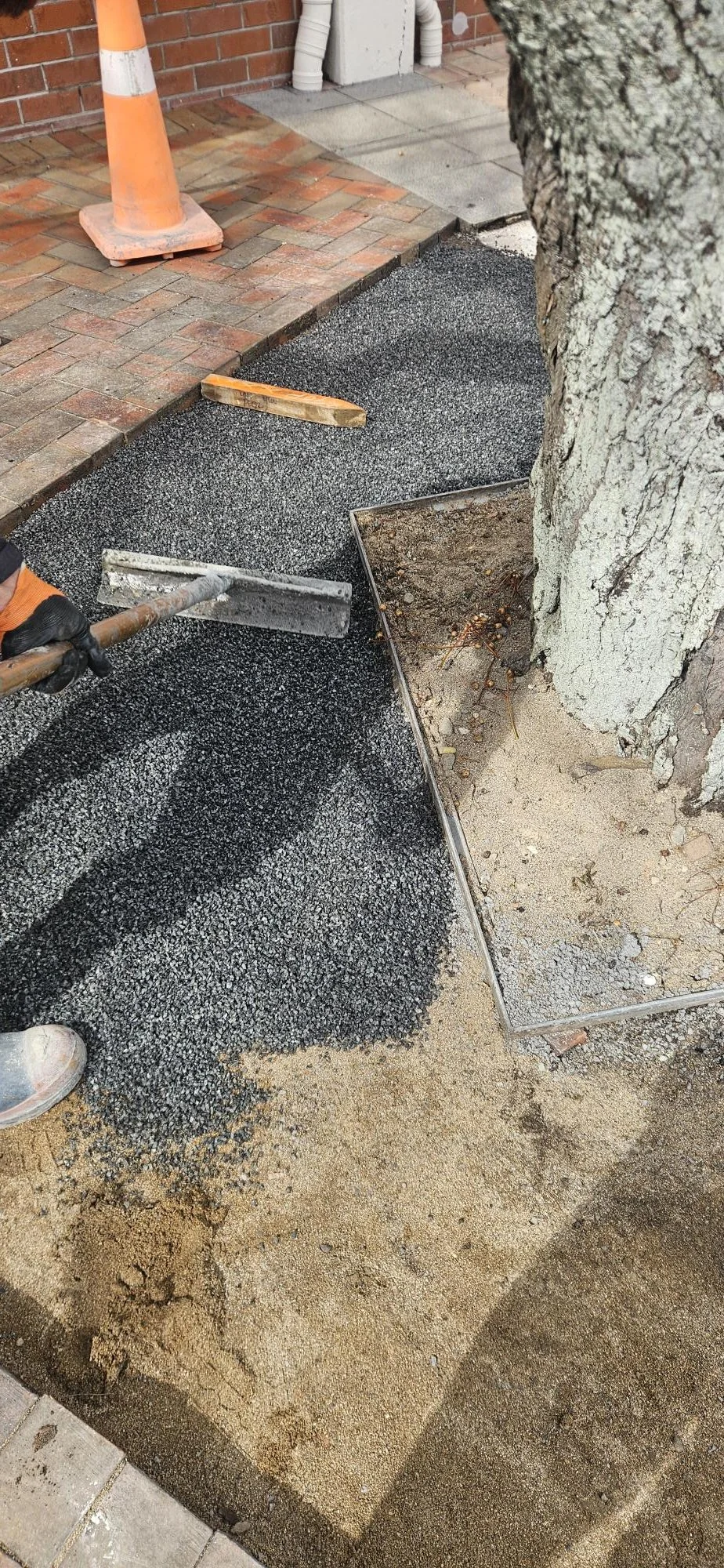
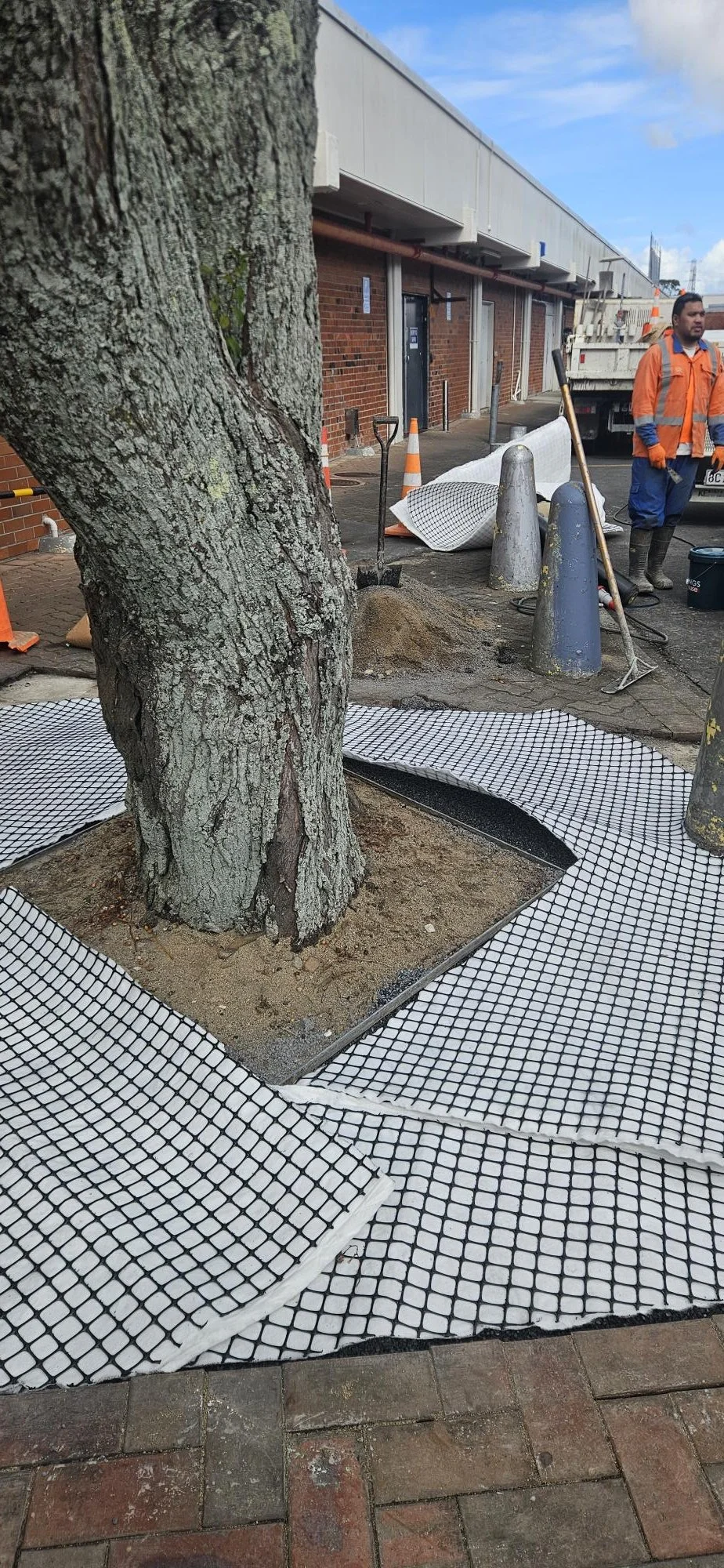
The area around the existing tree was resurfaced with Porous Lane, a proprietary permeable pavement made from natural aggregates and recycled tyre rubber bound with polyurethane. Its semi-flexible structure is designed to better tolerate gradual movement around tree roots than conventional rigid paving, while providing a continuous walking surface.
Porous Lane allows rainfall to pass through the surface into the underlying layers, supporting passive watering of the root zone rather than shedding all rainwater away from the tree.
Why it matters
Pedestrian safety A smoother, continuous surface helps reduce uneven transitions and trip hazards.
Tree health A highly permeable finish supports rainwater access to the soil beneath.
Maintenance A durable, semi-flexible system aims to reduce the need for repeated patch repairs.
Circular materials Recycled end-of-life tyre rubber is put to productive use in public-facing infrastructure.
From reactive repair to long-term value
The Pakuranga Plaza redevelopment illustrates a practical shift in how urban tree surrounds can be managed. Instead of repeatedly repairing the visible effects of root movement, the project uses a surface selected to accommodate the living landscape while maintaining pedestrian functionality.
The installation creates a continuous, permeable finish around the tree, with the potential to reduce future maintenance interventions and improve access to rainfall.
A small intervention with big relevance
As Auckland continues to intensify, established urban trees need infrastructure that works with them rather than against them. This project shows how a targeted paving upgrade can bring pedestrian safety, water access, resource recovery and long-term asset management into the same decision.
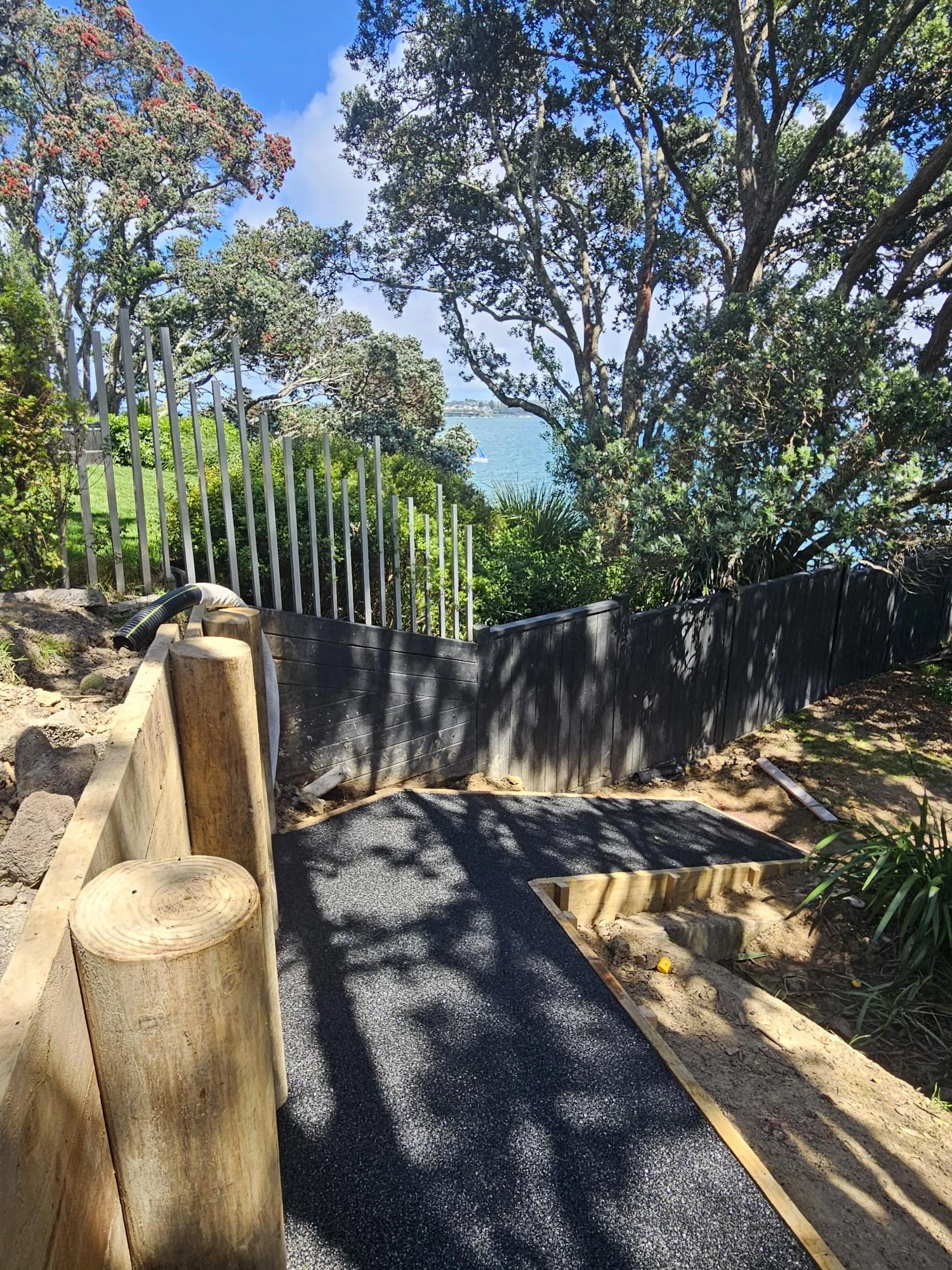
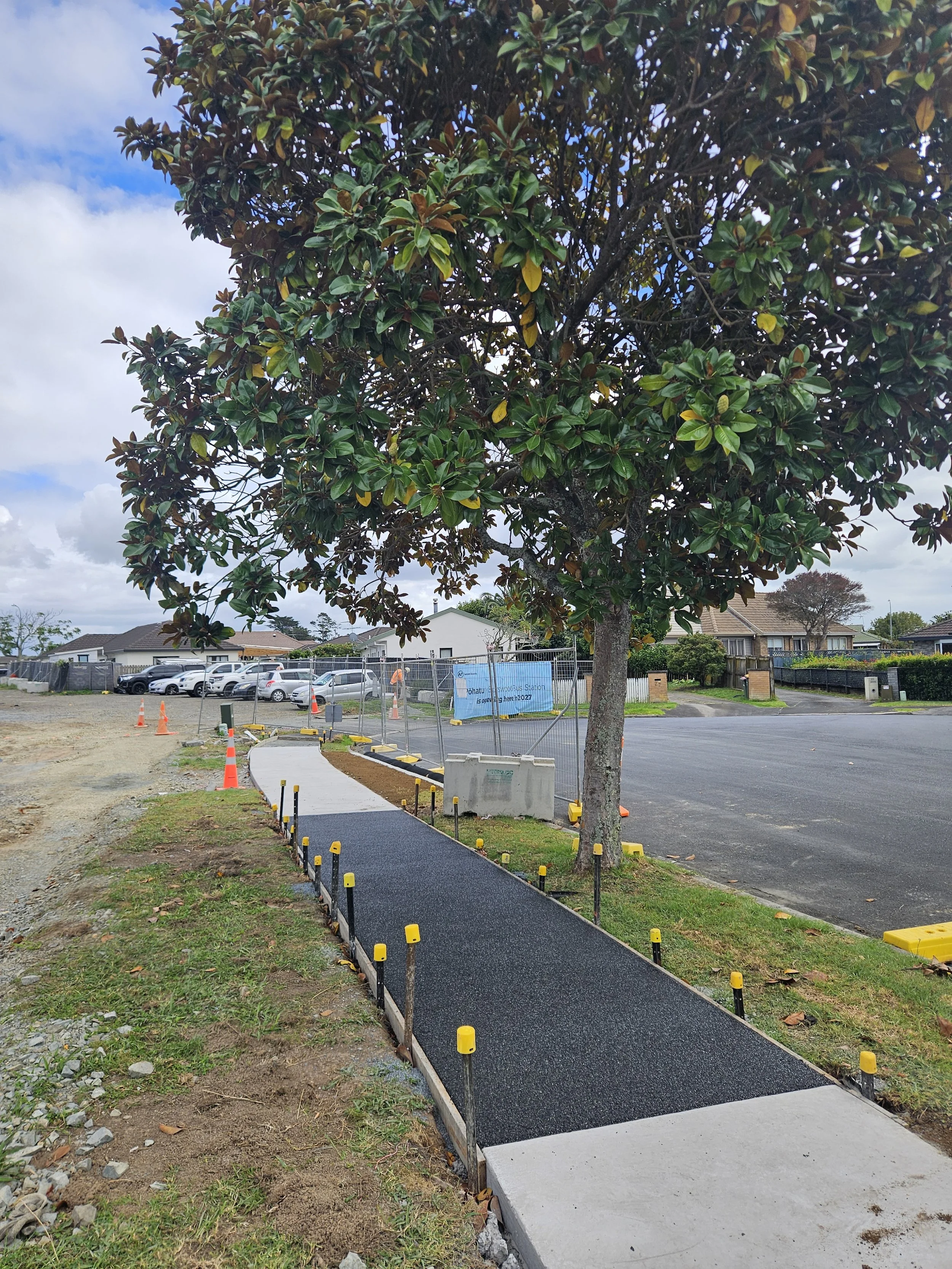


Porous Lane driveway installed on in Henderson Valley to prevent water pooling and help stormwater management.