
Porous Lane Case Study: Auckland Transport – Eastern Busway Project
Resilient Footpath Construction Over Magnolia Tree Roots
Project Overview
Auckland Transport is working with Fletcher Construction, ACCIONA, AECOM and Jacobs in partnership with Mana Whenua as the Eastern Busway Alliance.
This project is a key part of Auckland’s rapid transit network, connecting East Auckland to the wider region. Once operational in 2027 it will provide better connections and sustainable travel options for pedestrians, cyclists, motorists, bus and train customers.
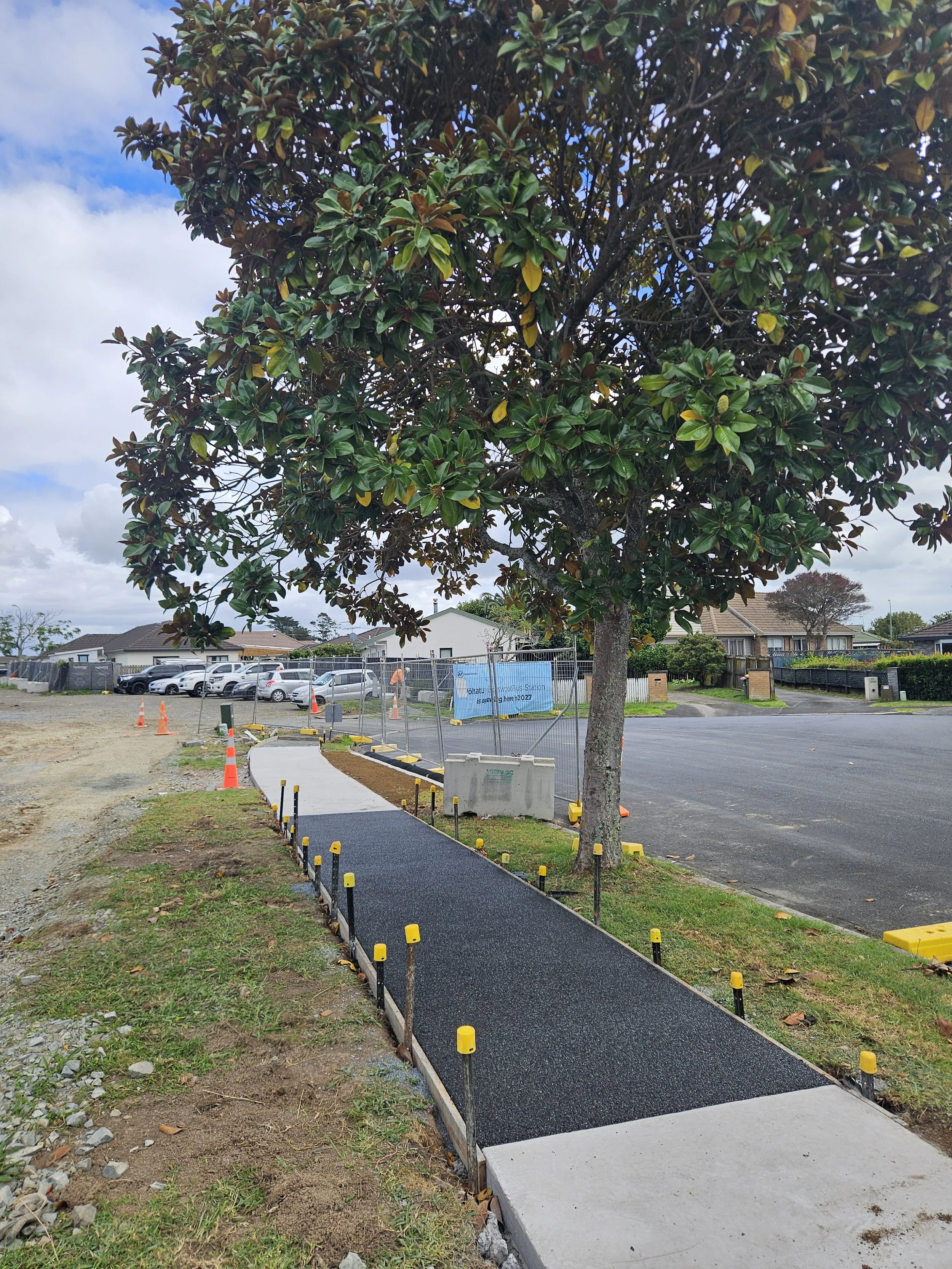
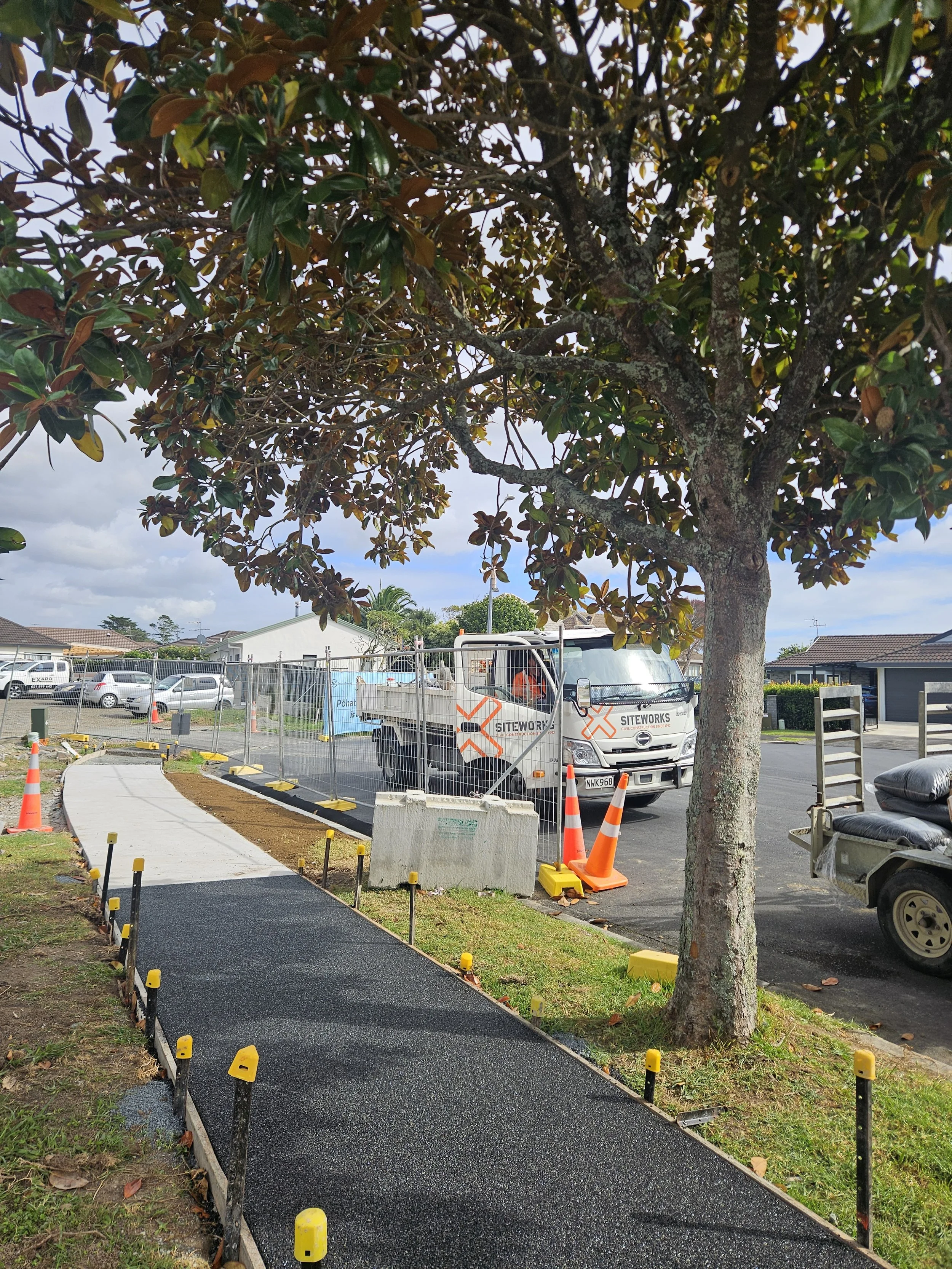
During construction works, the project team encountered a challenge common in established streetscapes: mature magnolia trees located adjacent to the new footpath alignment.
Concrete footpaths previously installed in the same area had already cracked due to root movement, highlighting the limitations of rigid pavements in environments with shallow tree roots. With a commitment to sustainability outcomes and efficient use of resources, the project team sought a more resilient alternative.
They approached Porous Lane to explore a permeable pavement solution capable of protecting the trees while delivering a durable, long‑lasting pedestrian surface.
Understanding the Root Challenge
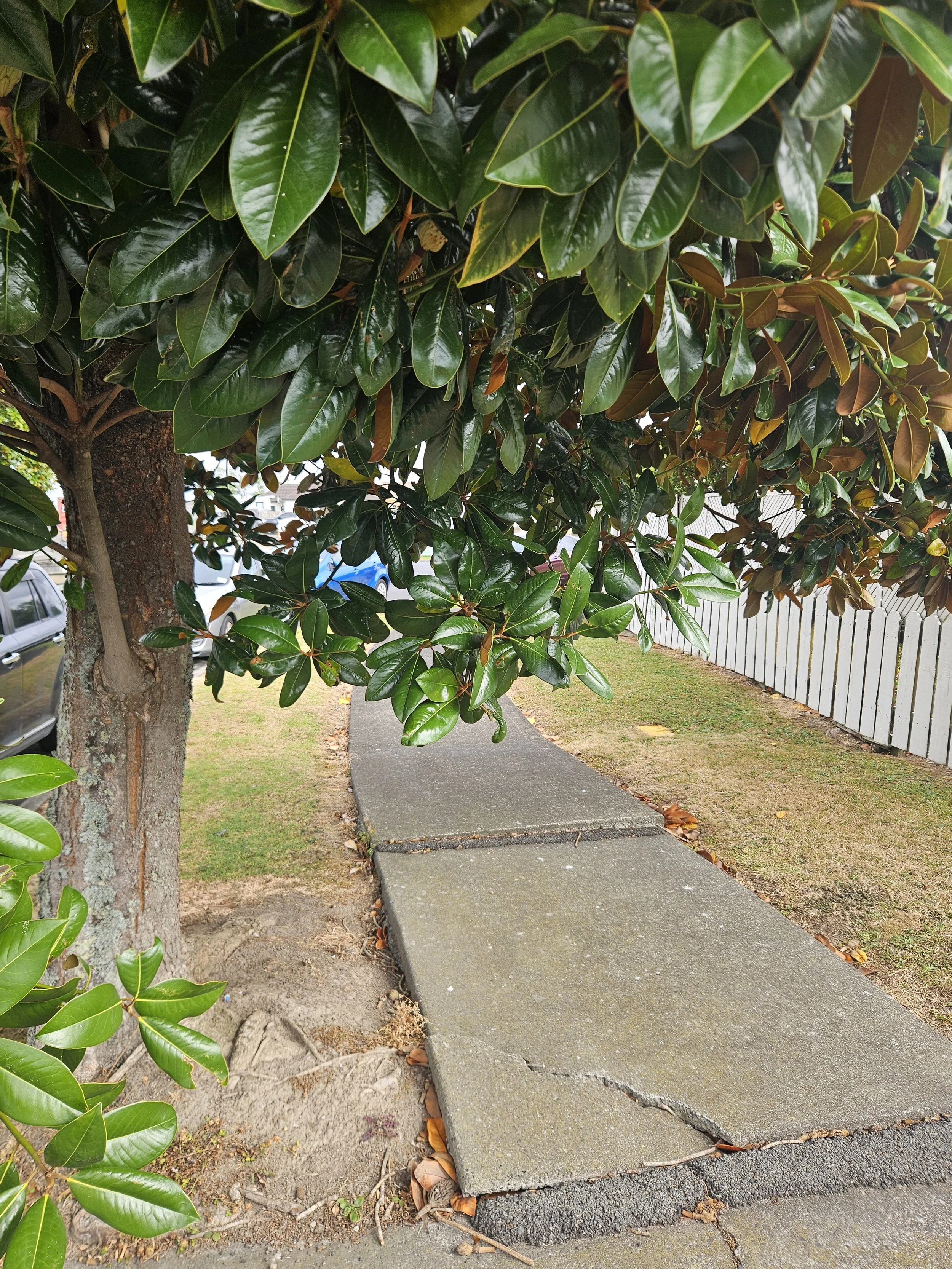
Magnolia trees have shallow, wide‑spreading root systems. Rather than growing deep into the ground, their roots extend horizontally close to the soil surface.
These fleshy roots can spread up to four times the width of the tree canopy, with most root activity occurring within the top 30–60 cm of soil. In urban environments this often leads to roots pushing against rigid pavements, resulting in cracking, uneven surfaces and ongoing maintenance.
The project required a footpath solution that could:
Accommodate ongoing root growth and movement
Prevent surface cracking and pavement failure
Support the long‑term health of the trees
Deliver durable infrastructure with reduced maintenance needs
The Solution: Porous Lane Permeable Footpath
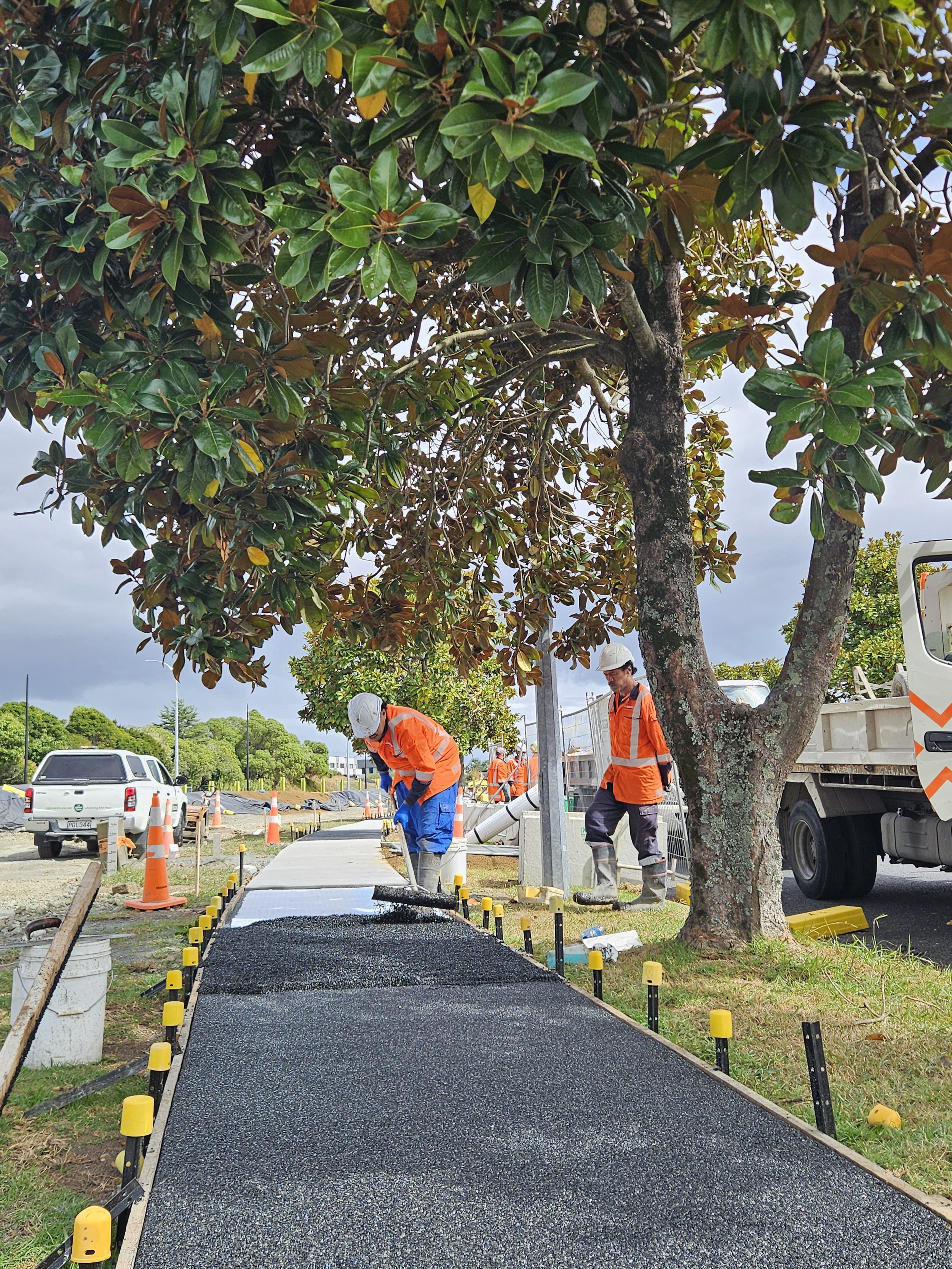
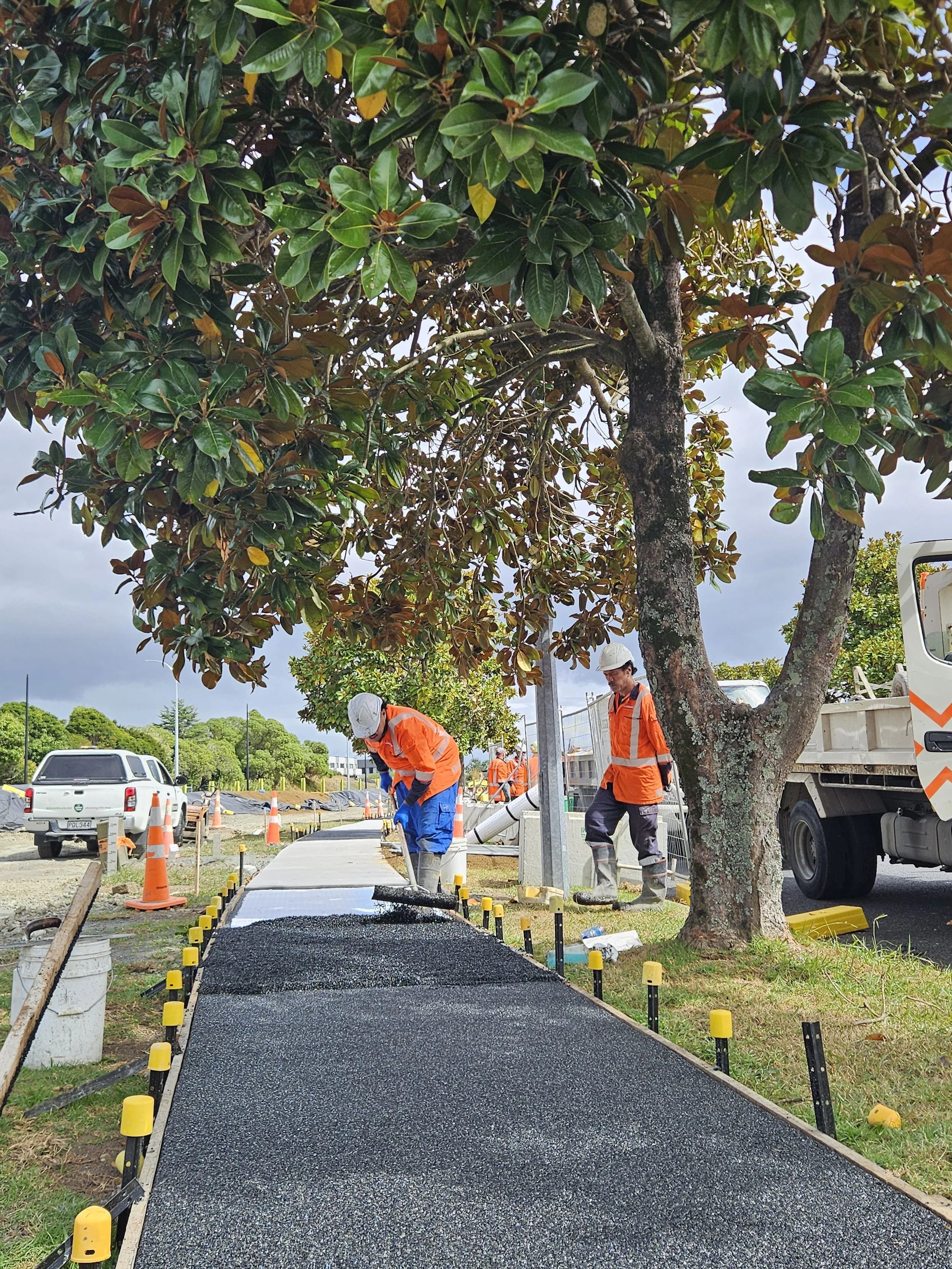
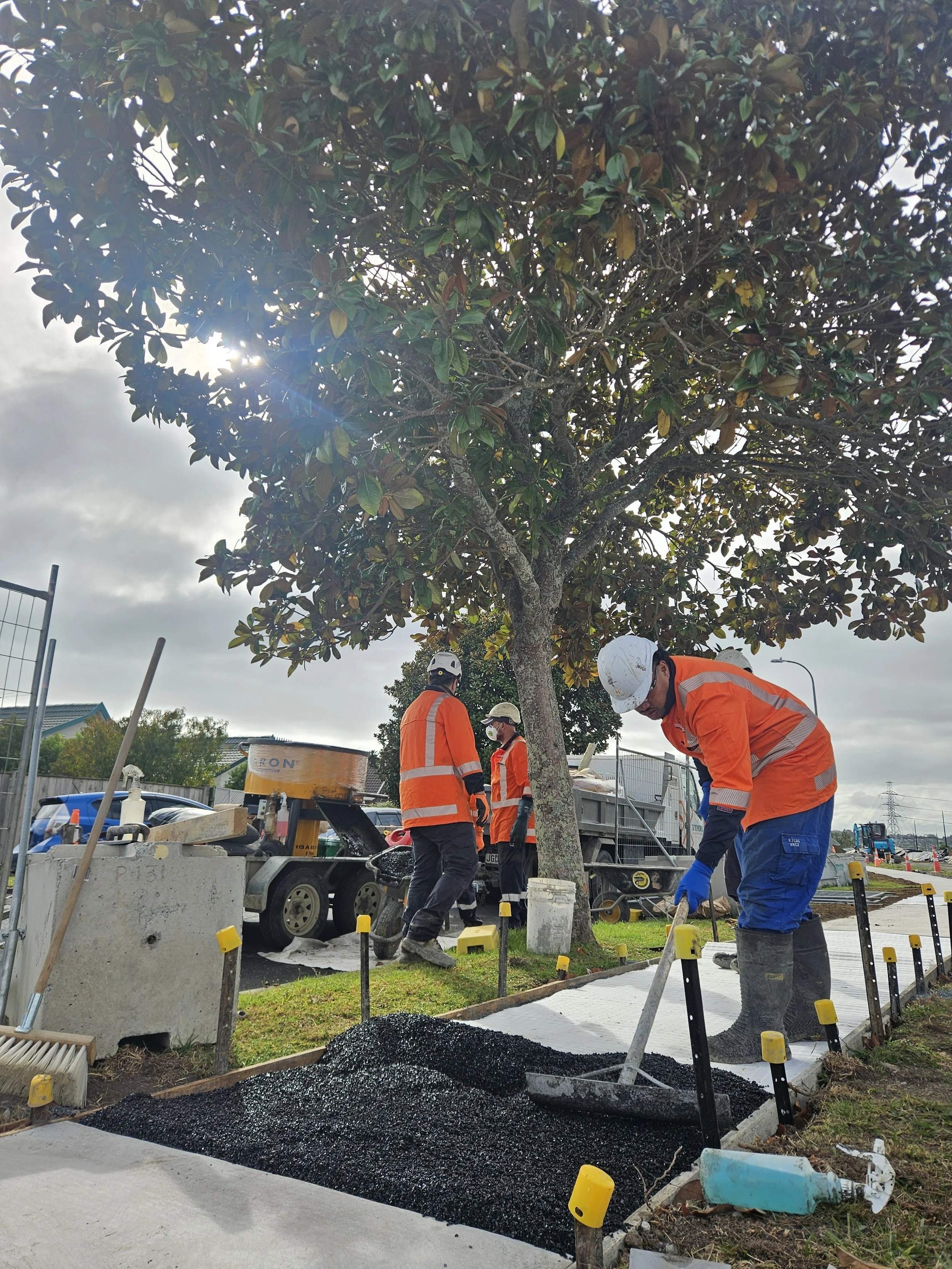
Porous Lane was selected as a permeable, flexible pavement solution capable of bridging over shallow tree roots while maintaining a stable walking surface.
Unlike rigid concrete, Porous Lane provides flexibility under the pavement surface, allowing it to adapt to root movement rather than resisting it. This significantly reduces the risk of cracking and surface failure.
At the same time, its permeable structure enables passive irrigation, allowing rainfall to infiltrate through the surface and reach the tree roots below.
This approach creates a balanced system where:
Tree roots receive natural water infiltration
The pavement flexes with root movement rather than cracking
Pedestrians benefit from a smooth and safe walking surface
Longer Design Life and Reduced Maintenance
Because the surface can adapt to ongoing root growth, the Porous Lane footpath is expected to deliver a longer design life compared with conventional concrete pavements in similar conditions.
Rigid pavements installed near shallow‑rooted trees typically require frequent repairs or replacement as roots lift and crack the surface. In contrast, the flexibility of Porous Lane allows the pavement to maintain surface integrity over time, significantly reducing maintenance requirements.
Porous Lane surfaces are designed to achieve a service life of approximately 20–25 years, reducing lifecycle costs and improving long‑term asset performance
Sustainability Outcomes
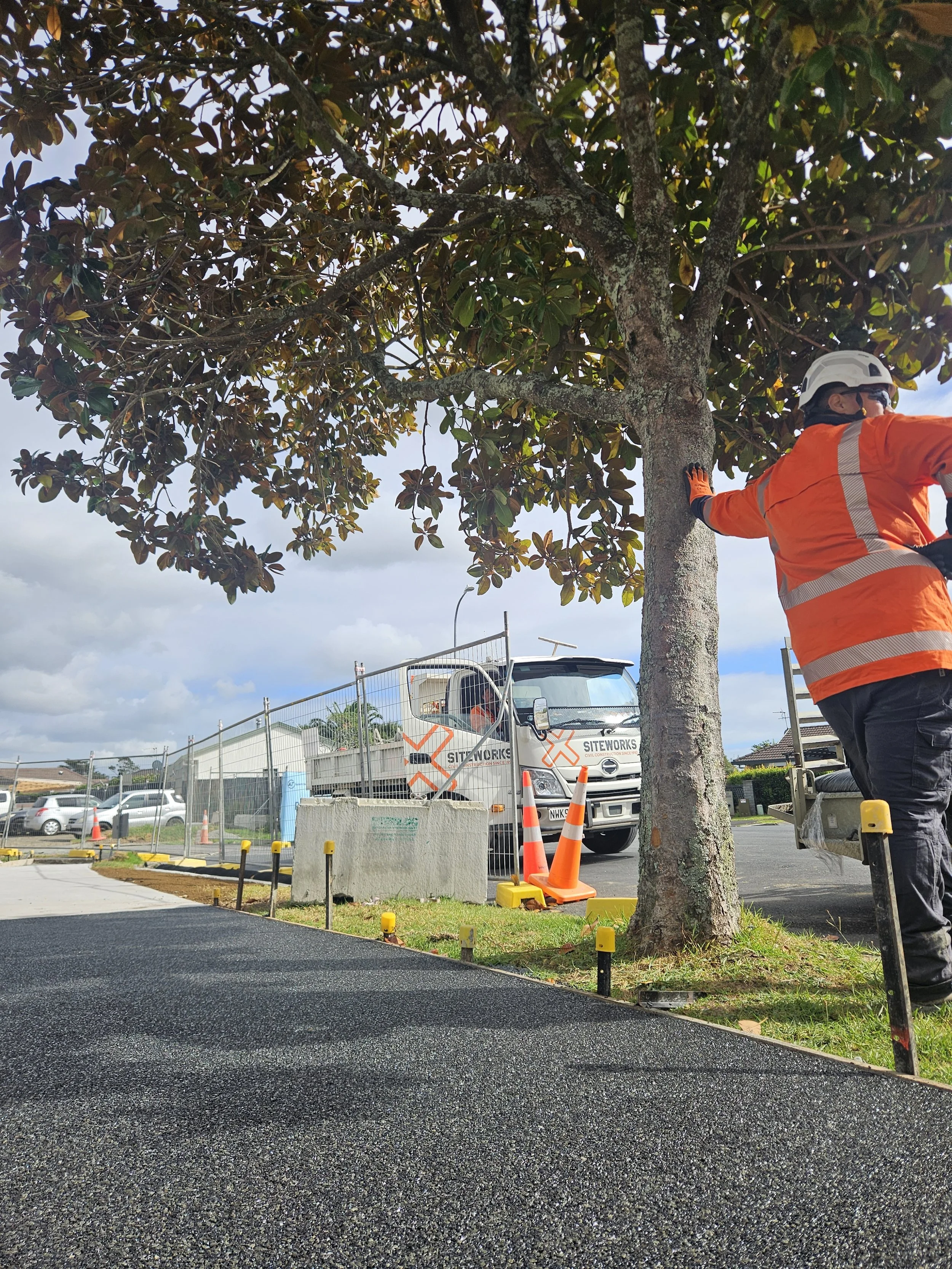
The installation incorporated four sections of Porous Lane Black Path Mix, delivering measurable environmental benefits while supporting the project team’s sustainability goals.
500 kg of recycled tyres diverted from landfill
Equivalent to approximately 55 passenger car tyres
Reduced reliance on rigid pavement materials prone to failure
Improved long‑term infrastructure performance and resource efficiency
Independent Life Cycle Assessment (LCA) analysis also demonstrates that Porous Lane can deliver significant carbon reductions compared with traditional pavement materials.
For footpath and bike lane applications, Porous Lane pavement produces approximately 22 kg CO₂‑eq per m², compared with 105 kg CO₂‑eq for concrete and 39 kg CO₂‑eq for asphalt over the full lifecycle.
This represents:
Up to 79% lower carbon emissions compared with concrete footpaths
Around 44% lower emissions compared with asphalt pavements
These reductions are primarily driven by:
The reuse of recycled tyre material in the pavement mix
A thinner pavement layer, reducing material demand
A longer service life, meaning fewer replacements over time
Together, these factors contribute to lower lifecycle emissions and more resource‑efficient infrastructure.
Project Impact
Project Impact at a Glance:
Resilient footpath bridging over shallow magnolia root systems
500 kg of tyres diverted from landfill
Equivalent to ~55 passenger tyres recycled
Up to 79% lower carbon footprint than concrete
Permeable surface providing passive irrigation to tree roots
Flexible pavement designed to adapt to root movement
20–25 year design life with reduced maintenance requirements