Project Type:
Bulk Storage Facility
Assessment-Led Flood Risk Assessment for a Critical Industrial Facility in the Mangapehi Floodplain
Project Overview
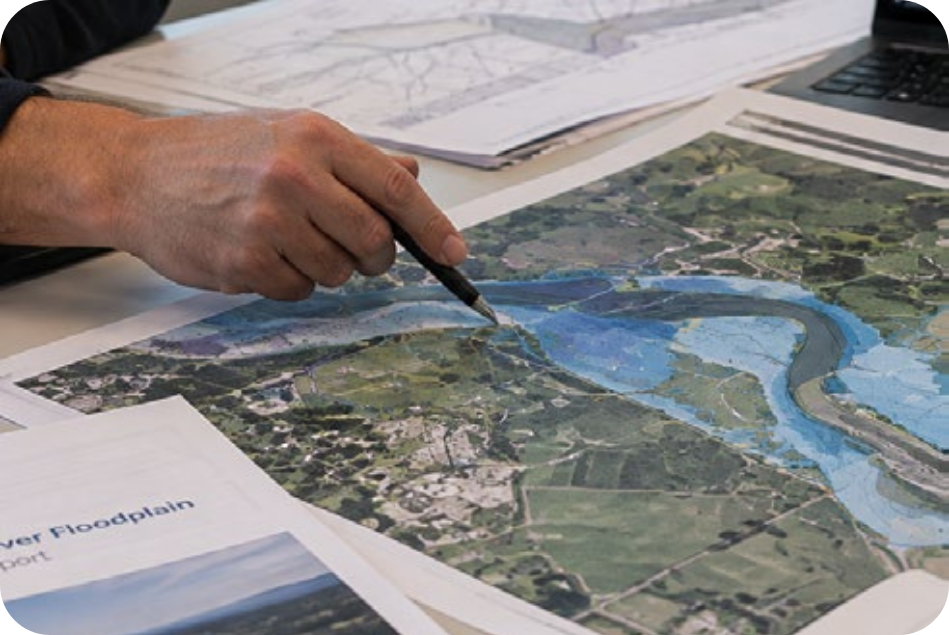
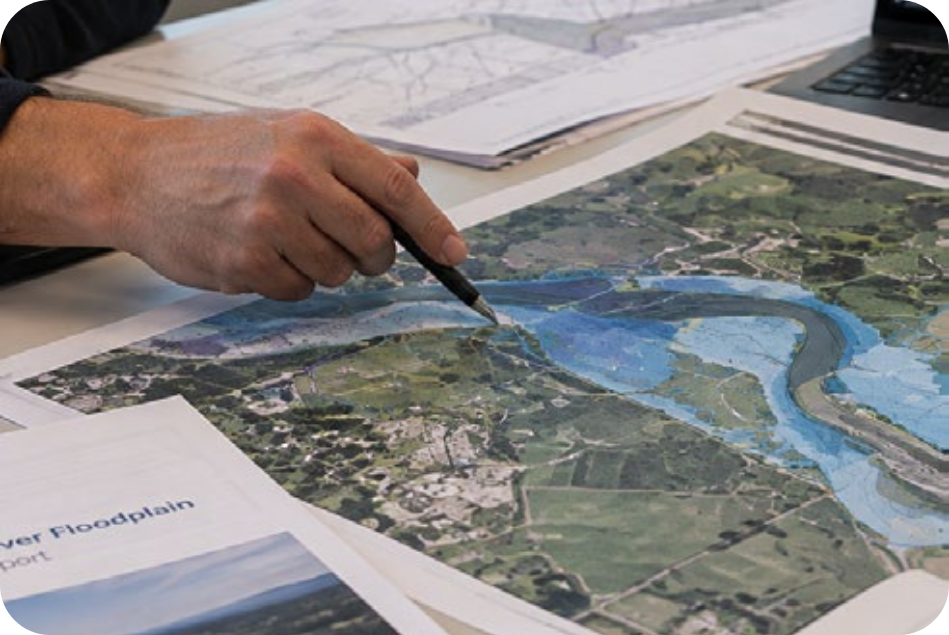
After recent flooding ruined a substantial volume of stock at a bulk storage facility within the Mangapehi River floodplain, Watersmart was engaged to assess the risk and identify practical mitigation options. The assessment considered flood behaviour, site conditions and operational requirements before recommending appropriate protection measures.
The Challenge
The facility supports customer operations throughout the region. Previous flooding had already caused significant stock losses, while future events had the potential to:
Cause further damage to stored product
Interrupt product distribution
Affect critical infrastructure
Disrupt vehicle movements and site operations
Create substantial recovery and replacement costs
The objective was to identify a practical level of protection that reduced the risk of further losses while maintaining efficient site operations.
The Approach
Watersmart undertook a staged feasibility assessment that included:
Reviewing previous flooding and available flood information
Assessing the site’s relationship with the Mangapehi River floodplain
Investigating flood pathways and entry points
Reviewing existing infrastructure and protection
Identifying vulnerable assets and operational requirements
Evaluating multiple flood mitigation options
Developing preliminary engineering concepts
Considering likely consenting requirements
The Outcome
The assessment provided the client with a clearer understanding of the site’s flood exposure and a practical pathway for improving its Property Flood Resilience through staged investment and targeted engineering interventions.
A range of mitigation options and protection levels were developed to support informed decision-making, balancing practicality, cost and residual flood risk.
The project demonstrates the importance of understanding real flood behaviour and previous impacts before selecting physical protection measures, reflecting Watersmart’s assessment-first approach to flood mitigation.