Watersmart Contributes to Industry Conversations at the 2026 Stormwater Conference
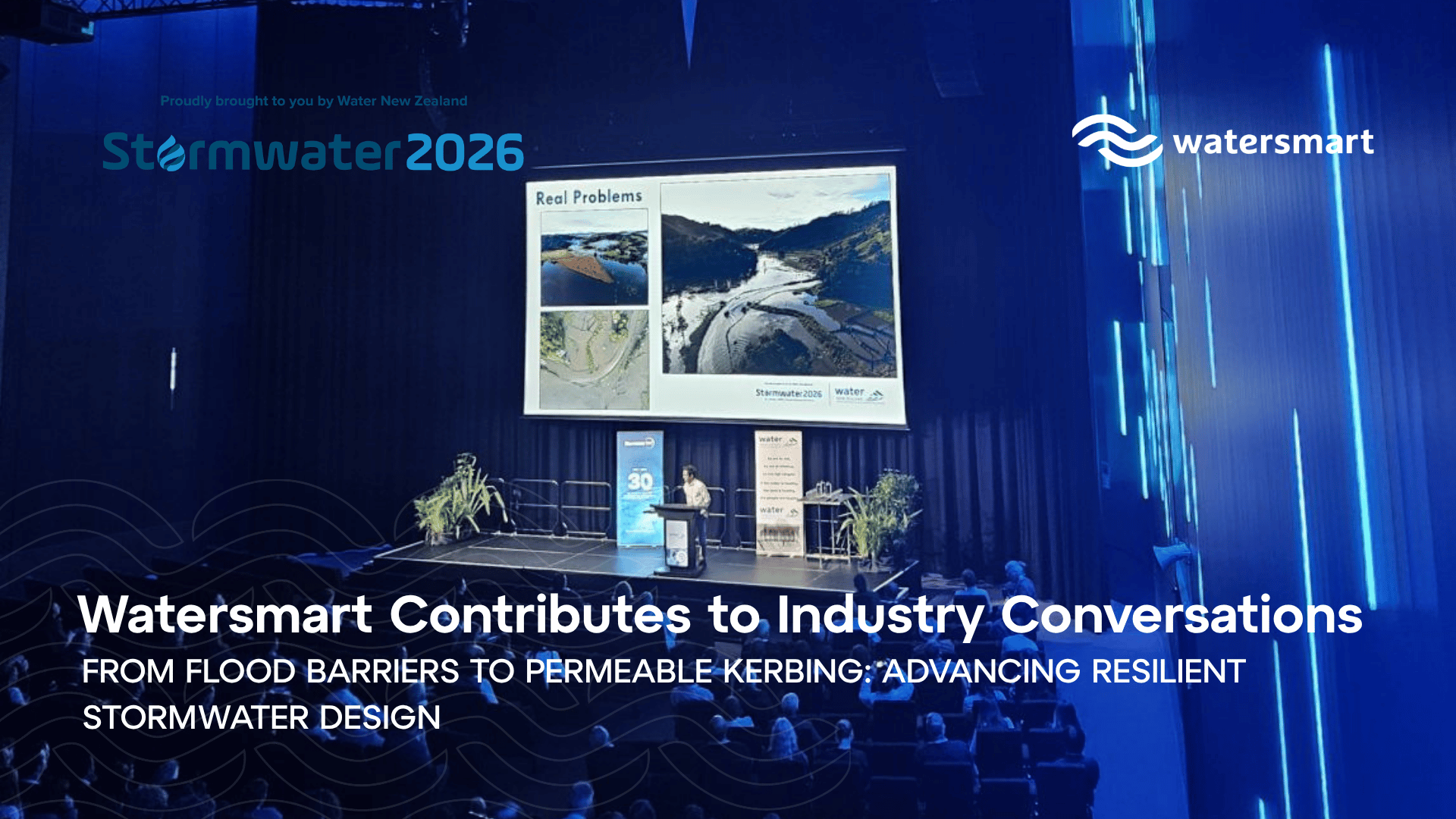
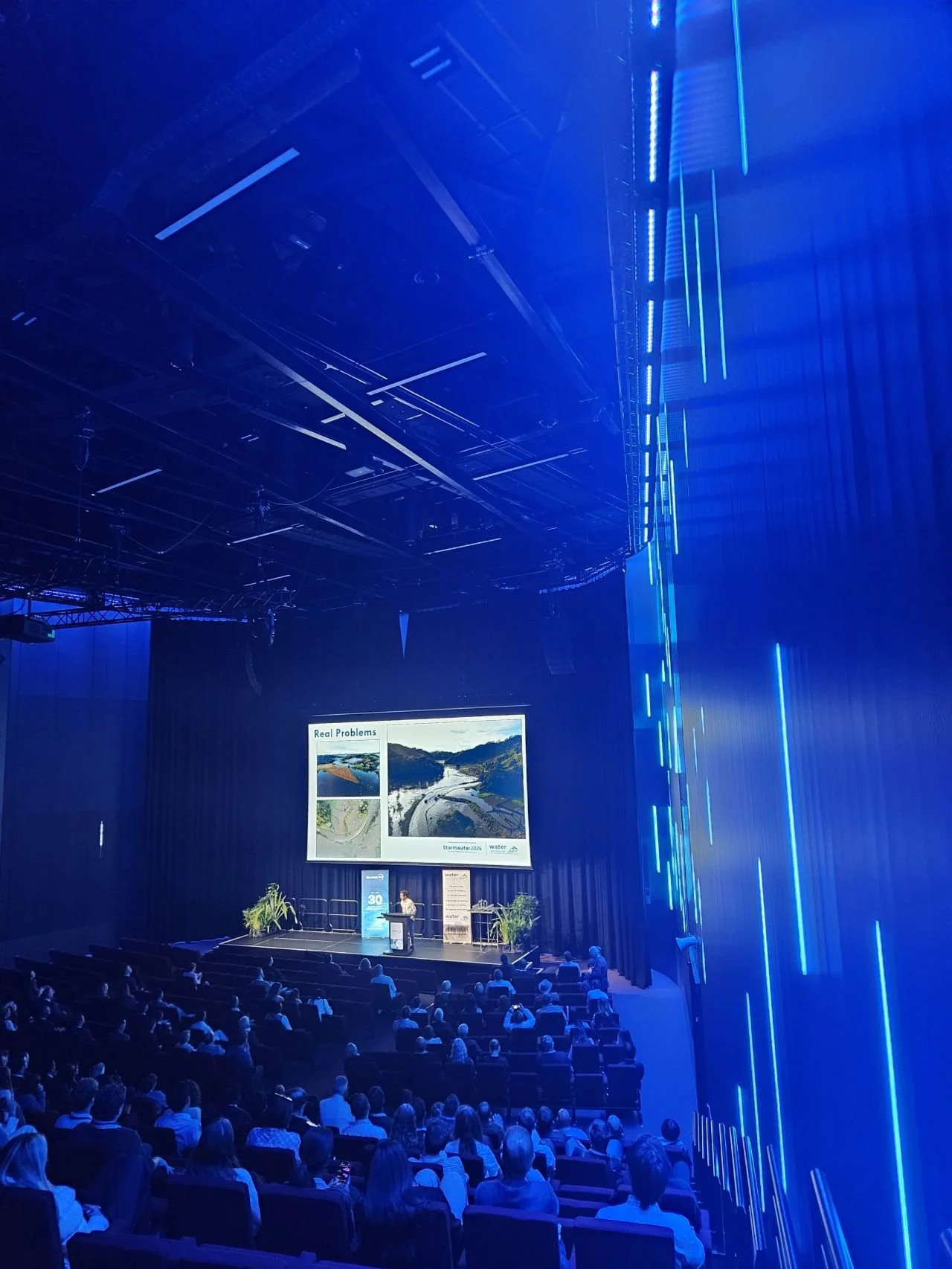
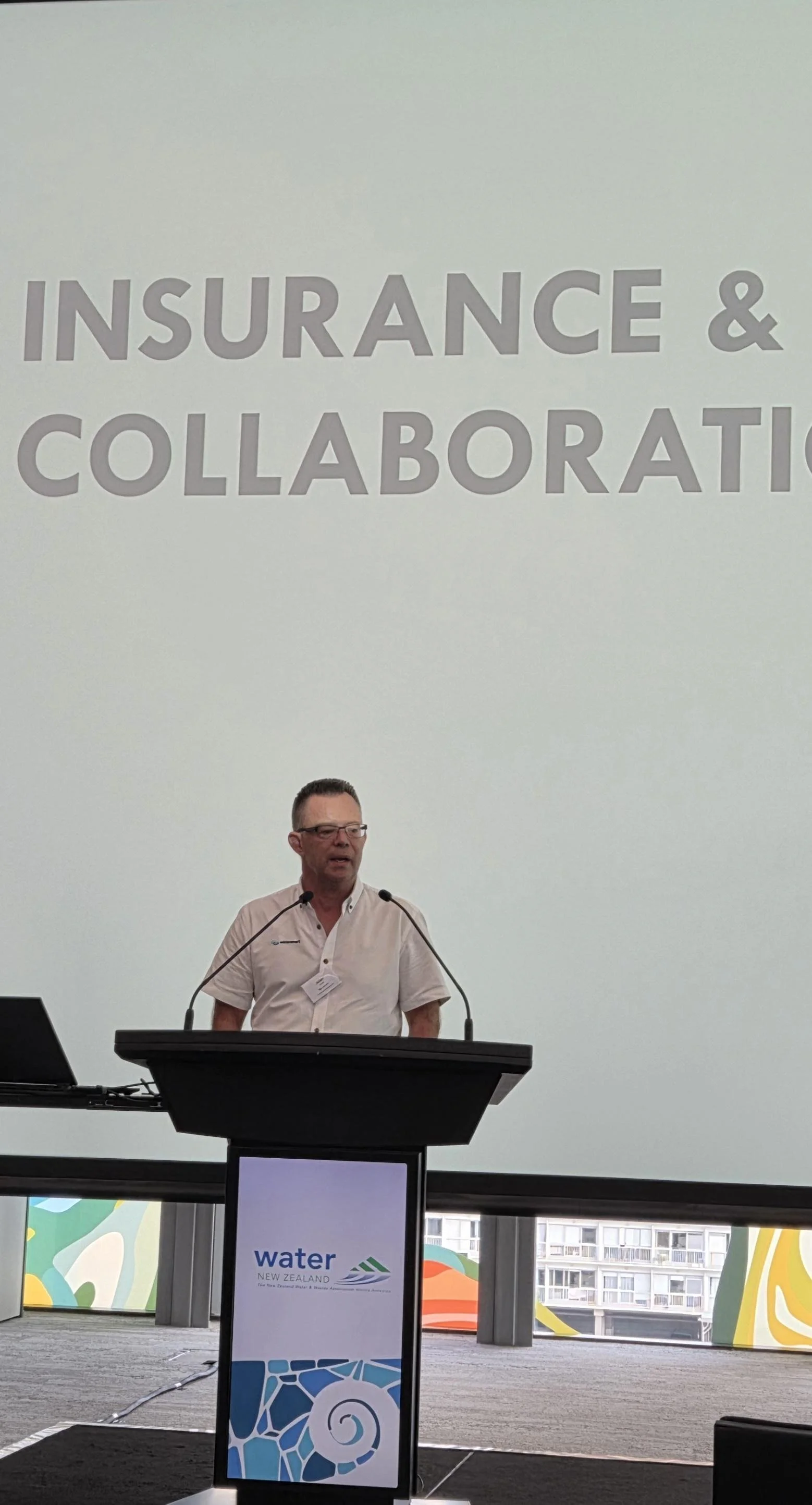
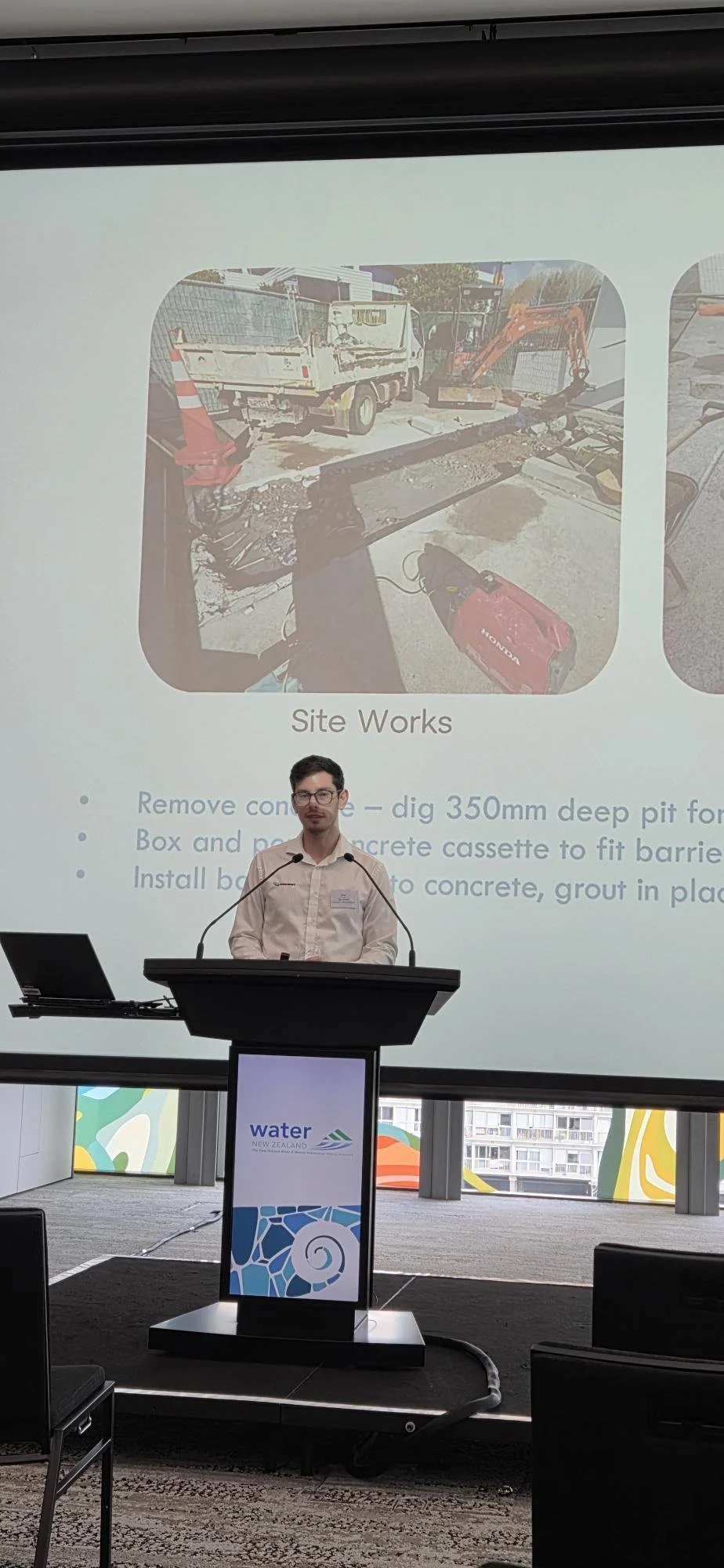
Elliot Olsen - Watersmart Technical Manager presenting at the 2026 Stormwater Conference.
The 2026 Stormwater Conference brought together councils, engineers, consultants, contractors, and industry leaders from across New Zealand and Australia to tackle one of the sector’s biggest challenges: how we build more resilient communities in the face of increasing climate and infrastructure pressure.
This year, the Watersmart team was proud to contribute not only through our exhibition presence, but also through two technical presentations that explored practical, real-world approaches to stormwater resilience, flood mitigation, and distributed water management.
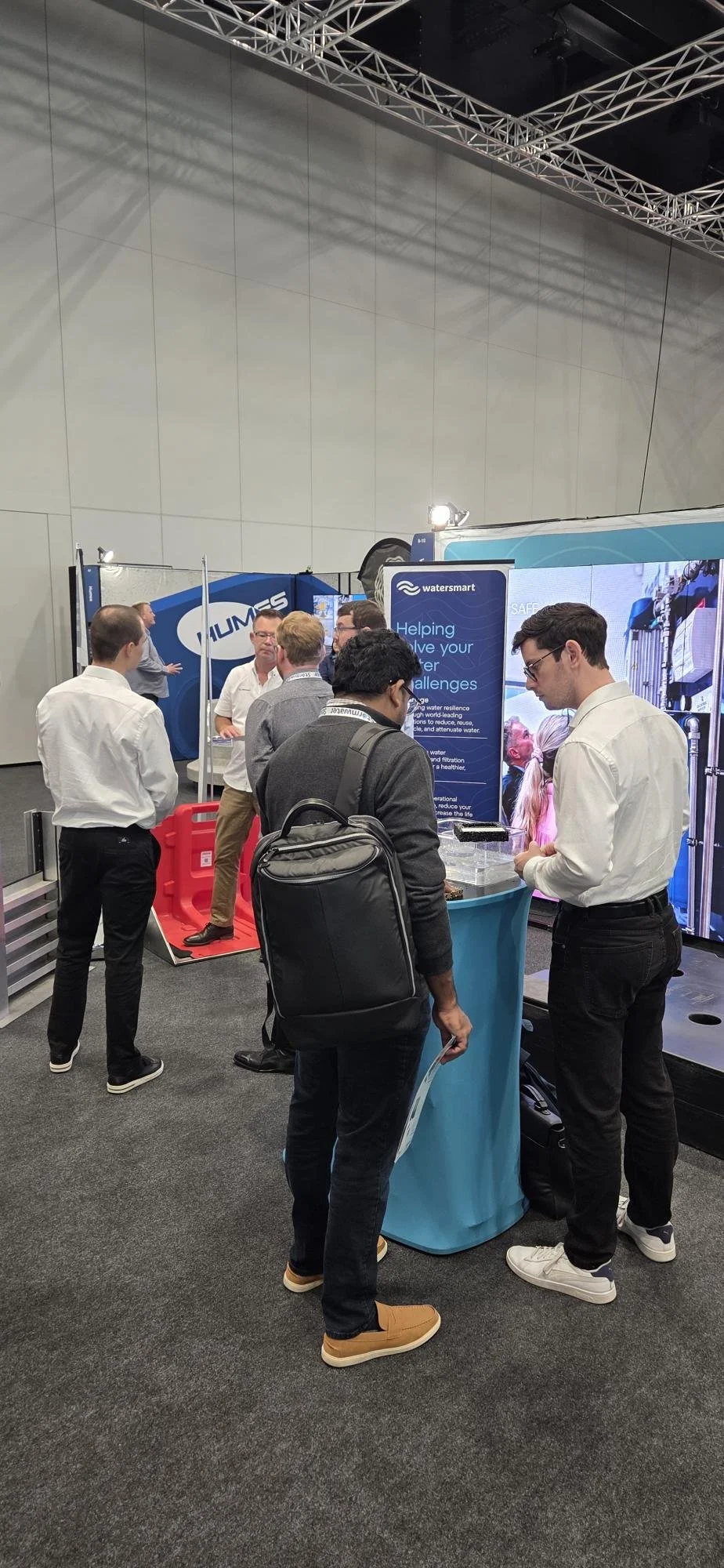
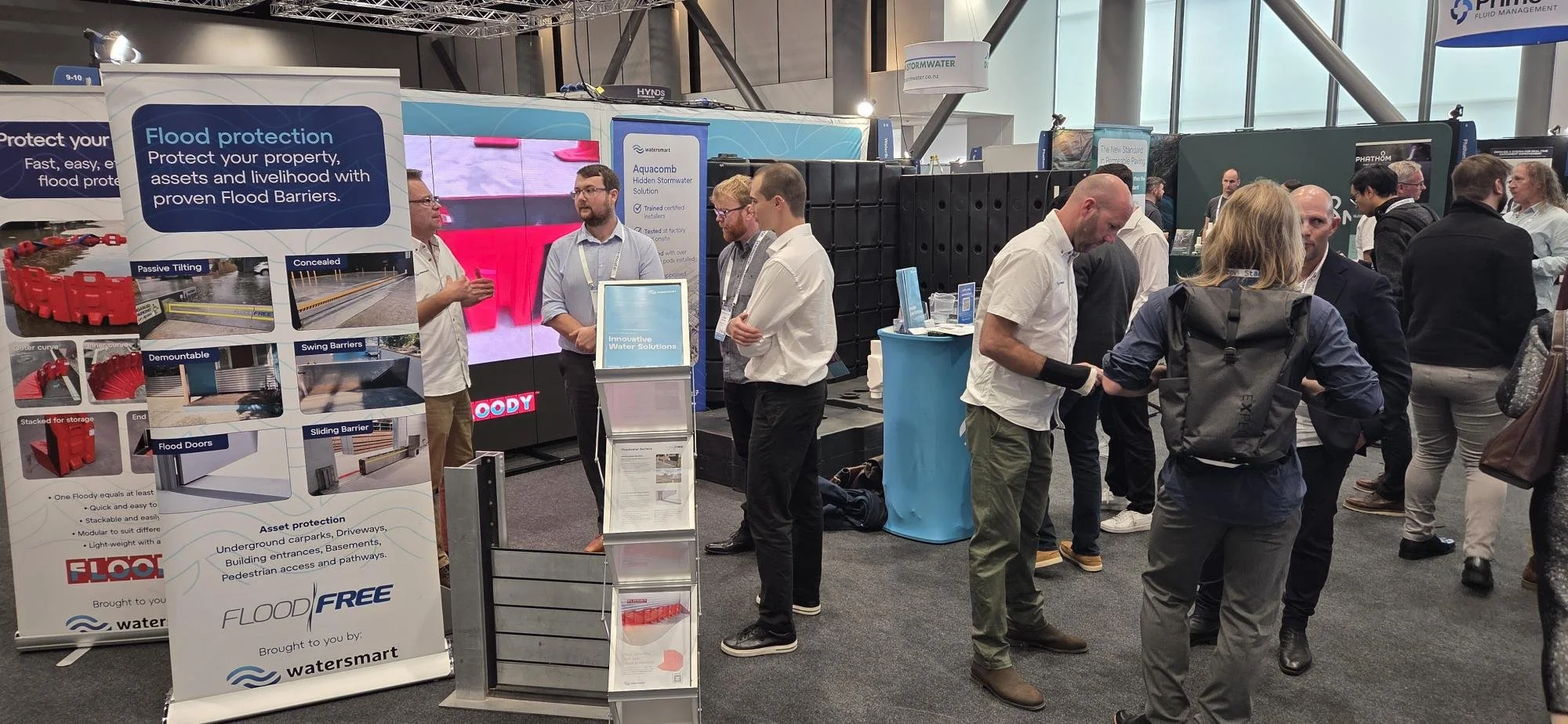
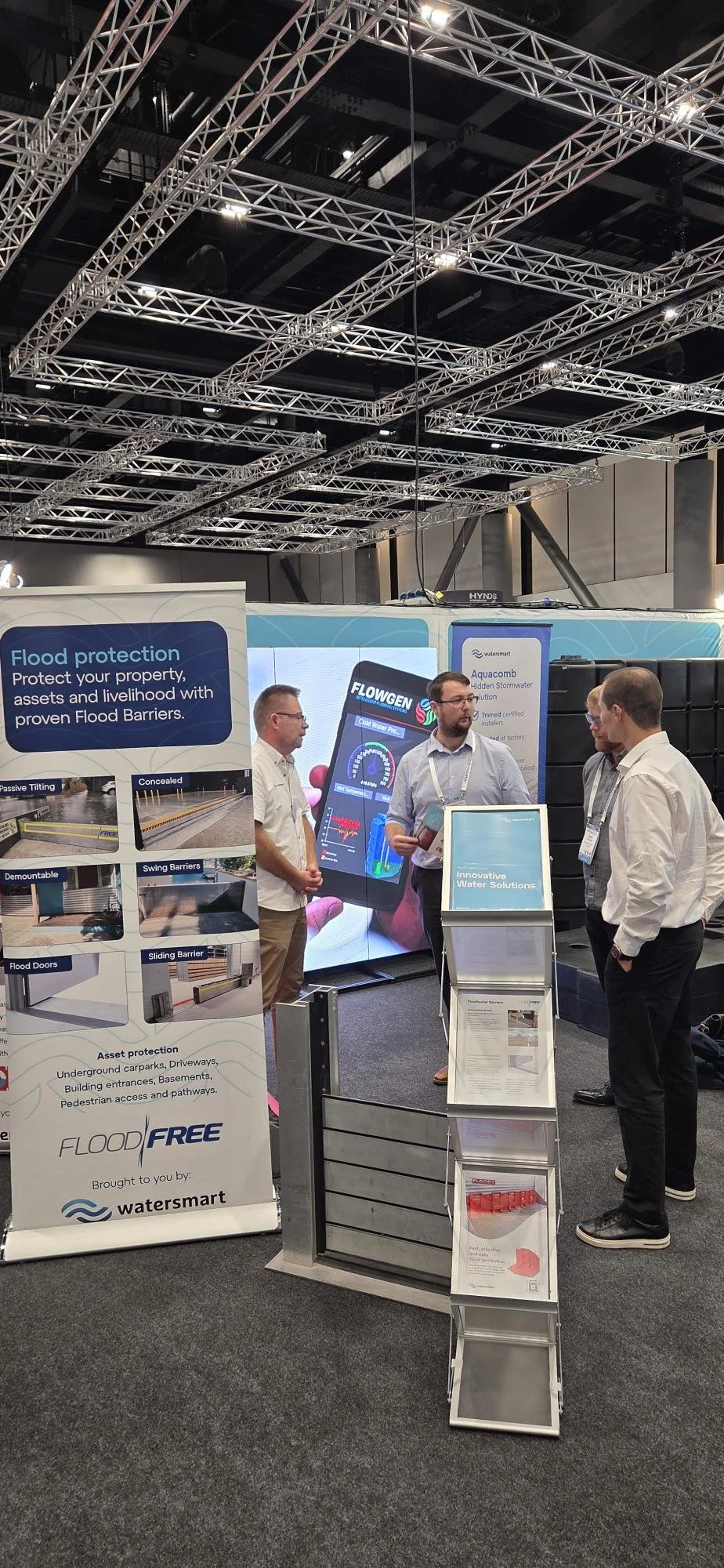
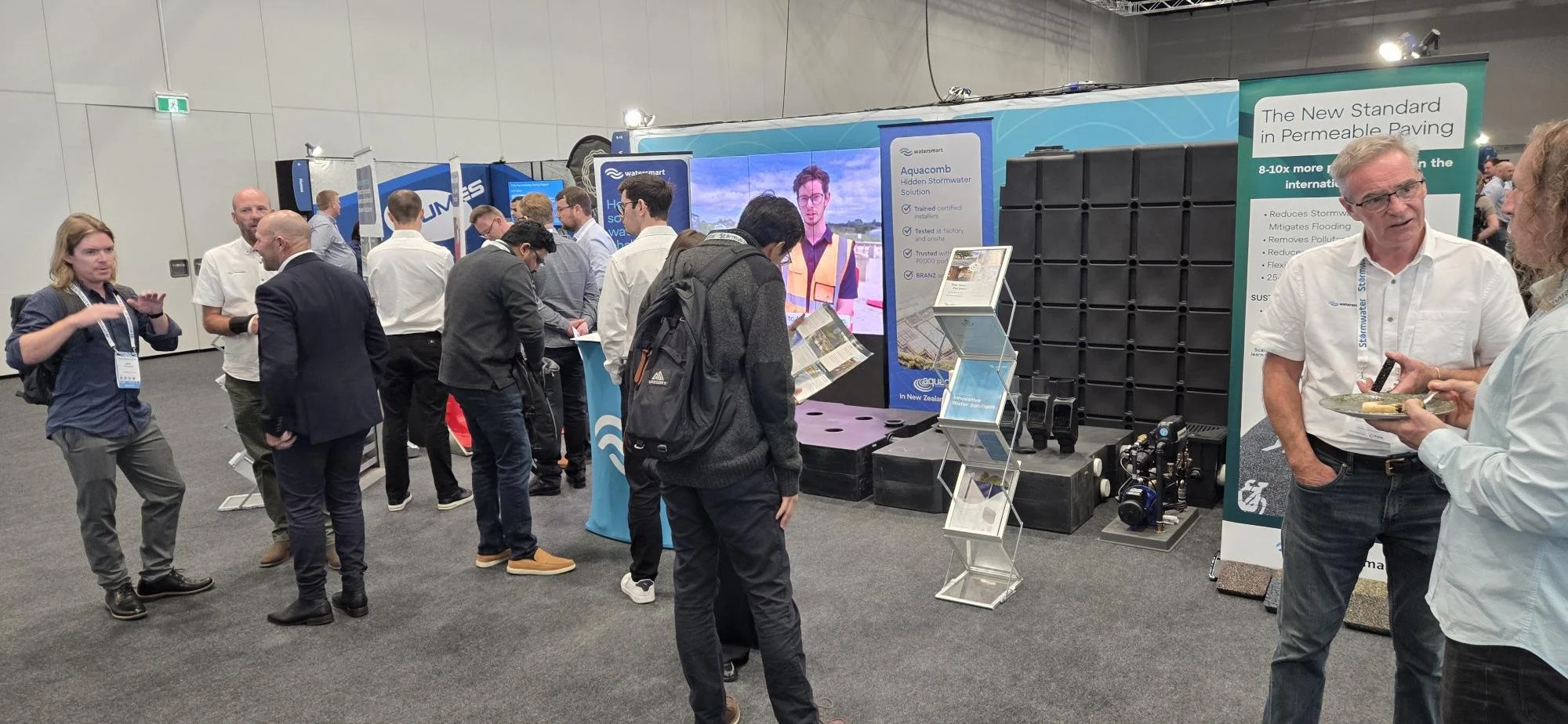
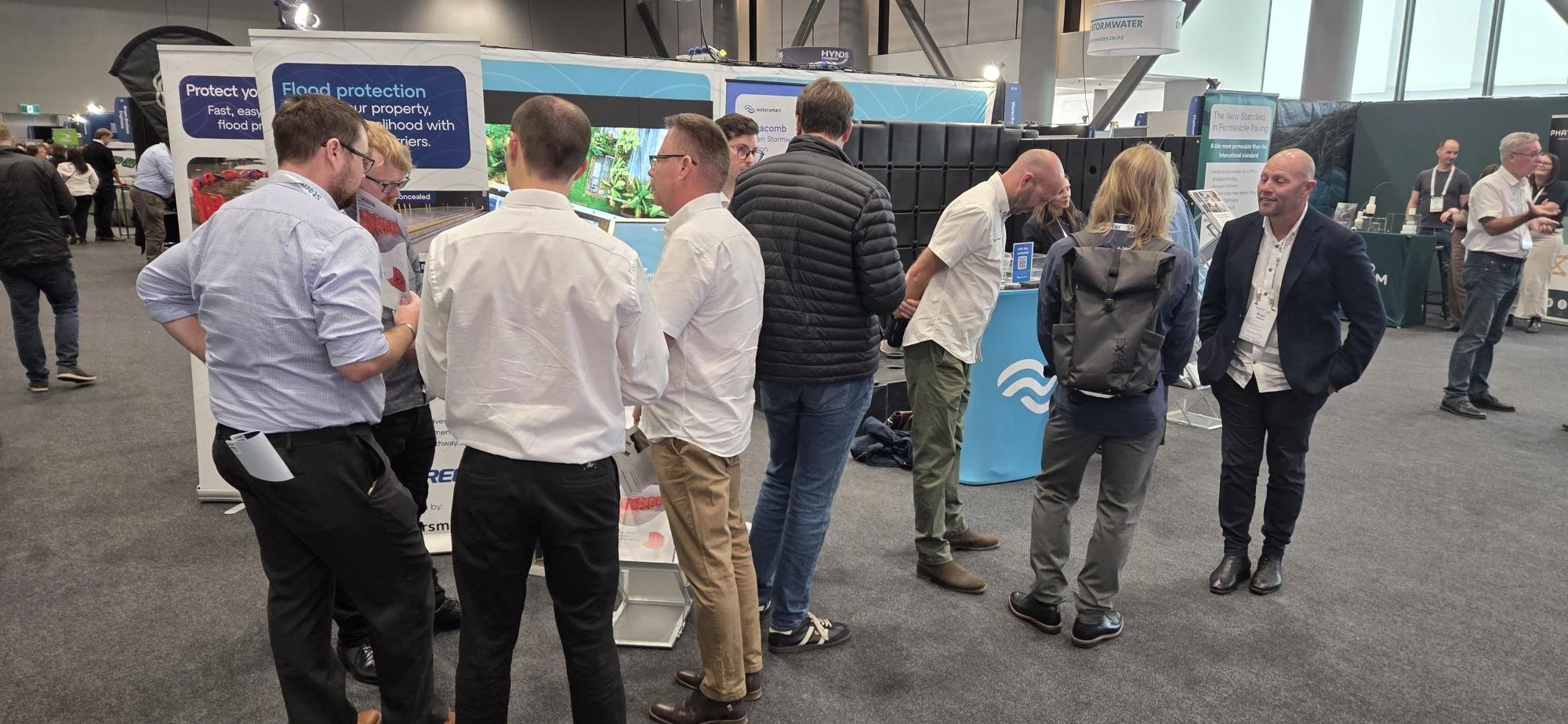
Our exhibition stand showcased Watersmart’s broader stormwater ecosystem, including flood mitigation, detention and retention systems, permeable infrastructure, water reuse, and resilience-focused solutions designed to support both public infrastructure and private developments. The conversations throughout the event reinforced a growing industry shift toward integrated, multi-layered stormwater responses rather than relying solely on traditional pipe networks.
Reimagining Kerb Infrastructure Through Permeable Design
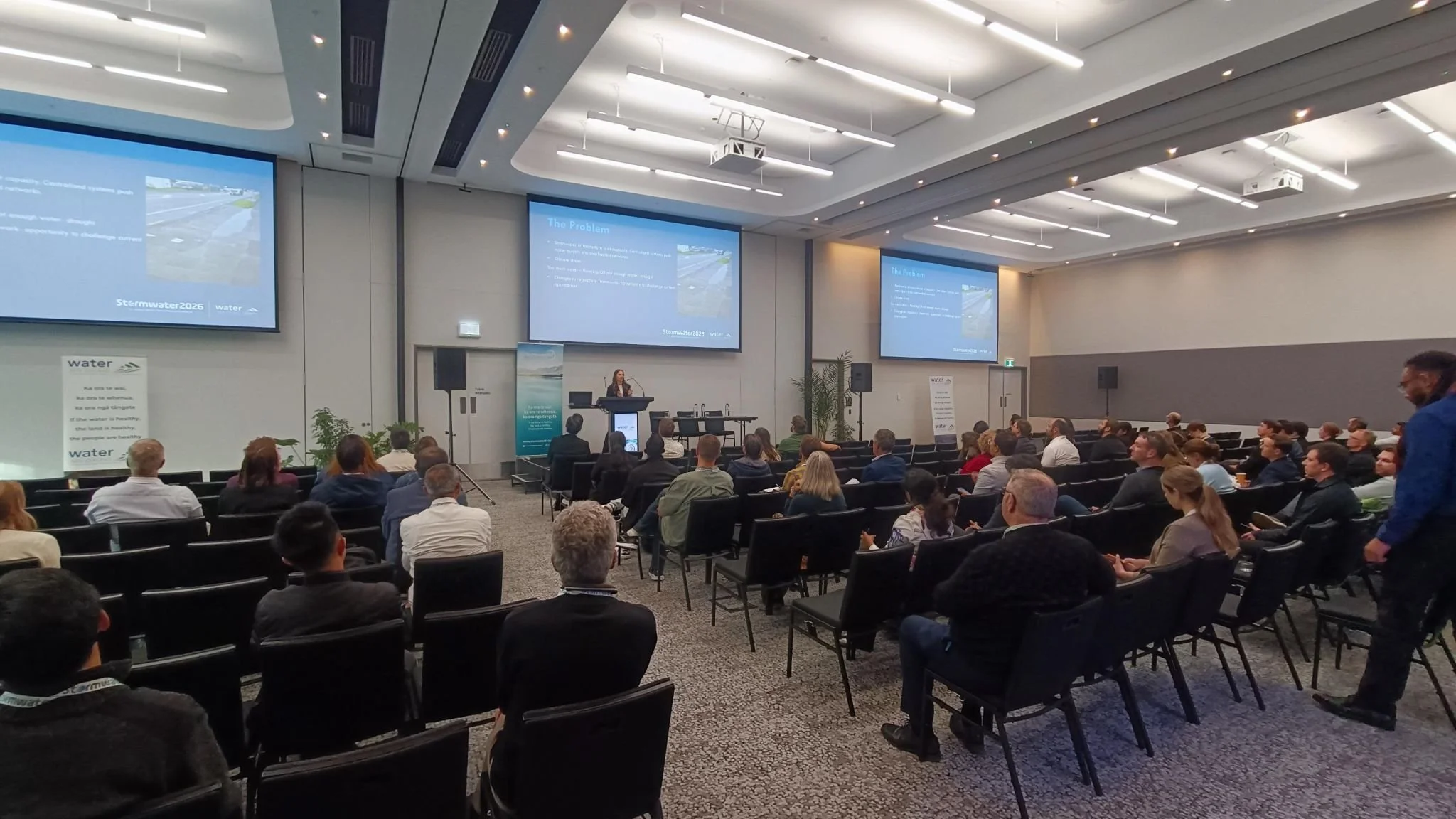
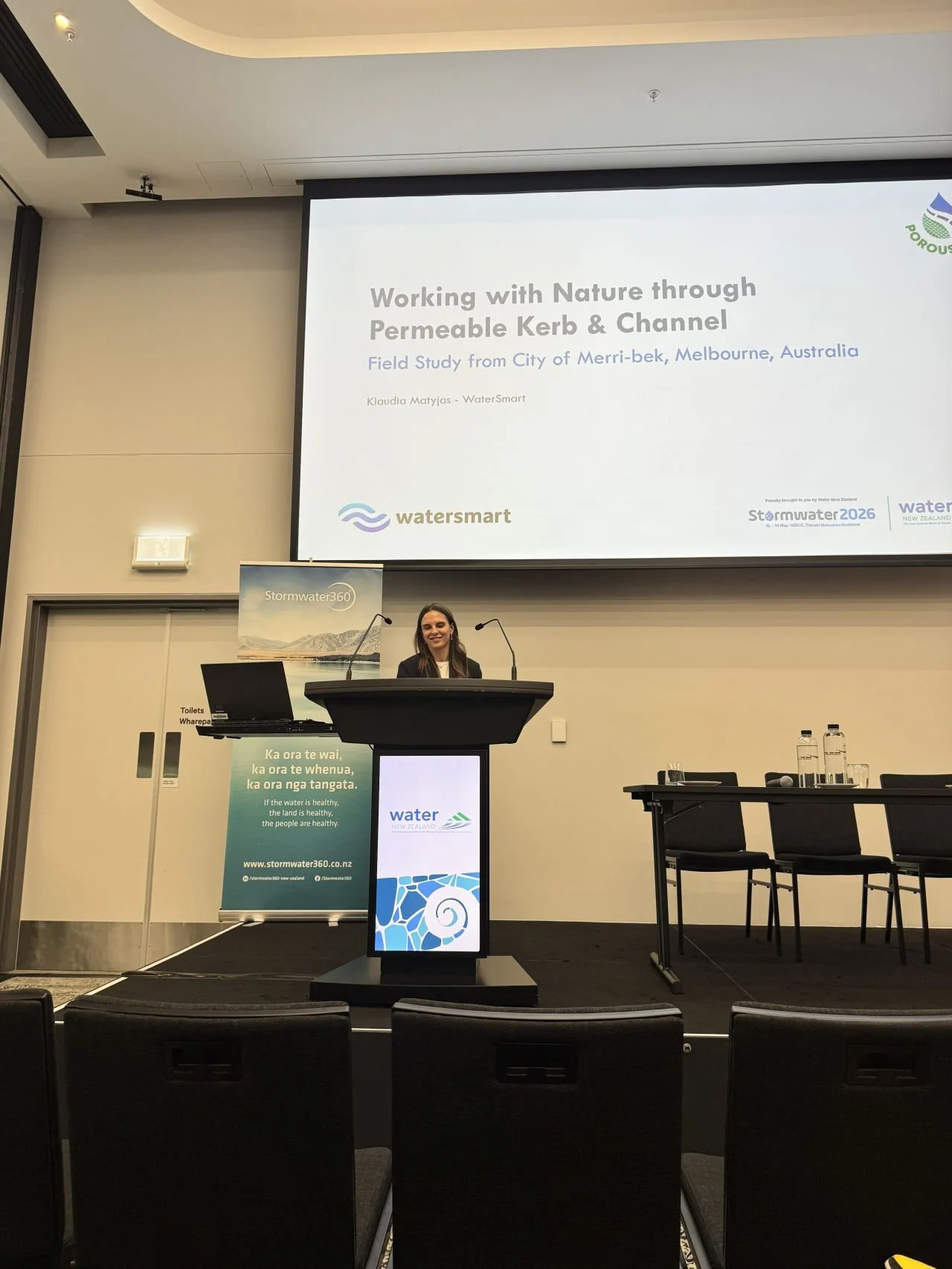
Klaudia presented findings from the City of Merri-bek permeable kerb and channel trial, developed in collaboration with the University of Melbourne and Porous Lane.
The presentation explored how conventional kerb and channel systems rapidly collect and concentrate runoff into underground infrastructure, increasing downstream pressure, disconnecting water from urban vegetation, and contributing to flooding risk.
The permeable kerb and channel approach rethinks this model entirely. Instead of treating stormwater as waste to remove as quickly as possible, the system allows water to spread, slow down, infiltrate locally, and support surrounding soil and vegetation systems.
Field study results from the Merri-bek trial showed:
Up to 81% runoff retention across monitored rainfall events
Significant peak flow reduction
Improved soil moisture and urban tree support
Strong performance despite low-permeability clay soils
Reduced clogging risk through distributed inflow design
Greater flexibility and impact resistance compared with traditional concrete kerbing
The presentation also highlighted the role of recycled tyre materials within the system and the growing importance of designing infrastructure that works with natural water processes rather than against them.
As councils continue looking for scalable low-impact stormwater solutions, interest is now growing around potential New Zealand pilot projects.
Flood Resilience Beyond Infrastructure Alone
A second presentation delivered by Julian and Elliot focused on the consenting pathway, design methodology, installation process, and testing regime behind the flood barrier systems installed in central Auckland last year.
The presentation explored how the barriers were engineered and sized to respond to site-specific flood risk, alongside the practical realities of installation, commissioning, and long-term resilience planning.
Importantly, the discussion extended beyond physical infrastructure alone.
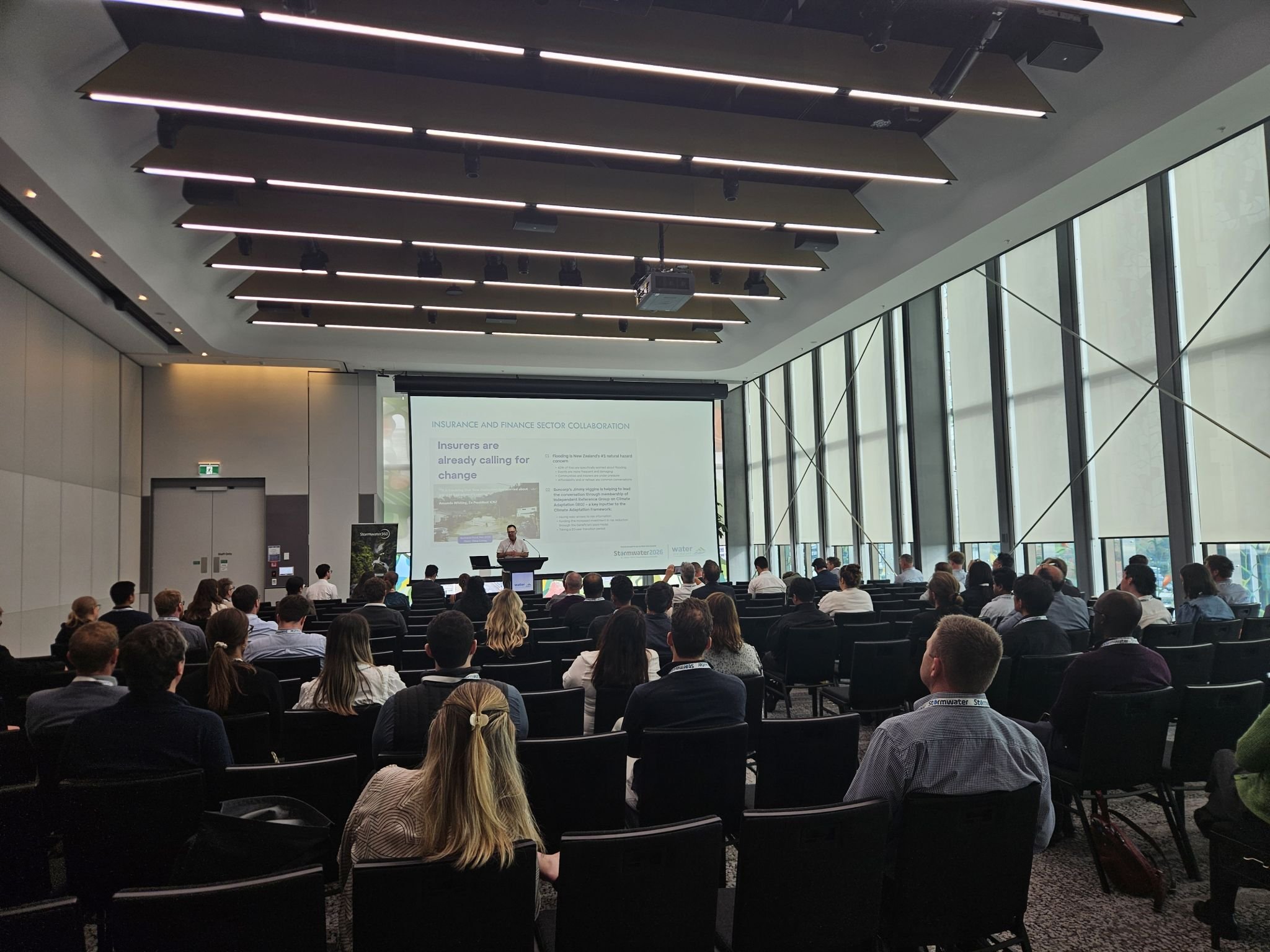
Part of the presentation focused on Watersmart’s ongoing collaboration with the insurance and finance sectors over the past 14 months, helping educate stakeholders on resilience solutions that support flood prevention, recovery, and long-term community protection.
Key themes included:
Shifting focus from reactive claims toward prevention and asset protection
Supporting post-flood recovery through investment in resilience infrastructure
Educating communities around practical flood mitigation solutions
Encouraging sustainability and resilience lending pathways
Creating stronger collaboration between the stormwater, insurance, and finance sectors
One of the strongest messages throughout the session was that stormwater resilience cannot sit within a single industry alone. Preventing flood impacts requires alignment between infrastructure, policy, finance, insurance, and community education.
Continuing the Industry Conversation
For Watersmart, events like the Stormwater Conference are not simply about showcasing products. They are an opportunity to contribute to the wider industry conversation around resilience, sustainability, and the future of water infrastructure.
As climate pressures continue to increase, the industry is being challenged to think differently about how stormwater is managed, how communities are protected, and how infrastructure can work more effectively with natural systems.
Being able to contribute practical project experience, technical research, and cross-sector collaboration discussions is an important part of helping move that conversation forward.