
Training that supports self-certification and best practice for in-slab installs
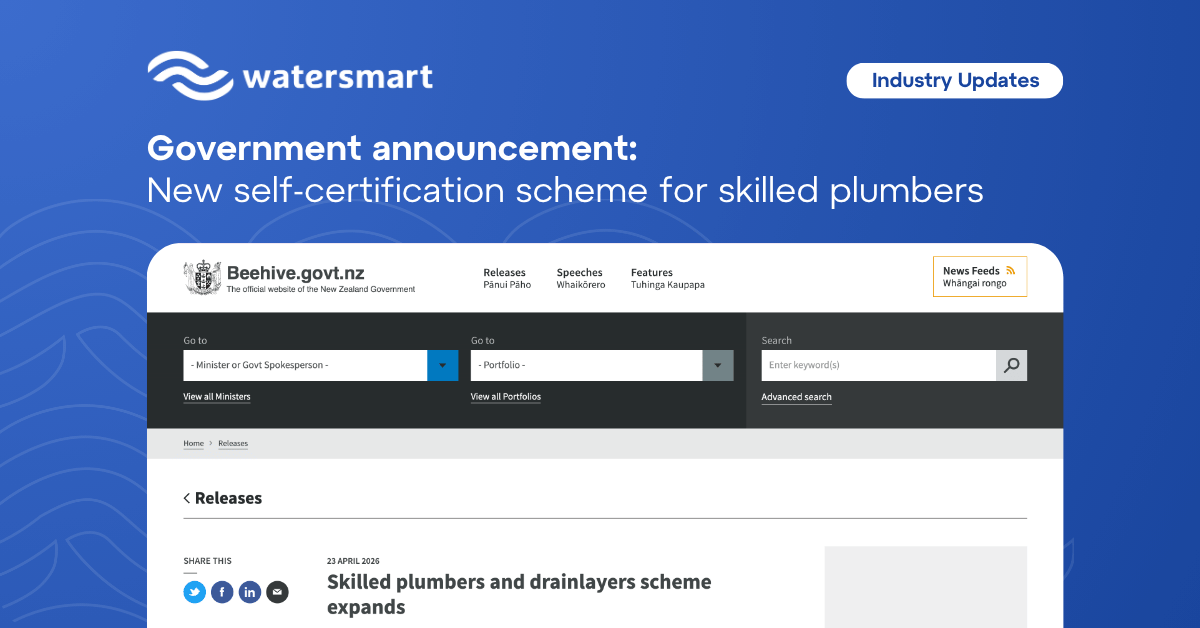
As New Zealand moves toward more stringent stormwater management, and enters a new era of building self-certification and proportionate liability, the technical integrity of in-slab water detention systems and the training to install them is even more critical than ever.
Not only does the product need rigorous testing at manufacturing and onsite to give all parties assurance around its quality, but those doing the installation must have sufficient training to give them the confidence to self-certify.
Training ahead of the curve
Watersmart has only ever used trained and certified installers but, with the new regulations coming in this year, having a robust accreditation programme that supports the industry is even more paramount.
Our comprehensive two-year programme is designed to ensure that installers aren't just compliant but are masters of the solutions they deploy.
A rigorous training framework
Self-certification should only happen through demonstrated competence.
We don’t just teach people about ‘a product’, we provide hands-on instruction on the correct placement and integration of the system, including how to pressure test onsite.
An installer is only signed off to work with us once we have seen that competency first-hand.
Ensuring durability
Water detention and retention systems are often installed in locations where access for inspection, maintenance, or replacement is limited. Under the Building Code's B2 Durability requirements, systems installed within a building structure, such as in-slab solutions like Aquacomb, are required to achieve a 50-year service life because they are extremely difficult to access or replace once construction is complete.
Even systems installed outside the building footprint, such as those located beneath driveways, pathways, patios, decks, or piled houses, are generally expected to meet a 15-year durability requirement due to the disruption and cost involved in accessing them.
Whether a system is designed for a 15-year or 50-year service life, failures can be difficult to identify and expensive to rectify. This is why correct installation, testing, and verification are critical. Through supplier-led training and support, installers gain the knowledge and confidence to deliver systems that meet their durability requirements and perform as intended for the long term.
Supporting self-certification through quality assurance
The goal of our approved certification is to provide the quality assurance required for successful self-certification. This includes -
Standardised training and accreditation.
Sharing on-site installation best practices.
Supporting post-installation follow up that incorporates the documentation required as part of the Building Act and self-certification requirements.
Partnering with industry
Our goal is to support the industry with these changes, giving installers the confidence to self-certify.
This partnership ensures that when a professional signs off an Aquacomb tank system, they are not only backed by the right training but also a quality product. In our case one that is BRANZ-appraised and a robust history of proven performance.
Proper training is no longer an optional extra—it is the essential foundation for a self-certifying industry.