
Porous Lane Case Study - Elliott Reserve, Auckland
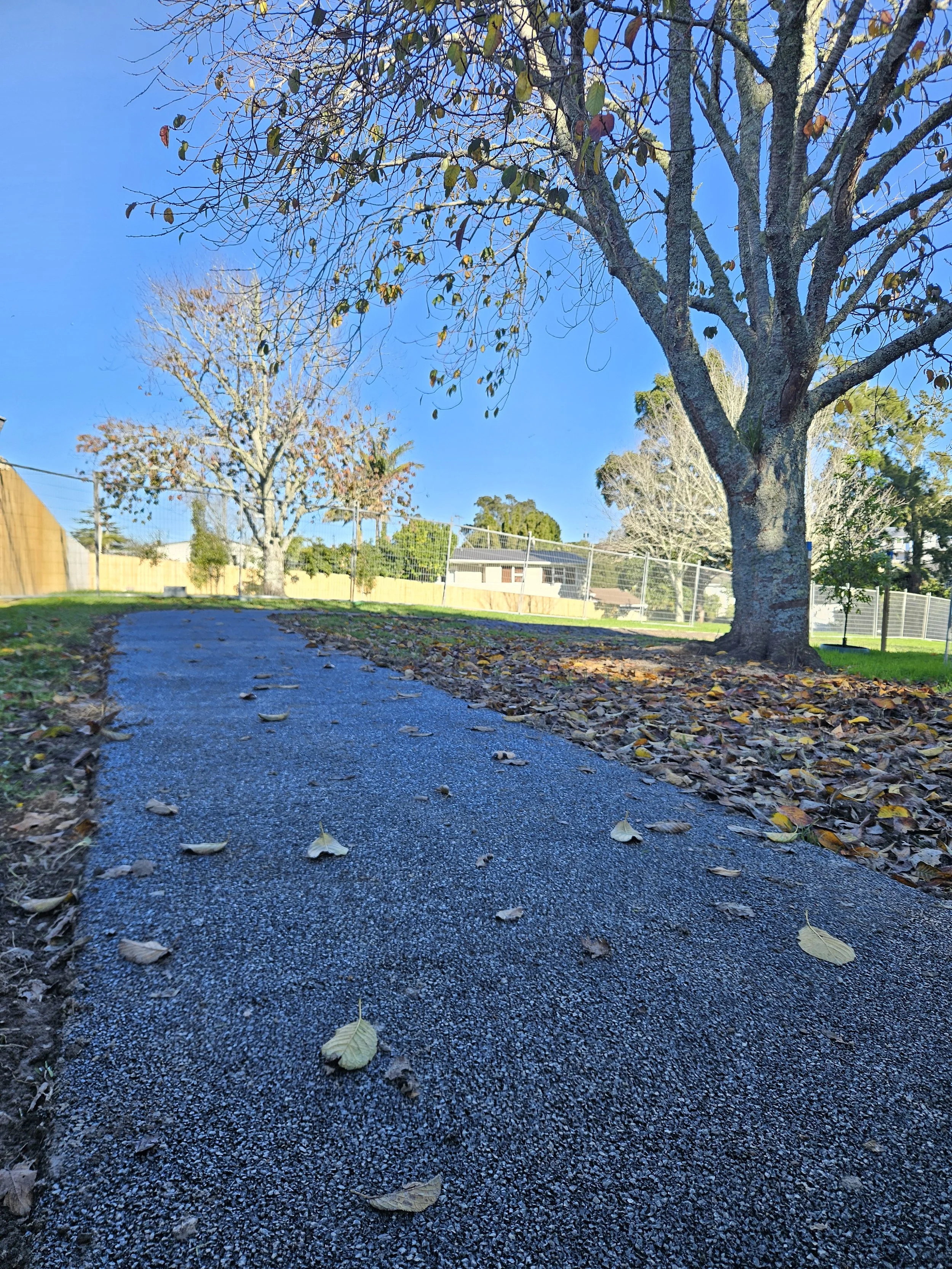
Project Overview
Client: Auckland Council (Project delivered via Ventia)
Location: Elliott Reserve, Bayview, Auckland, New Zealand
Solution: Footpath upgrade with Porous Lane
Size: 25m2
Delivering a durable footpath while protecting mature trees
Elliott Reserve presented a common challenge for urban infrastructure projects: how to construct a new footpath through an area with established tree root systems without compromising either the asset or the trees.
Traditional pavement options can restrict the movement of water, oxygen and nutrients into the soil profile, often leading to root-related pavement damage and increased maintenance requirements over time. For this project, the design and construction team at Ventia, working in partnership with Auckland Council, took a longer-term view, selecting a solution that would support both asset performance and environmental outcomes.
Porous Lane was chosen for the newly formed pathway because it allows water, nutrients and oxygen to continue reaching the root zone while providing a stable, durable walking surface. The result is a footpath designed to work alongside the existing landscape rather than against it.
Project Outcomes
Protects existing mature trees by maintaining natural soil infiltration and root-zone health
Reduces the risk of cracking and surface deformation associated with root growth
Provides a durable, low-maintenance asset with strong whole-of-life value
Integrates seamlessly with the surrounding landscape and surface treatments
Supports Auckland Council's carbon reduction and circular economy objectives using recycled materials
This project builds on previous successful installation at Blair Park and demonstrates how infrastructure can be designed for longevity while preserving the natural environment. By choosing a permeable surface from the outset, the project team has helped avoid the future maintenance and replacement cycles often associated with conventional pavements in root-affected areas.
At Elliott Reserve, the goal was to build a path that will continue to perform for years to come while supporting the trees and landscape that make the reserve valuable to the community.