
NZ's Stormwater Problem Is Getting Harder to Ignore
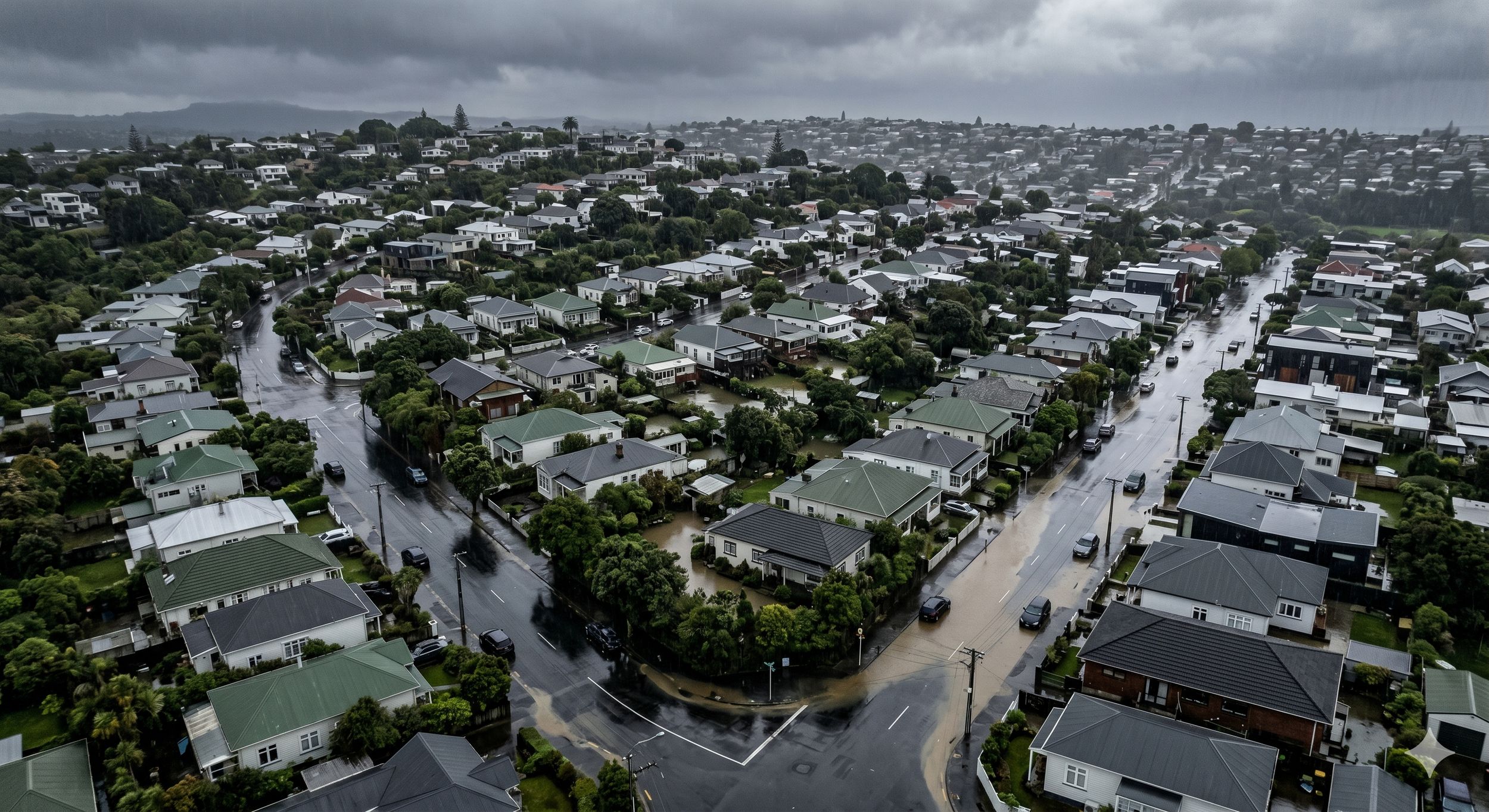
The Auckland Anniversary Weekend floods of January 2023 weren't a fluke. Neither was Cyclone Gabrielle six weeks later. They were a pressure test, and the results showed exactly what engineers and planners had been flagging for years: New Zealand's stormwater infrastructure was never designed for this.
The consequence isn't just wet basements and flooded streets. It's a shift in how councils, central government, and the development sector are thinking about water.
The Infrastructure Gap
New Zealand's urban stormwater networks were largely built to handle rainfall patterns from a different era. Pipes sized for historical storm events are now routinely overwhelmed by rainfall intensities that didn't feature in the original design assumptions.
Auckland's combined stormwater and wastewater network is a particular pressure point. When it surcharges, the result isn't just localised flooding. Untreated wastewater enters waterways. Stormwater management has become a public health issue, not just a planning one.
The shortfall isn't easily fixed by building bigger pipes. The capital cost is enormous, the timeline is measured in decades, and in dense urban environments, there often isn't room for the infrastructure anyway. The more practical lever is reducing the volume of stormwater that reaches the network in the first place.
That's where on-site detention comes in, and why the regulatory environment around it is tightening.
What Councils Are Requiring Now
Auckland Council's Stormwater Management Area Flow (SMAF) controls have been in place for years, but post-2023, enforcement focus and development scrutiny has increased. Most new residential developments in Auckland must now demonstrate they're not increasing peak stormwater discharge to the council network above pre-development rates.
In practical terms, this means:
Calculating the volume of stormwater runoff generated by the proposed development
Designing a detention system that holds and releases water at a controlled rate
Getting that system signed off by an engineer and approved as part of the building consent
What was previously a technical afterthought at the end of the design process is now a consent condition that can hold up an entire project if it isn't addressed early.
Wellington Water has published a list of approved solutions for on-site stormwater management. Christchurch, Hamilton, and Tauranga are all tightening their stormwater requirements as they update district plans under the National Policy Statement on Urban Development (NPS-UD), which places new obligations on councils to enable intensification while managing infrastructure constraints.
The Low Impact Design Shift
Beyond the regulatory minimum, there's a broader shift in how the development industry thinks about water.
Low Impact Design (LID), sometimes called Water Sensitive Urban Design (WSUD), treats stormwater as a resource rather than a problem to be disposed of. Instead of channelling rainwater off a site and into a pipe as fast as possible, LID approaches slow it down, filter it, and where possible, capture it for reuse.
This isn't a philosophical shift. It has practical consequences for site yields, consent outcomes, and long-term building performance.
Developers who integrate stormwater management early in the design process consistently find they can unlock more of the site. Space that would otherwise be consumed by a drainage easement or a large underground tank gets reclaimed for usable floor area.
The economics are real. On constrained urban sites, the difference between a 4-lot and a 5-lot subdivision can come down to whether the stormwater solution takes up a corner of the site or sits under the driveway.
What's Happening on the Ground
The 2023 events produced a wave of retrospective scrutiny on existing stormwater infrastructure. Properties that flooded despite having council-compliant drainage are being reassessed. The concept of residual flood risk (what happens when a system is overwhelmed, not just whether it meets the standard) is now part of planning conversations in ways it wasn't three years ago.
Central government is also moving. The Government Policy Statement on Housing and Urban Development signals continued pressure on councils to permit higher density development, which concentrates more impervious surface in smaller areas. More roof area, more driveway, more runoff. The stormwater management requirement doesn't disappear because the site is small.
If anything, smaller sites create harder problems. Traditional underground tanks often can't be used when invert levels are high, sites are rocky, or there's no room for a concrete pit. The solutions that work on a 2,000m² lifestyle block don't translate to a 300m² infill section.
The Gap Between Policy and Practice
There's a persistent gap between what councils require on paper and what actually gets built. Stormwater management plans get signed off. Systems get installed. Whether they're the right system for the site's constraints is a separate question.
Common failure points:
Systems designed for the compliance minimum rather than the site's actual runoff volume
Installations that work on paper but are difficult to access and maintain
Products specified without considering the long-term maintenance obligations on the homeowner or body corporate
The result is stormwater infrastructure that technically meets consent requirements but doesn't perform as intended over time. Councils are starting to think about maintenance obligations and liability more seriously, and that scrutiny will only increase.
The approach that's becoming standard practice among specifiers who've worked through these problems is to design stormwater management into the project from the start, choose systems suited to the site's actual conditions, and factor in maintenance from day one.
Where This Is Heading
The regulatory direction is clear. Stormwater requirements are tightening across all of NZ's major growth centres. More intensive development, more extreme rainfall, and infrastructure networks already at capacity mean on-site management is going to become more important, not less.
For developers, engineers, and architects, the practical implication is straightforward: stormwater management needs to be part of the conversation from the first site meeting, not a problem to be solved at consent stage.
Watersmart works with developers, engineers, and architects across New Zealand to design stormwater systems that fit the actual constraints of the site. Talk to the team before your next project gets to consent.
