
Small Systems, Big Impact: 220 Million Litres of Stormwater Managed
What Distributed Stormwater Systems Are Quietly Achieving Across New Zealand
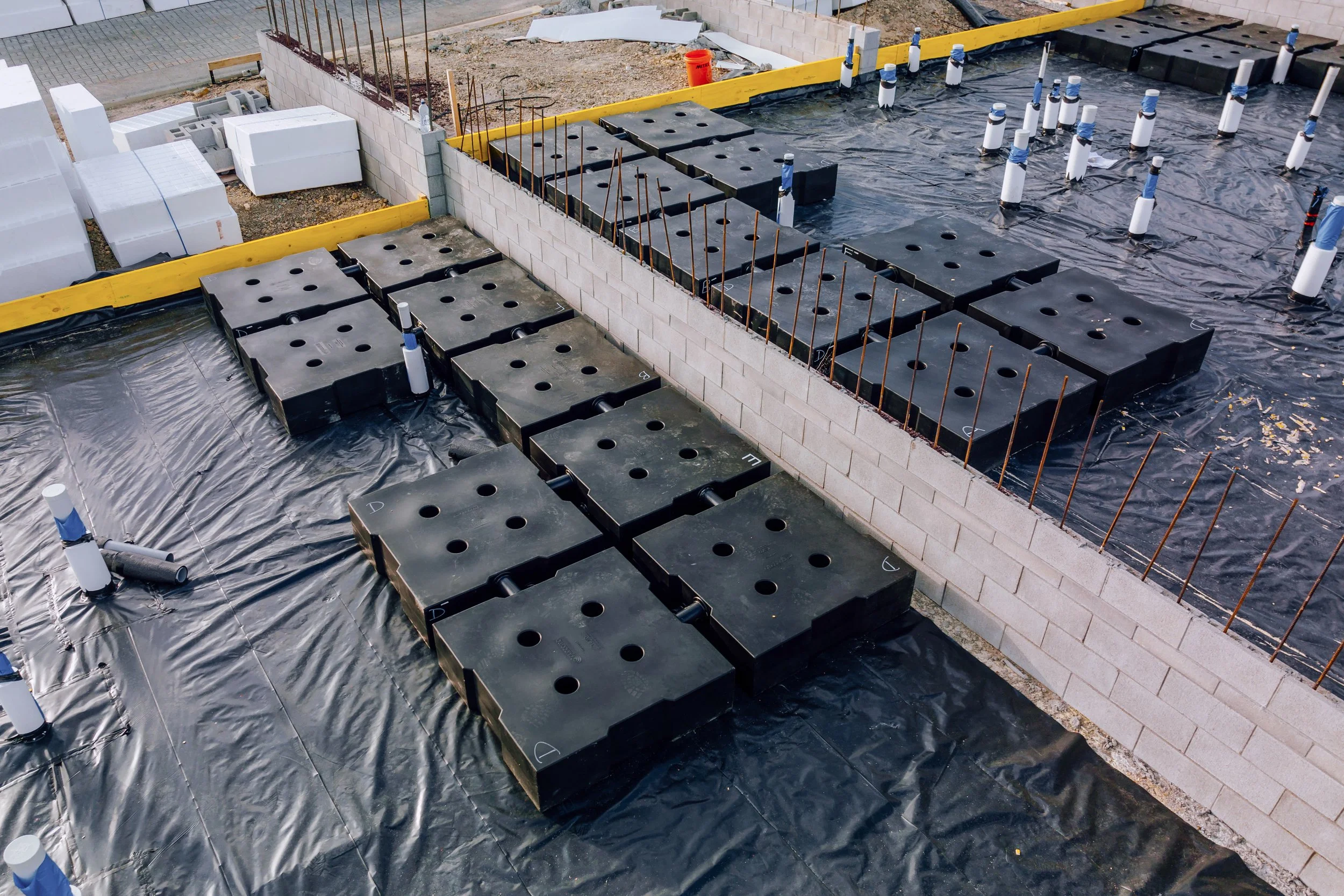
Over the past 12 months, 4,466,750 litres of Aquacomb water storage has been installed across New Zealand. These have managed an estimated 220 million litres of water over the year.
This figure is based on internal system capacity calculations across approximately 3,800 installations between 1 April 2025 and 31 March 2026. It reflects a combination of both detention and retention. In simple terms, that is water being temporarily stored and released in a controlled way, or held for non-potable reuse within the property.
On its own, each system contributes a relatively small volume. But when you step back, the scale becomes clearer. Across thousands of sites, this works out to roughly 60,000 litres per property last year.
Small systems, collective impact
Stormwater has traditionally been managed through large, centralised infrastructure. What this data starts to show is the growing role of smaller, distributed systems and how they work together across a network.
With Aquacomb, detention slows the release of water over a 24 hour period, helping reduce peak flow into downstream infrastructure. Where retention is included, captured water can be reused for things like toilet flushing or laundry. That reduces demand on potable supply, and reduces ongoing cost of living by cutting occupants' water bills.
These are not new ideas on their own. The shift is in how often they are being applied, and how much impact they can have when rolled out at scale.
Designing for resilience, not just compliance
Some parts of New Zealand are already showing what this looks like in practice. Hobsonville Point is one example where high levels of water attenuation have been built into the design of the area.
During recent major rainfall events, these types of environments experienced relatively less disruption. There are always multiple factors at play, but it reinforces a simple idea. When water is managed closer to where it falls, the system behaves differently.
Aquacomb supports that approach by allowing detention and retention to happen at the site level, rather than relying entirely on downstream infrastructure to carry the load.
Rethinking the footprint
There is also a practical design layer to this.
Above-ground tanks in the 2,000 to 3,000 litre range are a common solution for on-site storage. They do the job, but they also take up space and can limit how a site is used.
Underground modular systems offer a different option. Storage is built into the ground, which frees up surface area for landscaping, access, or usable outdoor space. In higher density developments, that flexibility starts to matter more.
This is not about replacing one solution entirely. It is about expanding the toolkit and giving designers more ways to respond to site constraints.
A shift that adds up
220 million litres is not coming from one project. It is the result of thousands of small decisions across homes and developments around the country.
Most of these systems sit out of sight and operate quietly in the background. But together, they form a layer of infrastructure that supports resilience, reduces pressure on networks, and helps manage water more locally.
As urban areas continue to grow and weather patterns become less predictable, this kind of distributed approach is likely to play a bigger role in how we think about water management.