
Greywater recycling pilot unlocks greater housing yield in Hamilton
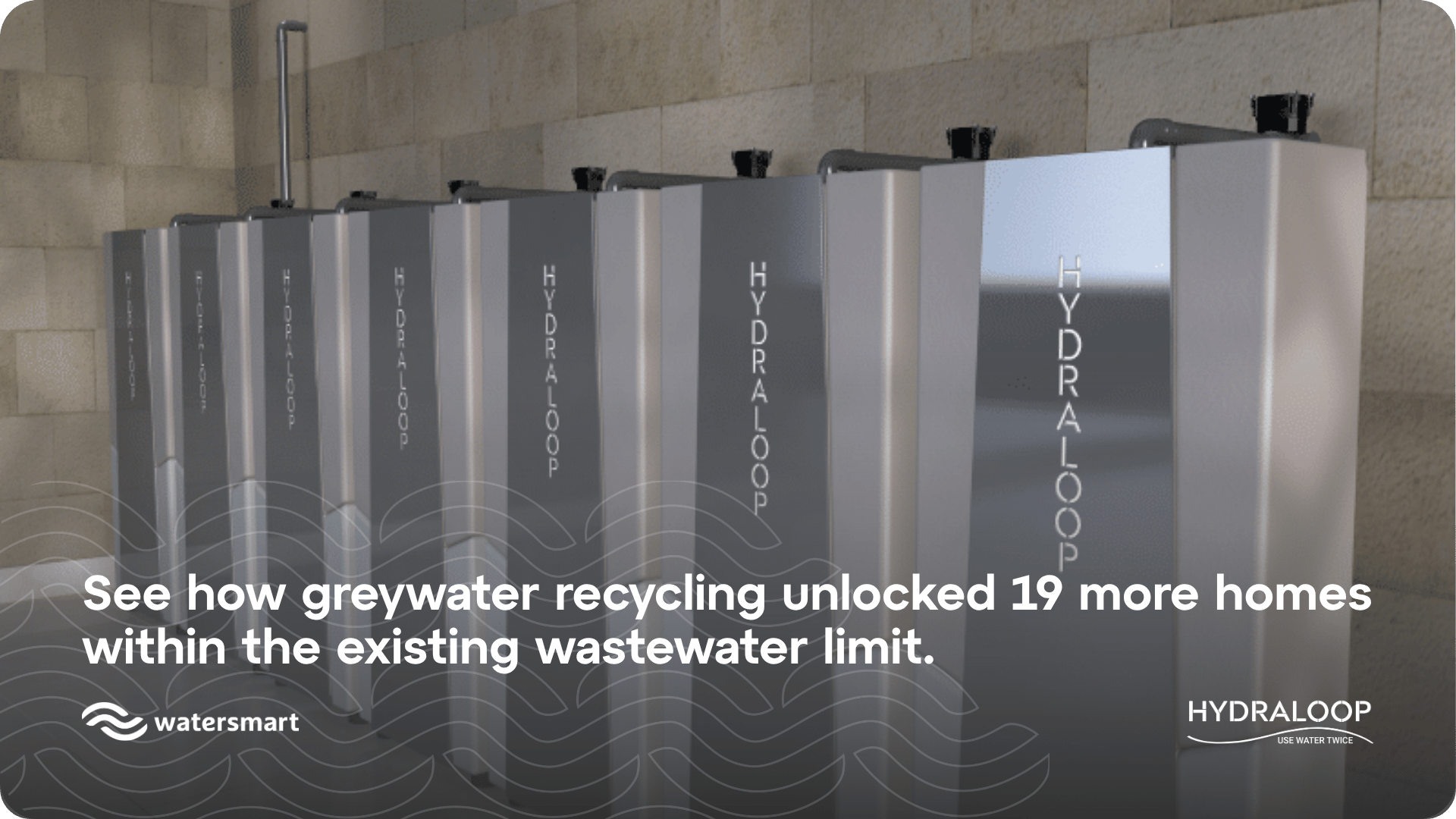
A residential development in Hamilton increased its proposed housing yield from 33 to 52 dwellings without exceeding the wastewater discharge limit already consented for the site.
The solution was not a larger network connection or an infrastructure upgrade. It was a centralised Hydraloop greywater recycling system designed to reduce both mains water demand and wastewater discharge across the development.
With Hydraloop incorporated, projected wastewater discharge fell from 28,080 to approximately 16,286 litres per day. This represents a 42% reduction compared with a conventional 52-dwelling design and keeps the development below its consented limit of 17,820 litres per day.
Making better use of water already onsite
According to BRANZ, the average New Zealander discharges approximately 150 to 170 litres of recyclable greywater down the drain every day.
This water comes from lightly contaminated sources such as showers, hand basins, and washing machines. Once safely captured and processed, it can be reused for non-potable purposes rather than being discharged directly into the public wastewater network.
Hydraloop treats greywater onsite using a six-stage process combining natural physical separation, biological treatment and UV disinfection. The core treatment process does not rely on added chemicals or consumable filters.
Once treated, the recycled water can be used for toilet flushing, washing machines, irrigation and outdoor taps. Depending on the building and its water-use patterns, Hydraloop can reduce reliance on mains water by up to 45%, while also reducing the peak and total volume of wastewater entering public infrastructure.
The development challenge
The Hamilton site held an existing resource consent for 33 dwellings, with total wastewater discharge capped at 17,820 litres per day.
To improve the viability of the development, the proposed housing yield was increased to 52 dwellings. Under a conventional design, the larger development was expected to generate approximately 28,080 litres of wastewater per day, exceeding the existing consented limit by 57%.
Council would only approve the additional 19 dwellings if the development could remain below the original wastewater cap. With no option for a new consent pathway or a higher discharge allowance, the engineering solution needed to work within the existing limit.
A centralised approach to greywater recycling
Rather than specifying separate systems for individual homes, the design uses 12 Hydraloop H600 units installed in a cascade configuration within a dedicated central plant room. This allows the system to share variability in greywater supply and non-potable water demand across the development.
Greywater from all 52 dwellings gravity-feeds to a central lift station before being pumped through the Hydraloop treatment cascade and into post-treatment storage tanks. The processed greywater is then chlorinated to 2 ppm as an additional project-specific treatment measure.
From there, the recycled water is distributed throughout the development using a dedicated non-potable reticulation network. It is reused for:
Toilet flushing
Washing machines
Outdoor taps
Irrigation
Depending on the development’s available discharge capacity each day, surplus treated water can be directed to an onsite land application field or discharged to the wastewater network.
The outcome
The centralised Hydraloop system reduced the development’s projected wastewater discharge from 28,080 to approximately 16,286 litres per day.
This represents a 42% reduction compared with a conventional 52-dwelling design, bringing the larger development below the wastewater limit originally consented for 33 homes.
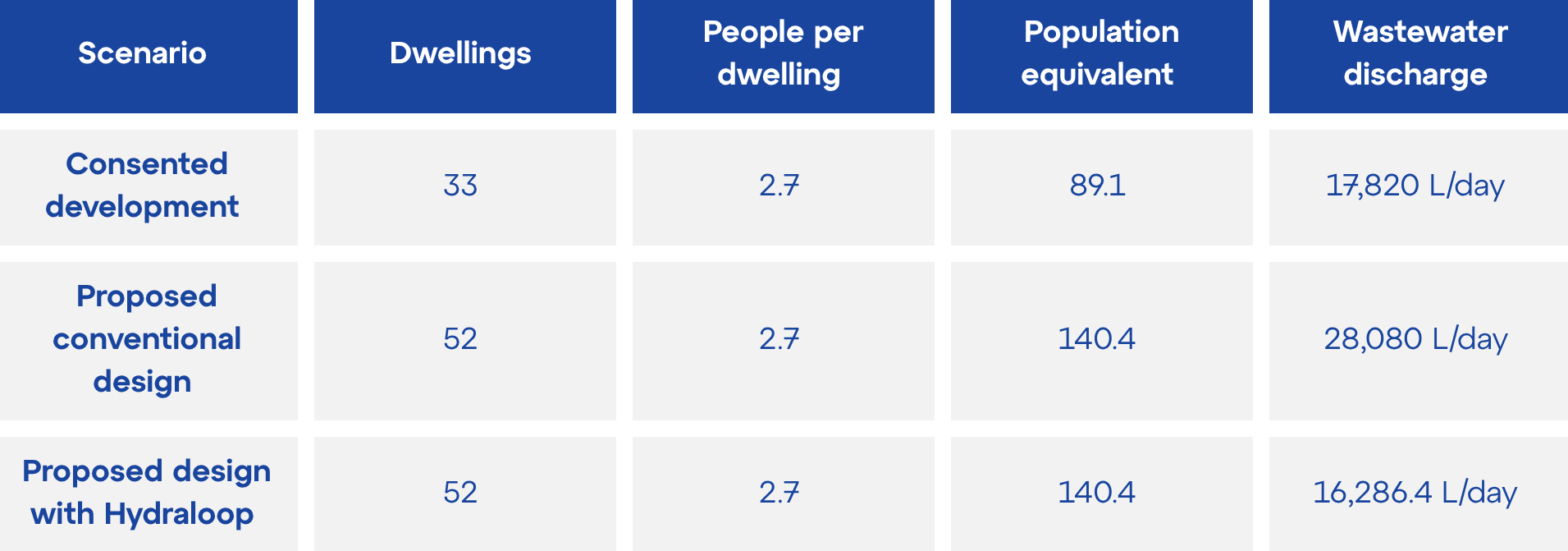
The result is a 58% increase in housing yield while remaining below the site’s existing wastewater discharge cap.
Changing the infrastructure equation
This Hamilton development demonstrates how greywater recycling can address a practical infrastructure constraint.
By reducing both mains water demand and wastewater discharge, developments can place less pressure on public networks, improve water resilience and create greater flexibility around housing density.
The centralised configuration also allows the Hydraloop equipment to be monitored and serviced as a managed development asset. Supported by an ongoing service contract, this helps the developer and utility manage operational and asset-life risk while ensuring the system continues to perform as intended.
For developers working with constrained water or wastewater infrastructure, the commercial question is not limited to the cost of installing a recycling system. It should also consider the additional site yield that the system could unlock.
In this project, greywater recycling enabled 19 additional homes without requiring an increase to the development’s consented wastewater discharge allowance.
Could greywater recycling help unlock greater yield from your next development?
Talk to Watersmart about your site requirements and the options available.