Whether you are looking to harvest rainwater to increase your water resilience, want to prevent flooding during extreme weather, or both, there are several things to consider when choosing a tank.
What is your core objective(s)?
As with any project, you need to think about what your core objectives are. Is it to have a water supply that complements a piped supply, is it the only water supply to service the full needs of the household, and/or are you a developer that needs to meet council requirements with stormwater detention?
Retention versus detention.
Retention tanks store rainwater for everyday domestic use. For those on an urban supply they provide a vital backup during dry spells, when water restrictions may be in place. For those in a rural setting they are vital part of having water at all.
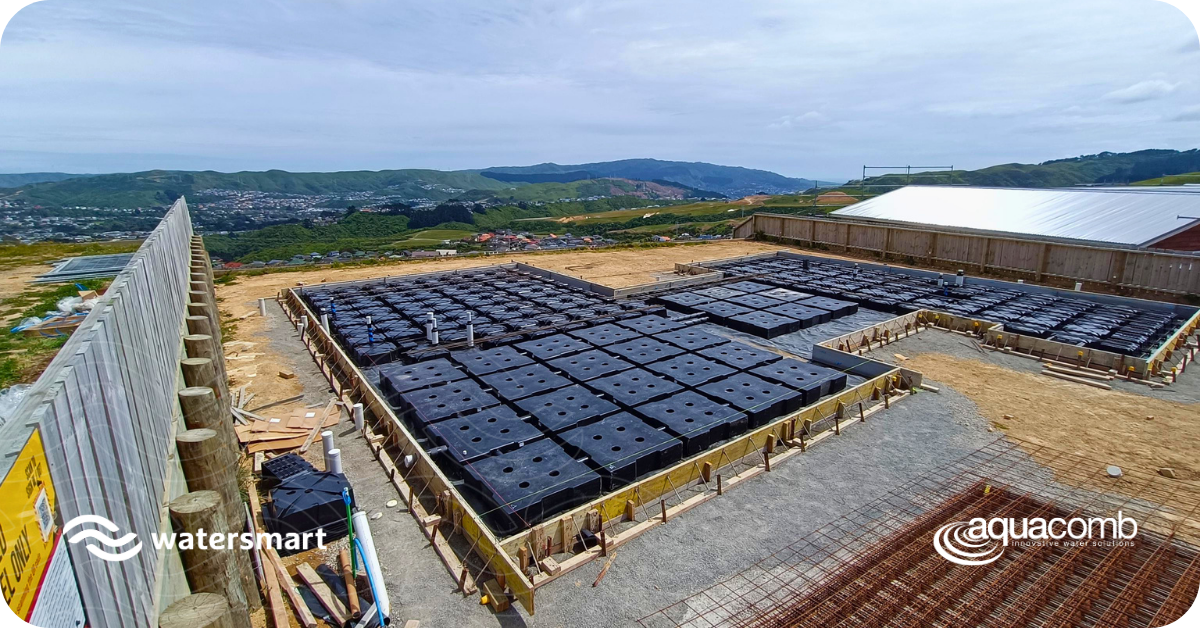
Detention tanks are engineered to temporarily hold and slowly release stormwater into local drainage networks, helping prevent urban flooding. Many local councils mandate detention systems for new builds to manage increased runoff from non-porous surfaces.
A dual-purpose system combines both functions - retaining lower water reserves for household use, while leaving an upper volume clear to attenuate peak storm flows.
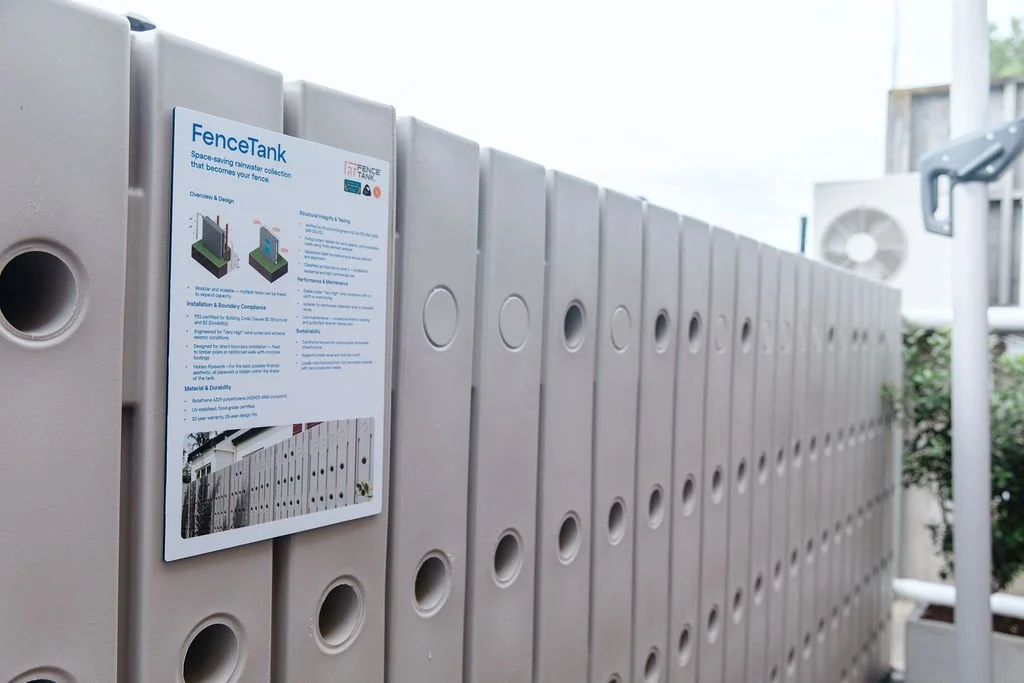
FenceTank installed at the Watersmart Innovation Hub in Auckland supplying non-potable reuse water.
Urban or rural/off-grid
Once you have decided on what type of system you need, we then need to consider capacity and the needs of the household.
For properties in rural or off-grid settings, you will of course need a substantially larger capacity (often 25,000 litres or more) to sustain the household’s needs. If you have stock to feed and water that will be an added consideration.
In contrast, urban sections usually need more compact options such as slimline, under-deck, or fence tanks that blend seamlessly into small spaces while meeting aesthetic requirements. Whilst compact, these tanks can still provide 1,000 litres or more of water – depending on their configuration.
We can help you to work out what capacity is needed to ensure you have sufficient supply for day-to-day use as well as reserves for when things get dry.

Slim City Tank Installed on a multilot development in Auckland for stormwater detention and reuse.
Below ground or above ground?
Once your objectives and capacity have been determined, it’s time to look at where the tanks are best to be placed.
Above-ground tanks are cost-effective, easy to maintain, and are best suited for retrofitting into existing properties. They are however subject to district planning rules regarding boundary setbacks and visibility.
Underground tanks save precious backyard space and stay hidden, beneath lawns, driveways, decks, or foundations. They help preserve usable space but do require excavation, engineering, and attention to local groundwater levels.
Tanks help build long-term resilience
As climate change brings more frequent extremes, from severe summer droughts to sudden torrential downpours, a well-planned water management system helps build long-term water resilience.
Taking the time to evaluate your storage goals, site constraints, and local council regulations today ensures you aren't caught off guard tomorrow.
By planning ahead and sizing systems for future weather trends, rather than just current needs, you secure a dependable water supply that will protect a property through whatever seasons New Zealand throws at it.
Need help fitting the right tank to your job? Drop us a line.