Watersmart Insights
Filter
Tag
- Aquacomb 24
- Education 12
- El Niño NZ 2
- Events 3
- FenceTank 14
- FloodFree 27
- Floody 20
- Flowgen 1
- Hydraloop 13
- Hydraloop NZ 1
- Leaf Diverter 2
- Porous Lane 25
- SMAF requirements 1
- SlimCity 7
- Sustainability 1
- WaterSAFE 2
- case study 14
- flood risk NZ 1
- greywater recycling NZ 1
- greywater recycling developments NZ 1
- off grid living NZ water 1
- off grid water NZ 1
- off grid water systems NZ 1
- permeable driveway consent 1
- permeable pavement NZ 1
- permeable paving NZ 1
- porous paving driveway 1
- rainwater self sufficiency NZ 2
- rainwater tanks NZ 2
- reduce mains water reliance 1
- reduce mains water use NZ 1
- stormwater runoff NZ 2
- sustainable development water NZ 1
- water independence NZ 1
- water reuse commercial NZ 1

El Niño in New Zealand: Why Two Regions Face Opposite Water Problems
El Niño does not make New Zealand drier everywhere. It moves the rain, leaving the north and east short while the west takes heavier downpours.
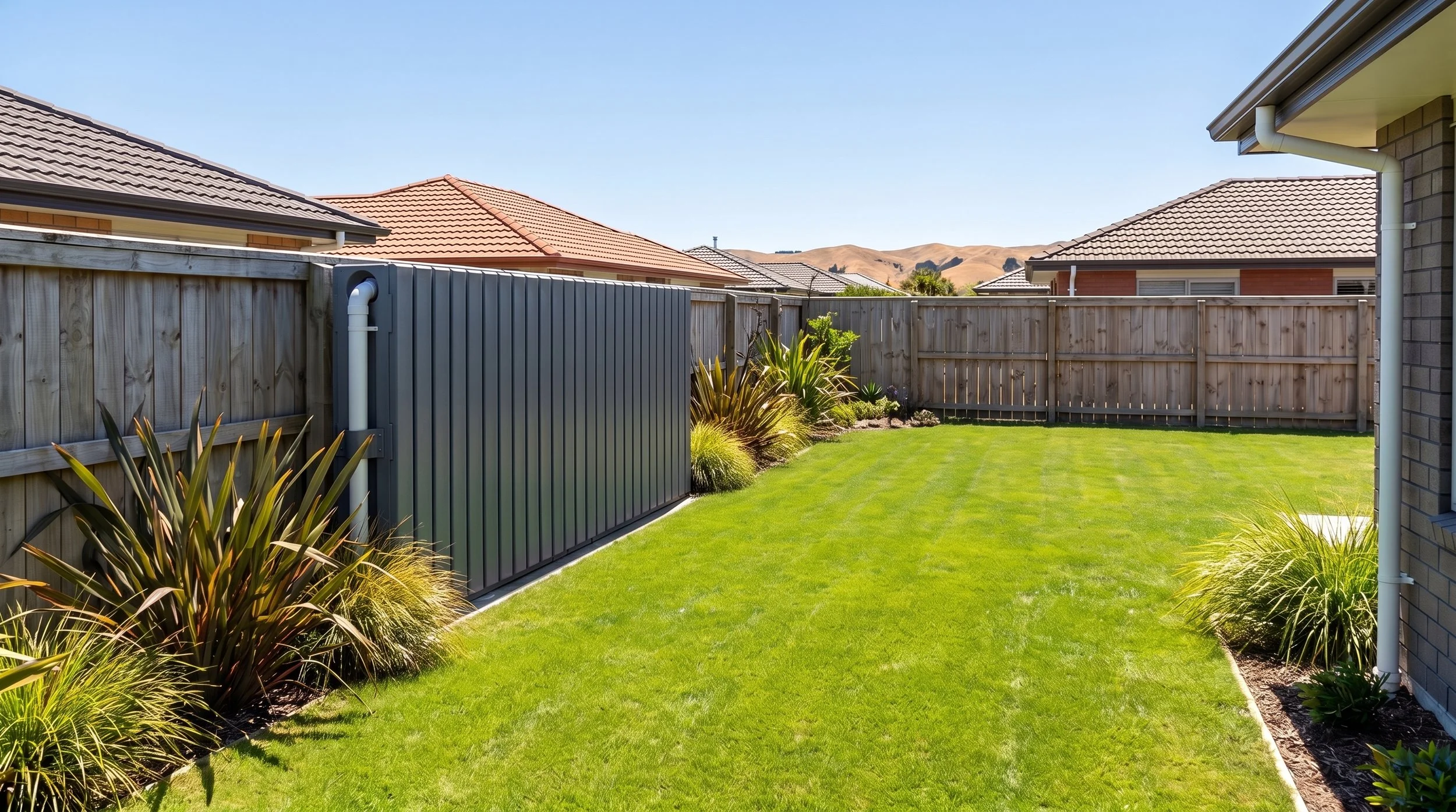
Rainwater Tanks for an El Niño Summer: Storing Water on a Tight NZ Site
NIWA expects El Niño to peak this summer, bringing drier conditions to the north and east. Slimline rainwater tanks store water on sections with no room for a round tank.

How to reduce heat island effects caused by El Niño
During hot, dry El Niño summers, traditional asphalt and concrete absorb heat while preventing rainwater from reaching the soil and surrounding vegetation.
Permeable surfaces such as Porous Lane allow rainfall to filter into the ground, supporting tree roots, reducing surface runoff and helping retain moisture beneath urban areas. This can strengthen natural cooling and reduce pressure on stormwater networks when sudden summer downpours arrive.
Discover how permeable paving can help create cooler, greener and more climate-resilient urban spaces.

Infrastructure Before Intensification: What Auckland Must Get Right to Enable Growth
Auckland has ambitious plans for housing, intensification and economic growth. But zoning land for development is only part of the equation. The supporting transport, water and wider infrastructure must be planned and delivered at the right time.
We’ve shared five key insights from the Property Council New Zealand’s Enabling Auckland: Infrastructure for Growth event, including what they could mean for the future of water management and resilient urban growth.

Re-cementing our commitment to sustainability through Toitū accreditation
We are pleased to share that we have extended our Toitū certification, reinforcing our dedication to rigorous environmental accountability, reduced operational emissions, and sustainable business practices.
This accreditation validates our commitment to resource conservation and climate resilience - extending from our product development all the way to the end-of-life recycling.
Learn more about Toitū and our commitment to sustainability
Fast-track Development Still Needs Infrastructure Certainty
Fast-track approval may help a development move through consenting sooner, but it does not resolve how the infrastructure needed to service it will be funded or delivered. We look at the Government’s proposed changes and what councils and project teams should establish early to create greater certainty.

El Niño Is Almost Certain. Is Your Property Ready?
El Niño is almost certain. Scientists put the probability at 95%, with modelling suggesting this event could rival or exceed anything previously on record. For New Zealand, that means compounding pressure across drought, intense rainfall, and water quality, often in the same season. Here is what that means for the buildings and developments we are responsible for, and what good water management looks like in response.
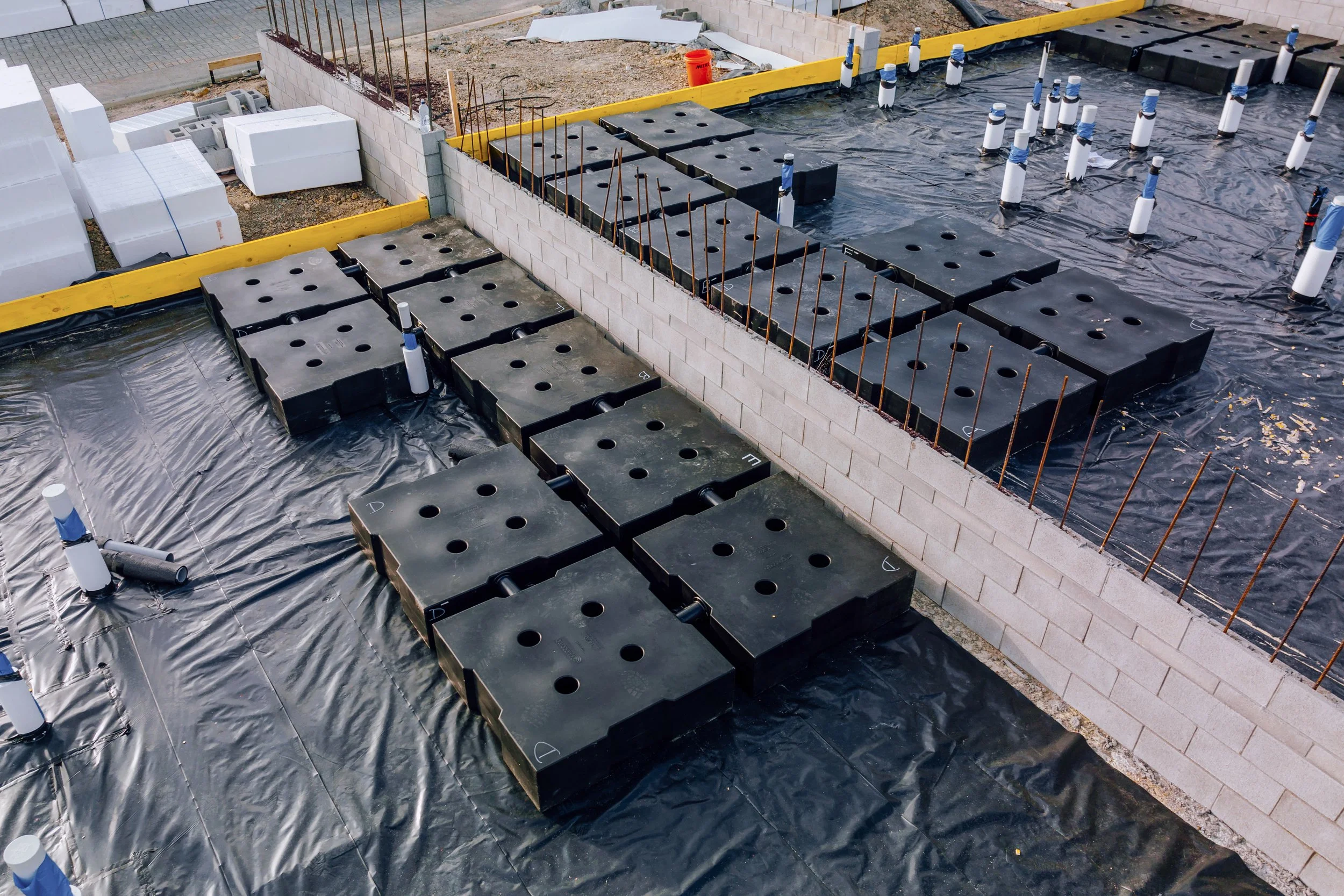
Small Systems, Big Impact: 220 Million Litres of Stormwater Managed
Over the past 12 months, 4,466,750 litres of Aquacomb water storage has been installed across New Zealand. These have managed an estimated 220 million litres of water over the year.
This figure is based on internal system capacity calculations across approximately 3,800 installations between 1 April 2025 and 31 March 2026. It reflects a combination of both detention and retention. In simple terms, that is water being temporarily stored and released in a controlled way, or held for non-potable reuse within the property.
On its own, each system contributes a relatively small volume. But when you step back, the scale becomes clearer. Across thousands of sites, this works out to roughly 60,000 litres per property last year.

Sponge Cities: Building Urban Resilience Without Slowing Growth
Around the world, leading cities are adopting a more integrated approach: designing urban environments to behave like sponges — absorbing, storing, filtering and gradually releasing rainwater rather than immediately channelling it away.
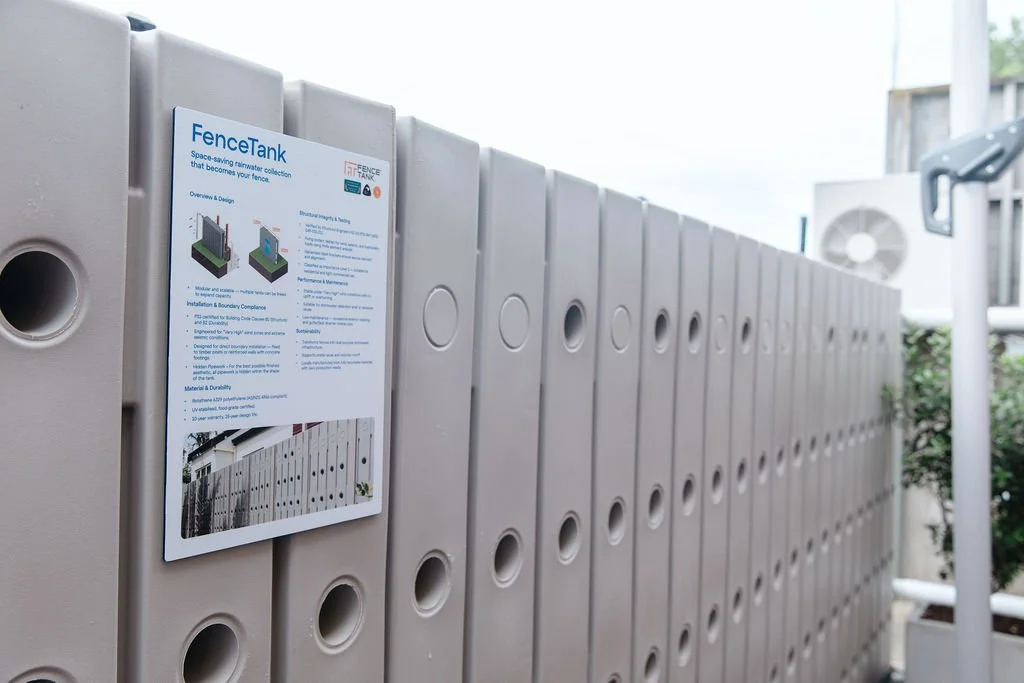
Make Summer Water Go Further: Slimline Rainwater Storage for Gardens, Play, and Everyday Use
Hot, dry summers put pressure on mains water, but slimline rainwater storage makes every downpour count. This guide covers FenceTank, stormPANEL, and Silo systems that fit tight sites while supporting gardens, outdoor play, and everyday non-potable use. Learn how to plan capacity, connect plumbing compliantly, and scale storage before restrictions hit.
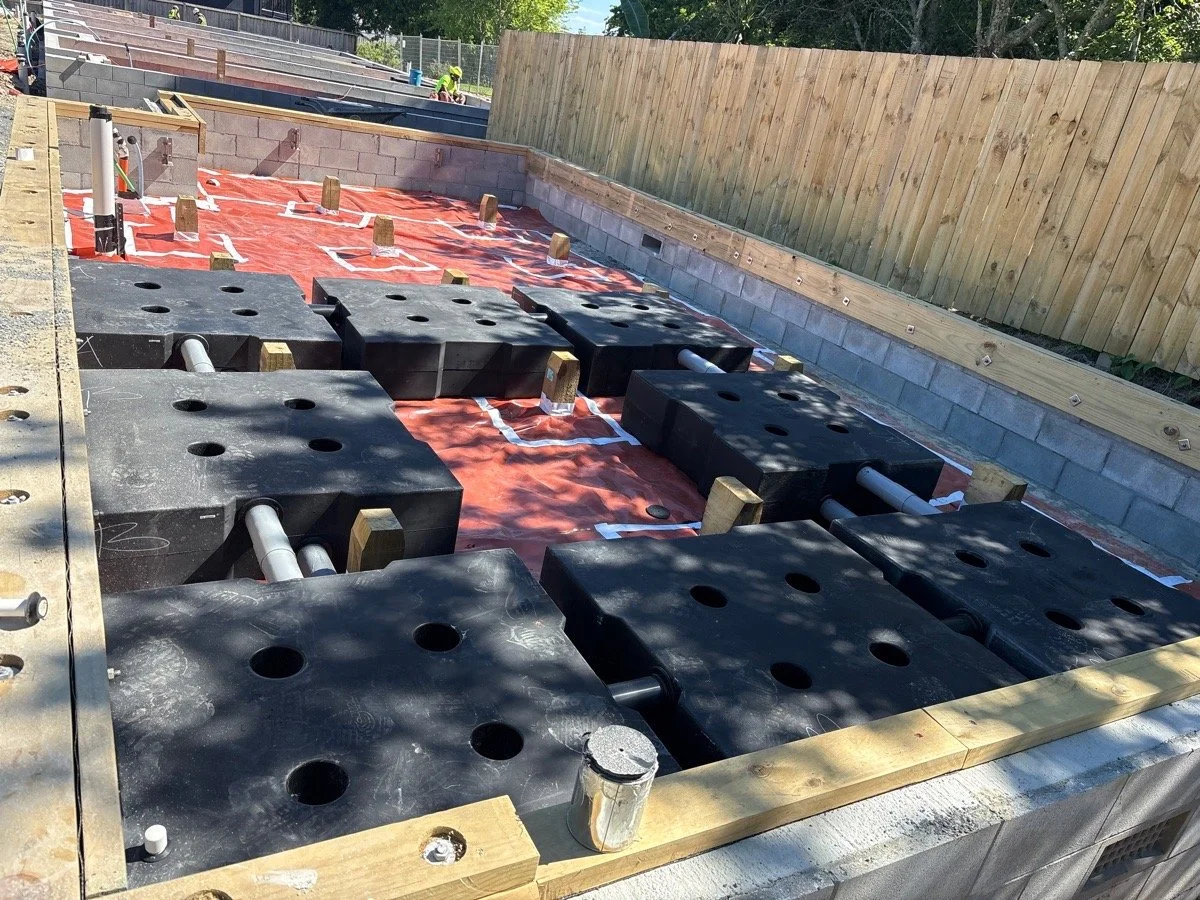
Summer Water Resilience: Smart Detention & Reuse in NZ
Plan smart water detention and rainwater reuse systems for NZ summer. Compare tanks, Aquacomb, lead times, capacities, and council compliance.

Watersmart Wins Stormwater Innovation Award 2025
Watersmart Wins Prestigious National Innovation Award for Stormwater Solution Porous Lane

NZ Govt Revamps Infrastructure Funding to Boost Housing
The New Zealand government has announced a comprehensive overhaul of infrastructure funding mechanisms to bolster housing development. This initiative, part of the “Going for Housing Growth” strategy, seeks to address critical challenges in land supply, infrastructure, and growth incentives.

Auckland Drought Alert March 2025
Auckland’s Rainfall Brings Temporary Relief, but Drought Concerns Persist

Addressing Infrastructure Challenges in New Zealand
New Zealand’s urban development is increasingly constrained by aging and overburdened infrastructure. Developers often face high costs, shared investment

Call for water metering to improve Kiwi water resilience
Experts and councils across Aotearoa are increasingly calling for the widespread adoption of water metering to help New Zealand better manage its water use

World Water Week
Next week is World Water Week, held since 1991 in Stockholm. Find out how Watersmart contributes to the theme this year.

Water Metering: Why It Is Useful for Building Owners and Developers
Water metering is a crucial tool for building owners and developers aiming to achieve a NABERS (National Australian Built Environment Rating System) rating, particularly for water efficiency. NABERS ratings are essential for demonstrating a building’s environmental performance and sustainability, and water metering plays a pivotal role in this process.

Winter has arrived and so has the flooding
Winter has well and truly arrived bringing with it the cold and the rain. It has also unfortunately brought flooding, with a State of Emergency being declared

Half a million Kiwis lack access to safe drinking water
Recent reports from water regulator, Taumata Arowai, showed that nearly half a million Kiwis do not have access to safe drinking water.
Tell Us About Your Project
From conceptualising to constructing, we’re ready to design your architectural dream. We promise a client-centric approach that empowers ideas, eases concerns, and delivers quality craftsmanship we’ll all be proud of.